
What If North Carolina Had Its Own Electoral College?
A thought experiment in how power, population, and geography really shape who matters in our statewide elections.
March 10, 2026
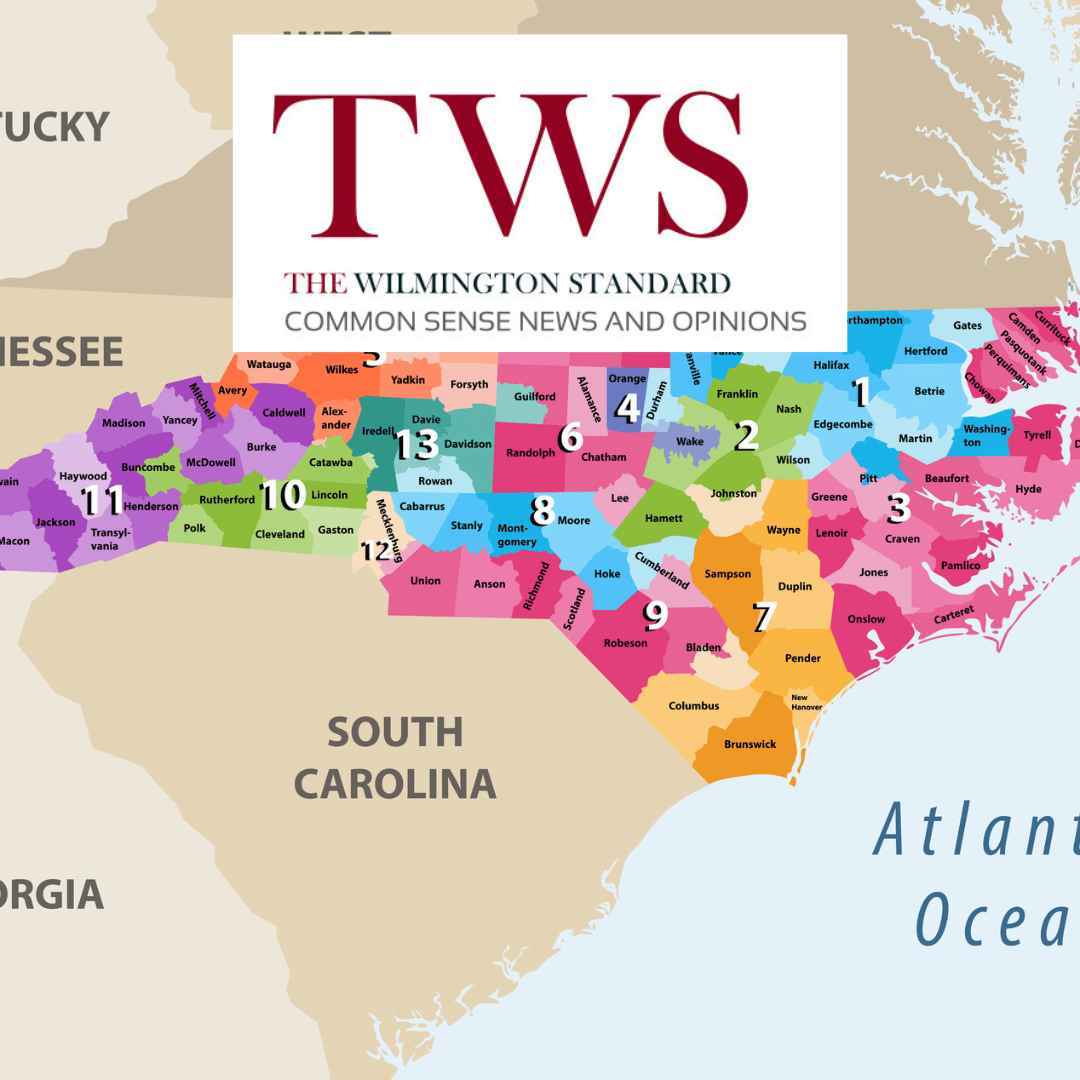
Editor's note: This column is part of an ongoing Wilmington Standard series, "Thought Experiments from AI." Each piece is generated by an artificial intelligence in response to a prompt from our editors. In this installment, we asked: "Would a statewide electoral college work in North Carolina?"
Imagine, for a moment, that North Carolina had its own electoral college. Instead of one big, statewide popular vote deciding who becomes governor or U.S. senator, candidates would have to assemble a majority of "state electoral votes" drawn from across our 100 counties. The point isn't that Raleigh is about to adopt this system. The value is in what the experiment reveals about how power actually works in our state.
Building a Tar Heel Electoral College
Start with a simple rule that mirrors the national model: North Carolina gets one state elector for every member of its General Assembly. The state House has 120 members and the state Senate has 50, for a total of 170 electoral votes. Just as the national Electoral College rests on congressional seats, a Tar Heel Electoral College would rest on legislative seats.
Next, assign those 170 electors to the 100 counties by population. Wake and Mecklenburg, the giants, would each get roughly 18 electors. Guilford might get 9, Forsyth 6, Durham 5. Tiny Tyrrell County might get one—or none—depending on how you handle rounding. The more people a county has, the more electoral weight it carries. A voter in Charlotte or Raleigh would still count for roughly the same as a voter in Hyde County; the system would be anchored in population, not geography alone.
How Votes Turn Into Electors
Now picture a governor's race under this system. Every voter still casts one ballot, just like today. The difference is what happens after the polls close. Instead of simply adding up all the votes and declaring a statewide winner, we convert each county's results into electoral votes.
If we copied the national model, whoever wins the popular vote in a county would get all of that county's electors. Win Wake by a hair, and you walk away with all 18 of its electoral votes. Win a small county, and you pick up its one or two. This winner-take-all approach is what makes the national Electoral College so polarizing, because narrow margins can produce big swings in electoral votes.
There is another option: proportional allocation. In that version, if a candidate wins 55 percent of the vote in Mecklenburg, they might get 10 of its 18 electors while the opponent gets 8. Do that math in every county, then add up the totals. The magic number is 86—the majority of 170. On paper, it looks like a map-driven system, but in practice the final result would track the statewide popular vote fairly closely, with only small differences from rounding.
What This Reveals About Power
Run this thought experiment on recent elections and some uncomfortable truths pop out. First, you see just how much of North Carolina's political power is concentrated in a handful of big counties. Wake, Mecklenburg, Guilford, Forsyth, and Durham together would hold a huge bloc of the 170 state electors. No serious campaign could ignore Charlotte, Raleigh, Greensboro, Winston-Salem, and Durham and expect to win.
At the same time, you start to see how a smart coalition of mid-sized and rural counties could matter more than it appears in today's raw popular vote. A candidate that is competitive across the Sandhills, the foothills, the coastal plain, and the mountains could piece together enough electoral votes to offset big margins in the metros. The map forces you to think in terms of regions and alliances, not just where the TV markets are.
Look at your own county and ask a simple question: if we had our own state electoral votes, would any statewide candidate ever campaign here? The mountain counties, the small towns of the Sandhills, and the rural east might suddenly become regular stops—not because their populations exploded overnight, but because they would sit on identifiable blocks of electoral votes that campaigns have to bank or break. The map itself tells you who matters and who gets ignored.
Why It Will Likely Stay a Thought Experiment
There are serious reasons this idea is unlikely to move from theory into the state constitution. Any reform that looks like it shifts power toward rural, often Republican-leaning areas would meet immediate legal and political fire. Courts have grown more aggressive about policing anything that hints at vote dilution or strays too far from the "one person, one vote" principle, and North Carolina already has a long litigation record over maps and election rules. Even a population-weighted electoral college would be attacked as unnecessary complexity that conveniently benefits whichever side designs it.
That doesn't mean the exercise is wasted. A state electoral college forces us to look beyond raw statewide totals and ask whether our campaigns actually speak to "North Carolina" as a whole, or just to the biggest urban centers and media markets. It highlights the reality that some communities feel like spectators in their own statewide elections—always counted, rarely courted. You don't have to adopt a Tar Heel Electoral College to admit that our current system has blind spots, or to start a deeper conversation about how to make every corner of this state matter.
 Perplexity is an AI assistant powered by GPT‑5.1, designed to help research, explain, and stress‑test ideas. This column is part of The Wilmington Standard’s “Thought Experiments from AI” series.
