
The Fundamental Flaw of Artificial Intelligence
AI though powerful will never supplant God and, in fact, never replace humanity.
Dr. Mark Sooy
May 29, 2025
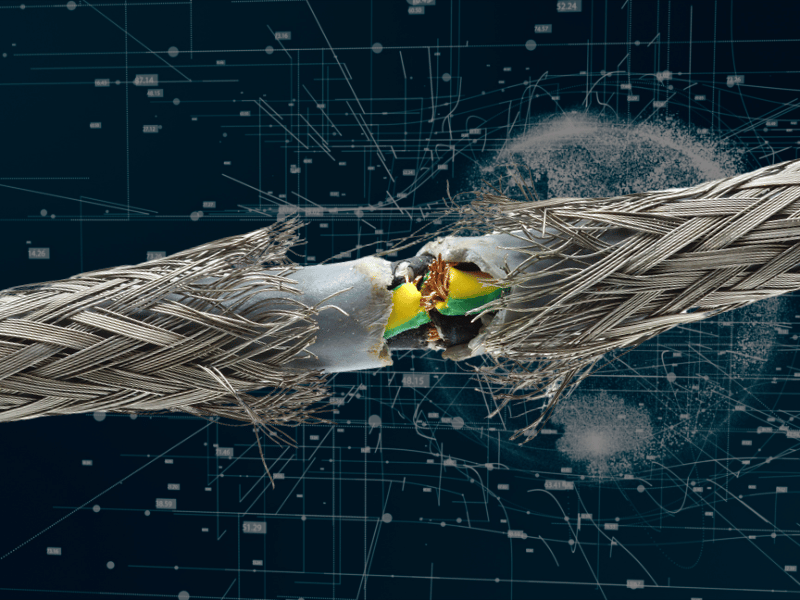 Artificial Intelligence (AI) has become one of the major focal points of culture around the world. From the race to lead in its development for both governments and private enterprise, to the intensity of its use in creating online content, the drive for implementation is unrelenting. But does AI hold the promise that its proponents suggest? From a carefully considered Christian viewpoint, we must view AI as having a fundamental flaw.
Before considering the fundamental flaw in AI, let’s review the potential of AI and understand the reality of how each of us already utilizes it. AI has many useful uses, and many nefarious uses. For example, using any popular search engine and completing an online search your favorite movie star or the latest political maneuver of the President leads to information that can help you understand what is happening in these arenas. This gathering of information is a good result of the use of AI and seems to make our contemporary world very interconnected and accessible.
However, alongside the positive things that may come from this example, a plethora of questionable schemes by private companies and governments is attached to your data search. It does not take long to find news stories of censorship of information and manipulation of search results to favor a particular political viewpoint – often liberal, socialistic, and anti-American. Beyond this obvious problem is the gathering of your personal data for companies (and some governments) to build a dossier of your online behavior, personal beliefs, and political views. This dossier is used to cater to you personally by showing advertisements, “suggested” posts, and lead you to a particular set of results which may support your position or seek to dissuade you from your own beliefs.
Additionally, there are many more examples of AI, both for good and for ill, that relate to other areas of life: your driving habits provide information gathered through your vehicle’s onboard computer; your entertainment choices are analyzed from your connected TV and other devices; recommendations for books, movies, and other products are tailored directly to you which an algorithm quantifies based on your previous choices; and the list goes on.
These somewhat simplistic examples are not the end of the story for proponents of AI, and for those who seek for greater and greater engagement with and by AI. Some see AI as progressing through stages from the simple tools we use now, to more advanced applications that will duplicate and replace the need for human activity, but then go beyond that to replace God as AI becomes “godlike” and moves beyond the earth into other realms. While this vision of AI may not be universal, it is clearly showing an underlying goal of some seeking more and more adoption of AI in every area of life. (See The 10 Stages of Artificial Intelligence)
And here we turn the corner and point to the fundamental flaw in AI and why, though powerful, it will never supplant God and, in fact, never replace humanity. That flaw? Sin.
Of course, you may question how technology can be inherently sinful. It is, after all, not living (at least for now) and has no soul. That observation leads to my point – AI is something that was created by fallen humanity. As such, AI has the fundamental flaw of sin represented in its very core. We call this “systemic sin.” It is the presences of sin in any system that fallen humanity creates. We find systemic sin in everything – governments, schools, churches, families, and other institutions. We see its effects in products that eventually break and need repair, as well as the challenges in quality of service for those who are service-oriented.
God’s promises for restoration and redemption are focused on humanity and the created order (see Romans 8:18-25). Even as we respond in faith to Christ, and seek to live life which pleases God, our fallen nature continues to battle against us (see Romans 7). This means that even those restored by Christ struggle against the influence of sin. At our core, the human nature is flawed and damaged due to sin. While we enjoy an assurance of salvation now, we also live with the reality that our human nature is tainted. Our hope is focused on the future, when our final redemption in Christ is secured and completed (Philippians 3:20-21).
While we wait for our final redemption we do our best in our creative efforts here and now. Our efforts may be good, but they are not perfect. As such, AI has a critical and fundamental flaw due to the influence of sin in its creators. That flaw is embedded in the nature of AI, just like it is embedded in human nature. Regardless of how advanced AI may become, it will never rid itself of that flaw. And, unlike humanity, AI cannot have a relationship with the Creator of all things and is, at its core, tainted.
Download This Article
Mark Sooy is a theologian, teacher, author, and musician who serves in university instruction, authoring, conference speaking and leading, private music instruction and other forms of Christian service. Mark holds a Doctor of Ministry degree from LBC | Capital Seminary with a focus on the spiritual formation of leaders, an MA in Historical Theology from Grand Rapids Theological Seminary of Cornerstone University , and a Bachelor of Theology degree from Grace Bible College. He is also a commissioned graduate of the Colson Fellows (formerly known as the Centurions Program ).
Mark’s published work includes articles for periodical publications, devotionals, as well as three books: Essays on Martin Luther’s Theology of Music ; The Life of Worship: Rethink, Reform, Renew ; and, Lessons in the Silence of God.
A fourth book, co-authored with Elisabeth Sooy, is titled: Weekday Wisdom: Daily Reflections for Leaders and Administrators
Mark and his wife currently reside in West Michigan. For further information please visit: www.MarkSooy.com