
The Legacy of Christian Arts in Culture
Those who infused the gospel into the structure of this church were expressing their faith without words
Dr. Mark Sooy
July 16, 2025
 “So Moses summoned Bezalel, Oholiab, and every skilled person in whose heart the Lord had placed wisdom, everyone whose heart moved him, to come to the work and do it.” (Exodus 36:2)
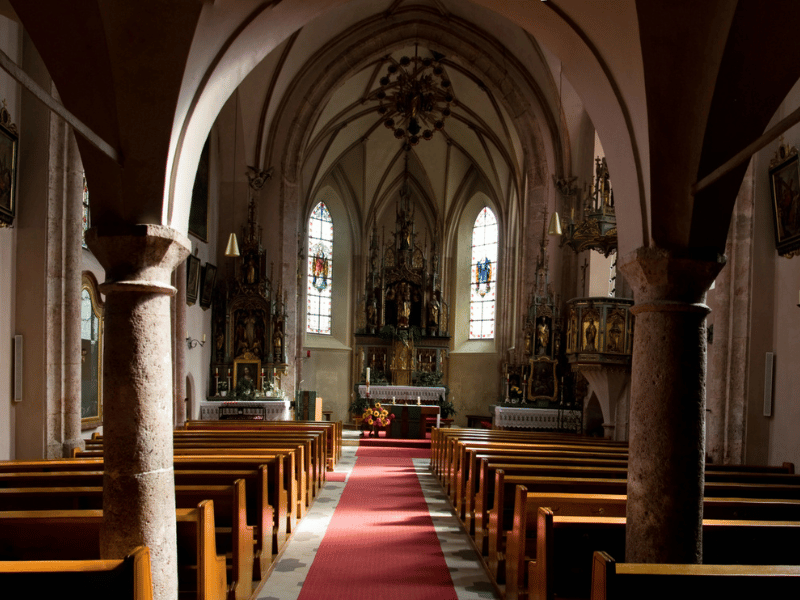
It was the middle of the week, and my family stepped into a church in the midst of a busy tourist town. As we entered the church, I found it interesting – even strikingly so – that amidst the activity and noise of the street outside, the church’s interior was quiet. In fact, I would certainly describe it as a “sacred” quiet. As people entered the church, they whispered to each other. Many would find a pew and sit, listen and observe the peacefulness discovered within the walls of the sanctuary. Calmness permeated the place and everyone seemed to know that respect and dignity were found there.
The church had been built (and apparently rebuilt several times in 170 years) in the fashion of a small cathedral. The entire sanctuary was, notably, shaped as a cross. The entry was the foot of the cross, and as you approached the altar there were two “wings” with pews that shaped the arms of the cross. Unlike our modern buildings, cathedrals and churches of ancient times were constructed to preach the gospel without words. We can certainly see the reflection of God’s image in this human creativity when we consider that God, Himself, also preaches without words – for Psalm 19 tells us that the “heavens declare the glory of God” even though “there is no speech, nor are there words” (vss 1-3).
But it didn’t end there. I began to walk about the building and look closely at the stained glass windows. There I found bold, unapologetic statements of Christian doctrine and truth. The doctrine of the Trinity – fashioned in glass – showing the truth of Father, Son and Holy Spirit as three persons, yet one God. Reminders of God’s power as experienced by Israel in various Old Testament stories. Images from the medieval church reminding visitors of Christ’s work, the presence of the Holy Spirit, the sacraments, the uniqueness of Jesus as the God-man, the stories of the four gospel writers, St. Paul preaching at Mars Hill, Zaccheus in the tree, and on and on. I could have spent hours there and even my kids were intrigued as I began to explain the meaning of the artwork.
Just as Bezalel and Oholiab were chosen by God to build the Tabernacle, and commissioned by Moses, so those who infused the gospel into the structure of this church were expressing their faith without words. From the comments of a local evangelical pastor, the clergy and membership of this church hardly stood for the gospel any longer – but were social activists based upon a liberal and ecumenical religious stance and political correctness. Acceptance of the profane and immoral were the norm – all in the name of tolerance. But no longer in the name of Christ.
Yet, here the gospel was proclaimed faithfully from faithful artisans of years past. Those artists had built a message that stood strong against the social ills of this age. And I wondered whether we were doing the same for future generations. Does the structure of what we build – buildings for worship, worship services, musical forms and expression, recordings and videos – are these things really infused with the truth of Christ like that church building? Not just words or the message, but the mediums and methods themselves? Could they see or hear our Christian convictions if the words were silenced?
We must work and pray that it might be so. We must work toward establishing artistic expressions in all of the arts that represent Truth deeply and concretely. We must think further, clearer and deeper as we proclaim the gospel, seek first His kingdom, and share the love of Christ with those around us.
Download This Article
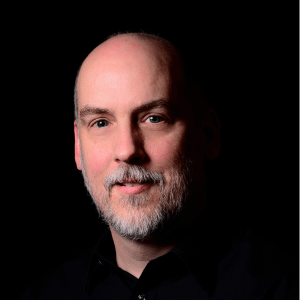
Mark Sooy is a theologian, teacher, author, and musician who serves in university instruction, authoring, conference speaking and leading, private music instruction and other forms of Christian service. Mark holds a Doctor of Ministry degree from LBC | Capital Seminary with a focus on the spiritual formation of leaders, an MA in Historical Theology from Grand Rapids Theological Seminary of Cornerstone University , and a Bachelor of Theology degree from Grace Bible College. He is also a commissioned graduate of the Colson Fellows (formerly known as the Centurions Program ).
Mark’s published work includes articles for periodical publications, devotionals, as well as three books: Essays on Martin Luther’s Theology of Music ; The Life of Worship: Rethink, Reform, Renew ; and, Lessons in the Silence of God.
A fourth book, co-authored with Elisabeth Sooy, is titled: Weekday Wisdom: Daily Reflections for Leaders and Administrators
Mark and his wife currently reside in West Michigan. For further information please visit: www.MarkSooy.com