Winning the North Carolina Senate Seat – Part 1: Finding the Right Mix
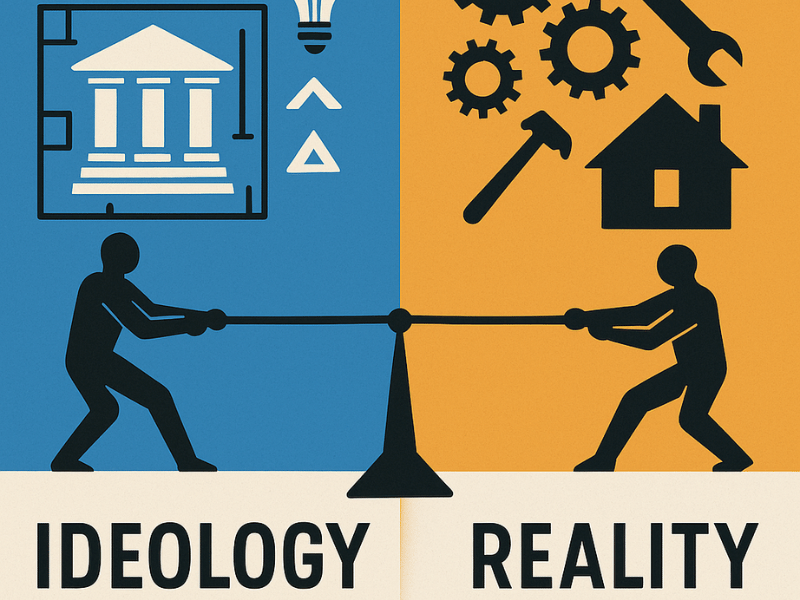
The right candidate will realize that politics is played out in the real world.
Reuel Sample
July 7, 2025
 Senator Thom Tillis’ decision to not seek reelection is now old news. He rounds out a career with a relationship with the Republican party that has been inconsistent at best. According to Heritage Action for America, Mr. Tillis has a lifetime score of 59% of voting with his party and a current session score – meaning this term of congress - of 70%. This voting record is abysmal, especially when compared to the 96% voting record of Ted Budd, the other Senator from North Carolina. The exit of Mr. Tillis was almost certain when President Trump let loose on him on Truth Social and promised to meet with primary opponents.
As a result, a Senate race that was going to gain national scrutiny in the first place just became more interesting. Politico and other media outlets are heralding Thom Tillis’ exit as a massive pickup opportunity for Democrats. While so far only Rep. Wiley Nickel is the only Democrat who has declared and is campaigning for that seat, all eyes are on former governor Roy Cooper to take the lead on the Left. On the Republican side Brooks Agnew, Don Brown and Andy Nillson have openly declared their intentions for that seat. The “heavy hitters” like Lara Trump, Michael Whatley and Pat Harrigan have yet to declare but are considered odds-on favorites.
A Primary of Primaries
All of this makes the primary election for Senator all the more important. While the general election is – or should be – all about the party that voters want to represent them in governance, the primary is all about the particular person that has the best chance of beating the opposition in November. Primaries in many ways give a sense of the party by putting forth the candidate that best represents the trending views and values at the time.
In theory.
What actually happens in primaries is only a small percentage of the party shows up to vote. For example, in 2022 in the last Senate race – which was also a race with no incumbent – then Congressman Ted Budd went on to garner roughly 765,000 votes to win the Republican primary. In December of 2022, there were roughly 2,237,737 registered Republicans in North Carolina. Assuming that every person who voted for Mr. Budd in the primary election was a Republican (they are not – North Carolina allows unaffiliates to vote in primaries), then the future Senator received the nod from only 30% of his party.
Short of motivating the Republican populace to show up for primaries, the challenge for this small percentage of primary voters who are also generally more politically engaged is to accurately select a candidate who will win in November. To do so, they must think about five very real political hurdles:
- How does he or she mix ideology with the very real practical world of politics?
- How widely is he or she known outside of a geographic sphere?
- Will he or she appeal to a wide mix of Republican and right-leaning voters?
- Can he or she get President Trump’s endorsement?
- Can he or she raise money?
Primary Voters Are More Ideological
Primary voters – especially Republicans – tend to favor ideology over practical governance. As summarized by Perplexity:
Republican primary voters are more ideological than the broader electorate, and this ideological intensity is a defining feature of the party’s primary process. This distinguishes them from Democratic primary voters, who, while also more ideological than general election voters, do not exhibit the same level of ideological homogeneity or emphasis on ideological purity.
Pure ideologues, however, have a hard time getting elected, and quite often a harder time governing.
Case in point #1: Lt. Governor Mark Robinson and the North Carolina Gubernatorial race. Mr. Robinson checked every box of conservative thought: he was a Christian, outspoken critic of the establishment, advocated for the complete end of abortion in North Carolina, and for the protection and promotion of traditional marriage. It seemed that Republicans agreed with him as he received almost 65% of the vote in the primary to advance him to the general elections.
In those elections, Mr. Robinson came in almost 15% behind the far-left Democrat candidate – now Governor – Josh Stein. In comparison, Donald Trump beat Kamala Harris by over 3 percentage points in North Carolina in the same election. Mark Robinson’s ideological purity could not garner the support of Republicans and conservative-independents enough to see through the scandals that plagued his campaign.
Case in point #2: Rep. Thomas Massie of Kentucky. With a lifetime voting record of 83% alignment with his party, Mr. Massie’s recent skirmishes with the president and the GOP – all over ideological concerns of big government and too much spending – have severally jeopardized his chances for reelection. As reported by Kaplan Strategies:
According to the survey of likely GOP primary voters in Kentucky’s 4th Congressional District, only 19% say they plan to vote to reelect Massie regardless of who challenges him. That number drops even lower — to 14% — if former President Donald Trump endorses a primary opponent.
Currently, Massie faces one declared challenger: registered nurse Nicole Lee Ethington, who leads him in a head-to-head matchup, 31% to 19%, with a majority of voters still undecided.
Mark Robinson and Thomas Massie are icons of the purist right. They endeavor to represent what a Conservative “should” be in politics. One failed dramatically in a state that elected a Republican for governor and the other will probably not make it through the next election. Come 2026, Republican voters in the primary need to understand that the most ideologically pure candidate might not be the best candidate.
Republicans Want Practical Results Balanced With Conservative Ideals
The “One Big Beautiful Bill” demonstrates that sometimes ideology must take second seat to practical politics. In many ways, this huge bill has plenty of items that conservatives should oppose. However, when faced with the equally conservative value of reducing taxes, most can see that this bill – now a signed law – will have huge beneficial implications of America.
Thomas Massie, Rand Paul and others are not wrong by pointing out the incredible spending that continues at the Federal Level. Entitlement spending makes up close to 70% of the entire federal budget:
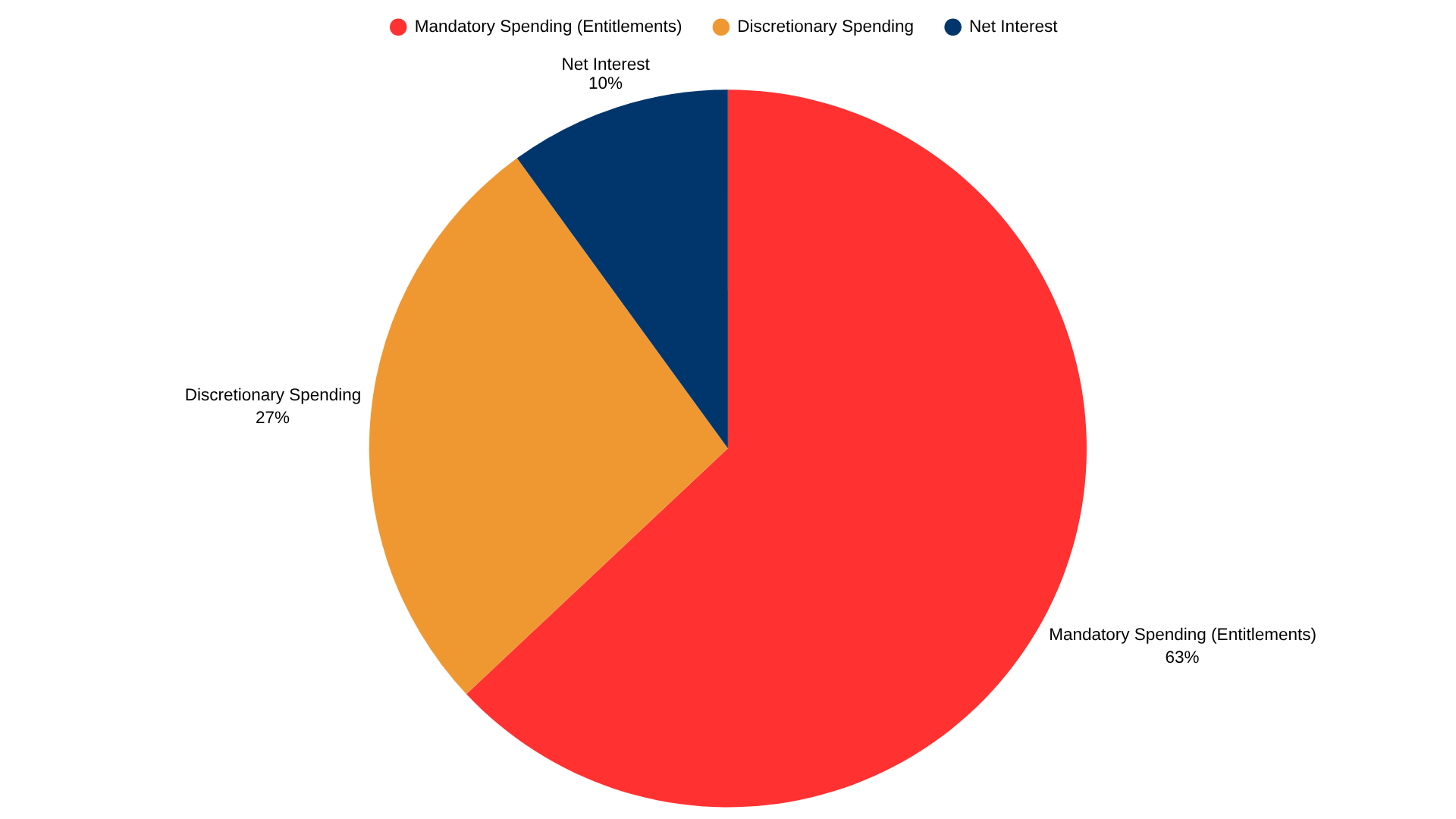
Fixing this out-of-control and unsustainable spending MUST be done. However, it must also be accomplished by Republicans who have one foot fully planted in solid conservative thinking and the other foot firmly planted in the knowledge of navigating real-world politics. Consider the challenges:
- Social Security: The surplus of funds needed for retirement and other benefits will be depleted by 2034. Fixing this issue is not just about privatizing Social Security (a very conservative idea), but the very practical reality of horse trading to get us there.
- SNAP and other programs. About 12% of Americans received SNAP (formally food stamps) assistance in 2024. A pure ideologue would say cut them loose. However, Republicans need to find practical, long-term solutions to getting people off these programs.
- Other assistance programs. According to USA facts, one in three Americans receive some sort of assistance from the Federal government. Conservative thought says that we need to break this trend of reliance – which is very true. But it takes a real-world analysis and understanding to get us there.
If we do not fix these programs, our country will spiral downward into spending that cannot be matched by revenue.
Asking the Right Questions
How do Republicans find the candidate who best can fix these issues? How do we find the right blend of ideology and practicality in our next Republican Senator? We must ask:
- Do you understand the issues that are undermining our country? If the answer is a litany of cliches and political “isms” then that person has no right to be in DC.
- What are your practical solutions to fixing those issues? If the answer is simply an echo of the question with some musts thrown in – yes, we must fix social security and I will make sure that I am the one to lead the charge – move on to the next candidate. These are real-world problems that need real answers.
- Will you work with your party to advance an agenda that might go against your ideological views? Americans love those who go rogue – who stand against all odds and swim against the current. Sometimes it is needed, but most of the time the only thing that happens when Republicans lose a vote due to the one of their own is that Democrats win.
- If the time comes, are you willing to take “The Big Hit” along with your party in order to fix things in the country? If not, they will become part of the problem.
Balancing ideology with practical politics is never easy. If Republicans have any chance of holding the Senate seat here in North Carolina, they must find a candidate who can successfully walk this tight rope. It will be even tougher for ideologically driven primary voters.
Let’s hope they can.
Next – the right candidate must also be a statewide candidate, not just appealing and known in just one geographical area.
 Reuel Sample is the Editor-in-Chief of The Wilmington Standard. A graduate of Grove City College and Princeton Theological Seminary, he has served as both a Presbyterian Pastor and a Navy Chaplain. He is the product of a classical liberal arts education combined with real world experience in politics and business and conservative Christian worldview firmly rooted in the Reformed tradition. He is the host of several podcasts including the NHC GOP Podcast, the Pastor's Voice, and co-hosts the Nikki and Reuel Podcast Experience. An avid sailor, he has sailed around the world as a youth and to the Azores as a teen as well as extensive trips up and down the east coast of the United States. He is honored to be married to his wife Pam and makes his home in Wilmington, NC.
Support Us
We rely on advertisers and patrons to support us in ongoing costs, and to expand our reach in other areas. Please consider becoming a Patron to support conservative news and opinions here in the Coastal Carolina Region.
Latest Podcasts

When Did We Stop Believing Women? Daily Update June 3, 2026
Gen Z Conservatives and the Modern Conservation Movement – Episode 42