Episode 41 Who Owns the Algorithm Owns the Movement
May 28, 2026
Watch on YouTube
Listen on Buzzsprout
Like and Subscribe




Politics is no longer something Americans tune into every four years – it has become a core part of our identity, and the algorithm is the architect behind that shift. In this episode, Reagan breaks down how engagement‑driven platforms reward outrage over nuance, turn movements into fandoms, and quietly decide which “version of reality” voters live in. She explains why decentralization is actually the Right’s biggest structural advantage in decades – if conservatives learn to build creator‑driven ecosystems, not just crank out press releases. And she makes the case for a conservative movement that can master meme culture and digital communities without trading away substance, policy competence, or America‑first principles.
What you’ll learn / Key moments
- 00:00 – Cold open, Memorial Day travel update, and why this episode builds on last week’s Gen Z–trust discussion.
- 01:00 – How politics became identity‑first and why the internet, not just elections, made it part of who we are.
- 03:00 – From one shared media environment to personalized feeds: how algorithms shattered the old “common context.”
- 05:30 – What engagement‑based algorithms really reward: emotional intensity, outrage, and tribal belonging instead of honesty and nuance.
- 09:30 – Why most people show up in politics for tribe, belonging, and meaning – not policy white papers.
- 13:30 – The rise of identity clusters and whole information ecosystems instead of simple party labels.
- 18:00 – Creator‑driven media, livestreamers, and influencers as the new gatekeepers of political power and trust.
- 23:30 – Meme culture as the “foundational language” of the digital age and why short, shareable content now carries whole ideologies.
- 28:00 – The upside and downside of outrage‑driven ecosystems: when winning the algorithm means losing the country.
- 33:00 – Why decentralization structurally favors conservatives and what we must build now: creator ecosystems, decentralized communities, and real governing competence.
What You Can Do
If you care about building a conservative movement that actually wins the future – not just the next outrage cycle – now is the time to plug in. Follow The Reagan Faulkner Show on Instagram, Facebook, TikTok, and Substack so you never miss an episode and can share this conversation with people who need to hear it. Stay connected with what’s happening on the ground by following The Wilmington Standard on Instagram and Facebook, where we cover local stories the legacy outlets ignore.
And when you start your day, vote with your dollar: grab a bag of Seven Weeks Coffee, use code REAGAN2026 at checkout, and you’ll send 10% straight to crisis pregnancy centers while supporting a company that shares your values. Let’s build the creator networks, communities, and institutions that put faith, family, and American self‑government back at the center of our politics
What's up guys, and welcome back to the Reagan Faulkner Show. I know, I know, I'm in a different set today. We are still traveling all across North Carolina.
I am home. It is Memorial Day week, I guess, but at some point, we'll be back in the regular set. I don't know.
That might be back when school starts. But anyway, last week, we really broke down why Gen Z is losing trust in institutions. What's been going on, what's been shaping that decline, and today, we're going to be going even deeper because here's what nobody in legacy politics actually wants to admit.
Quite frankly, politics has fundamentally changed, not just in tone, not just in reach, but in its core nature, politics has fundamentally changed. What it is to people, how they find it, why they stay, and what it means for their actual sense of self, what it means at the core of their identity. Politics is no longer something that Americans just kind of participate in occasionally, participate in on Election Day or every four years.
It's actually become part of who we are as a society and who we are as Americans. And the Internet is the core reason for why that has happened. Today, we're going to be walking through exactly how this has happened, why conservatives need to understand it better than literally anybody else in the country, and what it means for the future of the conservative movement.
So to break it all down, here are the core premises that we will be covering today. Why politics has become identity first and what drove that shift, how the algorithm killed nuance and weaponized tribal belonging, why modern political movements increasingly look like fandoms, and what decentralization means for conservative power. And lastly, critically, what leaders who actually want to win need to understand right now.
So let's jump right into it. It's going to be a big day, but it's going to be super, super interesting. Researching for this episode was absolutely fascinating.
It like literally created 20 different rabbit holes that I want to go down now. So I hope that y'all enjoy. Now politics didn't just get more polarized.
We didn't just get more divided as a country. It didn't just get more divisive or quite frankly, I guess you could say more political or more charged. It became a core part of people's legitimate identities.
Understanding why is the first step to actually doing something about it, doing something about kind of how to navigate this new political culture that we have. So to understand where we are, we need to really dive into where we came from. We need to understand kind of how politics were consumed in the past to understand how they're being consumed now and why it's different, what we're going to do about it.
For most of American history, political life really happened inside of a relatively small shared information environment. People disagreed. Sometimes they definitely disagreed bitterly, but they were largely reading the same newspapers.
They were watching the same network TV and same network newscasts. They were sitting in the same churches and they were sending their kids to generally the same schools. They shared environment and that created a kind of cultural baseline or a common context from which all disagreements stemmed.
The internet didn't just add new voices to that environment. It shattered this environment completely. Today every American practically lives inside of their own personalized media ecosystem.
Algorithms determine what you see. They determine what you get emotionally invested in and they determine the communities that you enter and specifically, crucially, they determine what identity gets reinforced every single time you open up your phone or your iPad or your laptop or your email or anything digital. And here's where most political operatives haven't like internalized yet.
Algorithms are not neutral pipes. It's not like neutral content gets pushed based on your political affiliation or based on your beliefs. Research published by the Knight First Amendment Institute at Columbia University found that engagement based algorithms consistently amplify divisive content.
Not because it's true, not because it's useful, but because it generates the most emotional reaction. The code doesn't care whether a post makes you informed or it makes you more educated or it makes you a better citizen. It cares whether or not it makes you click, whether it makes you share, whether it makes you rage or comment or stay on that certain platform longer.
That changes everything about social media, that changes everything about our political system when we are using social media to determine our political stances or what policies we want to support or where we align on the right left spectrum. Because once the political information environment becomes algorithmically driven, the rules of political communication permanently change. The algorithm didn't just distribute information.
It started selecting which version of reality got amplified and therefore which version of reality users are going to live in. So what does the algorithm reward? Because I'm still trying to understand the algorithm. I've been studying it for a while now and it's quite complicated for people who don't literally engage with it every day as a creator, as somebody that's trying to figure out why their video has zero views, zero likes, and it's just sitting in the ether somewhere on TikTok or Instagram.
Algorithm does not reward patience, it does not reward nuance, and it most certainly does not reward intellectual honesty. It rewards emotional intensity, it rewards moral certainty, it rewards outrage, very much it rewards outrage, and it rewards tribal belonging or something that we call tribalism. Ian Gauldy's piece, The Algorithm Where Nuance Goes to Die, I think that is a great title, makes this point precisely.
Social media platforms present themselves as a form of like a modern town square where discourse can flourish and it can go around the town square and talk to everybody regardless of political affiliation or race or religion or ethnicity, but the truth is that the algorithms structurally favor polarizing content, or like I said earlier, divisive content. Research from MIT and NYU has confirmed that emotionally charged and divisive content spreads significantly faster and further than neutral information online, not because people agree with it more, but because they actually react to it. They have that reaction where they comment or they rage comment or they share it with somebody and they say, oh my gosh, you won't believe this, or they text it to their mom, they're like, mom, look at this, this is so fake.
And that just continues pushing the content further and further because people are reacting to it. And algorithms, they measure reaction, not agreement, and again, not intellectual honesty or enhancing somebody's civic abilities. And this is a critical distinction.
The system isn't just passively reflecting what people believe, it's actively selecting emotional extremity and it's feeding it back to us as if that's what the mainstream looks like. So again, if you're a conservative, you're going to see things on social media and they're going to look pretty mainstream. And then when you go to a GOP meeting or you talk to your conservative friends, they're going to be like, no, I've never seen that.
You're like, oh my gosh, you haven't seen that? This is so mainstream. Well, actually, it might not be because of the way that the algorithm pushes out specific content. Creators and politicians who understand this game are winning.
People like Spencer Pratt, those who don't are being completely left behind. And if they're trying to run a campaign on social media or even use social media for their campaign at all, they are probably losing digitally very, very bad. If you don't understand the algorithm or if the candidate isn't able to use it to their advantage to reach more voters or to reach more people or to get into the national news the way that Spencer Pratt has.
Here's a truth that most political consultants are, quite frankly, still highly uncomfortable with. The majority of people who do not engage politically because of policy. Let me rephrase that.
I messed it up a little bit. The majority of people who engage with politics do not do so because of policy. They do not think about politics and say, oh my gosh, I really love page 145 of the one big beautiful bill.
I think I'm going to get involved in grassroots politics. That is not how it works today at all. Quite frankly, I don't think that's how it's ever worked, but definitely not today.
The majority of people who engage politically are doing it because of identity, because of tribe, because of belonging and because of meaning. Noma Magazine's analysis of what writer Renee de Rista, I'm so sorry if I mispronounced that, called the great social media diaspora describes what happens when sprawling online communities fracture into politically homogenous self-governing clusters. People aren't just choosing political parties anymore.
What they're choosing is an entire information ecosystem. Again, every single social media platform and online force kind of reaffirming each other to create their own little reality or safe haven of what they believe, and it's just feeding each other. They're choosing entire information ecosystems, entire social environments, and entire identity communities when you're picking Facebook groups or you're getting on things like Blue Sky or other decentralized platforms that aren't just mainstream TikTok for you page, Instagram for you page, your Facebook profile.
This is a fundamentally different phenomenon than traditional partisanship. Research on personality politics from NeuroLaunch reinforces this, saying political affiliation increasingly functions as a personality trait, not just really a civic preference. People's political identities are now tied to their psychological self-concept, how they kind of self-identify and portray themselves at a fundamental level.
This means that political disagreement often triggers the same emotional response as a personal attack. So if I said, you're dumb, and then I said this policy is dumb, now that people are self-aligning their core identities with their political beliefs, they are going to feel that you saying that a certain policy that's dumb that they align with or believe in, or as part of their, like, you know, whichever side they're on, whatever partisan side of the divide that they're on, they're going to feel that that comment is just as hurtful as walking up to you and saying you're dumb, because they literally self-align with it at an intrinsic core level. This is why political conversations feel so volatile online.
When you challenge somebody's policy position, you're not just arguing about governance or policy or politics or candidates. It's like feeling like you're actually challenging a core part of how that individual actually understands themselves and what they believe in, and even to an extreme degree, their own personal ethics and sense of morality. Modern political identity isn't just about who you vote for.
It's about who you are. And social media built that architecture. This is also why creator-driven media has exploded as a political force.
Think of live streamers. The first one that comes to mind, unfortunately, is on the left. But, you know, think about Hasan Piker and how, like, huge his following is, even though he's facing so much scandal right now and subpoenas and all of that.
He has a pretty large following. Again, look at Nick Fuentes, live streamer on the right. He has a pretty large following, and people, like, are identifying with these creators.
Think about, like, the Daily Wire. People identify with Ben Shapiro or they identify with Michael Knowles or, you know, they identified with Brett Cooper when she was on there. Now they identify with her individually instead of identifying with the Daily Wire because, you know, they feel like something was at play when she left.
Like, people are self-identifying with these creators. Tulane University School of Professional Advancement published an analysis of decentralized social networks that identifies a critical cultural shift being as centralized platforms fragment, trust flows increasingly through personalities and communities rather than institutions. People follow the voice that they trust, then inherit that voice's political worldview, often in that order.
So, you know, even think about it from spokespeople from Fox News or, you know, other CNN, ABC, wherever they might be, often you would see a personality leave that station and they would go on to create a podcast or go to another station or go on talk radio or go somewhere else. And you saw a lot of their fans, the people who would sit down for the six o'clock news every night or, you know, whatever that may be, they would follow that personality to that podcast or to that radio show or to that talk show or wherever it is to that other network, wherever it is that they may go. This is why figures like Joe Rogan and, you know, really Tucker Carlson, he's one of those newscasters that got followed, why their digital operations, Tucker's new digital operation, Joe Rogan, you know, his podcast and the growing ecosystem of Gen Z conservative influencers really do have political power, a huge degree of political power, not because they hold credentials.
I mean, look at Charlie Kirk, who, in my opinion, was an absolute genius, but no credentials at all. He understood how to utilize social media. He understood how to utilize influencer politics.
He understood how to utilize podcast culture to really get a movement growing and to modernize a movement. Again, not because of credentials or anything else, but because he understood the system. And yes, he did happen to be a genius without credentials, but he also understood how politics was shifting and what the modernization of the political parties was going to look like.
So these influencers, these creators, these personalities, they've built relational trust at a massive scale. And relational trust is the only currency that really survives in a fragmented media environment. It's becoming fragmented because people don't trust institutions.
So when it becomes fragmented and when they don't trust these institutions anymore, where are they going to go? Well, naturally, they're going to go to the voices, the personalities, and the people that they trust. Those people that have built that trust over the years, whether it's through podcasting, whether it's through social media posts, or whether it is through legacy media, but it was the one voice that they trusted and the whirlwind of what they felt like was lies or noise or distraction or a fundamental lack of authenticity. Institutions that have not figured this out are losing influence every single day.
If they don't figure this out, quite frankly, they will not survive what is coming in the future. This is really where things get fascinating and where conservatives have a huge opportunity that they are not fully exploring or exploiting. An analysis from the Tech Trends on memetic culture, which is like meme culture and political identity, argues that memes have evolved from internet humor into, quote, the foundational language of the digital age.
The primary vehicles through which political ideologies are distilled, how they are spread, and how they are made emotionally accessible to huge, huge, huge audiences. Again, think Spencer Pratt. Spencer Pratt is not getting on video and just going through policy, just breaking down policy.
He's not publishing studies or articles, just breaking down policy. He's putting out 30-second to two-minute videos that are basically memes, that are mocking what's going on, that are spreading the truth about what's going on, but that are entertaining and that are humorous to watch. He's using that to really spread the word about what is happening in LA and what he wants to do and the change that he wants to make, but he's doing it through meme culture.
So far, in my opinion, he is the best candidate that has done this so far. He is really changing the game for what candidates are going to need to do in the future. Again, he's not even a self-identified conservative.
He's a self-identified independent, but he's making his message known to mass audiences all across the country. It's not staying local to just LA, the way that our mayoral race in Wilmington happened. He is making it known to everybody that has a cell phone across the entire country and probably outside of the country too.
So think about what that actually means. Ideas that used to require a 500-page policy paper to explain can literally now be compressed into a two-second image that 10 million plus people will see before breakfast or throughout the course of their day or during their lunch break. Aesthetics, humor, shared references, and community identity are doing the ideological work that used to be done by party platforms, that used to be done by the RNC and the DNC and local GOP chapters throughout counties or statewide GOP chapters or the spokespeople for the party or the people who drop the press releases.
It's literally now just being done through meme culture and social media. The left really did understand this early on. This is why the progressive movements of the 2010s spread so effectively.
They spread through Tumblr, they spread through Twitter in a pre-Elon Musk world, and then eventually they really took to TikTok. If you are a conservative and you have ever tried to post conservative or Christian content on TikTok, you really do have another thing coming. Maybe you'll get on the quote-unquote right side of TikTok or you'll find your audience, but gosh, you have got to go through some crazy, insane haters to get there.
TikTok is definitely not conservative-owned. There is a very large amount of progressives, Democrats, and far-left ideologues on TikTok. But back in the 2010s, the Democrats, the progressives, they had the memetic culture architecture that made their ideas feel cool, they felt communal, they felt emotionally satisfying to adopt, they felt morally and ethically superior, and this was spreading through the original social media back when these platforms were new, back before they were mainstream.
Conservatives, now we're catching up, and in some respects, we are surpassing. We do basically have X, although now the left, they have blue sky. Particularly among young men who find the cultural energy of the right to be more authentic than what institutional liberalism offers is where we're really surpassing that.
Whether you like them or not, people like Andrew Tate, people like Clavicular, people like Nick Fuentes are really leading that young, right, male energy. Men that don't want to be feminist, they don't want to feel like beta men or soy boys. Those are the voices that are really leading them right now and that have really figured out how to utilize social media for something other than spreading progressive ideologies.
So this isn't something that just kind of happens by accident, I guess. It really requires intentional investment in cultural communication, not just political messaging. You can't just have a political correspondent or a consultant just take to social media and try to figure it out.
You really do need to understand the algorithms, you need to understand the systems, you need to understand what people go to social media for and how to have them stay on your video, how to hook them before they move on and they watch a Golden Retriever video or they get rage baited by something. You want them to stay on your video and that is why going viral is not an accident. Spencer Pratt's not an accident.
He knew exactly what he was doing and that's something that conservatives really need to learn how to do more mainstream than having this once-in-a-blue-moon unicorn candidate that's capable of doing it or once-in-a-blue-moon unicorn influencer who's capable of doing it. World reporters' examination of the interconnection between politics and entertainment makes this point directly. When political messaging blends with entertainment culture, it becomes emotionally immersive.
The most effective political communicators today aren't just making arguments. They're not just doing the discourse. They're creating experiences that people want to be part of.
That's why we see digital communities. That's why you can join creators discords or you can join like there's something where you can join like a group chat. I know Isabel Brown has one.
I believe a couple of other Jordan Peterson has one as well on Instagram. You can like join a group DM and these influencers will send out like pre-curated messaging or articles or things like that and you literally feel like you're like a part of their community or a part of their friend group. They are creating experiences that people want to be a part of.
That's fandom logic applied to politics and it works. That is creating communities of people with like a like-minded hobby. Whether that like-minded hobby is enjoying a certain influencer or video games or something like that.
They are literally applying fandom logic which has been around for you know over a decade probably two or three decades. I guess two decades at this point. They're applying it to politics and and it is working.
It really is working. The left built a cultural movement and they won elections with it back in the 2010s when these platforms were brand new but it is the cut. The left built a cultural movement and they won elections with it back in the 2010s when these things were brand new.
Conservatives need to build one too not by copying them. That would be quite obvious and they will continue advancing but by understanding the mechanisms and doing it even better than how they did it in the 2010s because quite frankly there hasn't been a whole lot of advancement on their side in the last 26 years. So here's where I want to make a direct argument to every single conservative that's listening right now.
Decentralization is not a threat to conservatism. It is actually the greatest structural advantage the right has seen in literally decades. If we move intentionally which is very very important.
The culture mosaic analysis of decentralized society describes a shift from hierarchical top-down power structures toward distributed networks where authority flows through communities and voluntary associations. That is by definition a conservative model of social organization. Subsidiarity, local accountability, community-driven authority, those are our values literally at our core literally you know at the dawn of Thomas Jefferson and the enlightenment these individualistic traits are at the core of our values as conservatives.
The left built its power through centralized institutions. They don't really want you to think about it. They want you to think that they're like the owners of decentralization but think about it.
The left built their power through these centralized institutions. Universities, legacy media, government bureaucracy, corporate HR programs. Those were the checkpoints of cultural and political influence for the last 50 years.
The long march through the institutions but decentralization disrupts every single one of those choke points. When information flows through a thousand different podcast feeds, a hundred different substack writers, and millions of TikTok creators rather than through like three TV networks and a handful of newspapers, local and national, the institutional left loses its gatekeeping advantage and the right which has always been stronger at the grassroots level whether it be messaging, whether it be outreach, whether it be organizing, we gain. We gain power.
We gain influence because grassroots is our strength as conservatives. But only if we build, only if we actually embrace this intentionally and methodically and like smartly, like we have to do this with a purpose, not just a bunch of random people trying to figure this out and making AI slop content. That is not going to work.
A two-lane analysis of decentralized social network infrastructure notes that the shift from platform-dependent to protocol-based social infrastructure means communities can now self-organize around shared values without needing permission from Silicon Valley or gatekeepers, to be honest. Again, think about those Instagram DM communities with your favorite influencer. Yeah, Meta kind of owns Instagram.
Meta does own Instagram, but still you are using that to your advantage. You are creating these communities. Now, if conservatives move to blue sky or continue using X or create their own social media network that's decentralized that uses these themes, then you really do get away from Silicon Valley.
You do get away from having to share your data with all of these massive tech companies. You get away from potentially being banned or de-platformed or being censored or having your post taken down because it is fully decentralized and self-governed, and as conservatives, self-governance is what we love. The gatekeepers are losing their gates, to be quite honest with you.
The question is who builds and what replaces them? Now, I'm not going to pretend that there are absolutely no risks in identity politics. Identity first politics are riddled with potential issues if exploited or done incorrectly or people try to grift and take advantage of them. I think intellectual honesty requires acknowledging these risks and these issues directly.
The same algorithmic dynamics that enable grassroots movements to scale also create powerful, like so, so powerful incentives toward outrage, radicalization, and tribal escalation or like radical tribalism. The night Columbia research found that engagement based systems don't just amplify division. They often misrepresent what mainstream activity, what mainstream actually believes making fringe positions appear more prevalent than they are, and I'm sure as I'm saying that a lot of listeners right now are thinking of various stories that they've seen on social media, various stories that they take issue with, various stories that they think, wow, this looked really mainstream.
This had however many thousands of likes, but when I called my friend about her, when I went to my GOP meeting about it, no one seemed to understand it. Yes, that is what these algorithmic dynamics do. They make you think that fringe ideas are way, way, way more mainstream or prominent than what they actually are.
Again, that doesn't mean we ignore these ideas because these are still voters unless they're like terrible ideas or hate group type ideas, then we don't really engage with them, but if there are actual issues that people are having and they might look mainstream, but they actually are fringe, we still don't ignore those voters because they still have a voice. They might not win. That's why we have the representative republic or constitutional republic that we do instead of mob rule democracy, but we do still at least listen to the voters and take their thoughts into consideration.
Ian Galdi's analysis puts it clearly. Remember we talked about this analysis a little earlier on. Creators who want to stay visible in algorithmic systems face constant pressure to become more extreme because extremity is what gets rewarded.
The snake eats its tail, for lack of better words, and the result is a political environment where the most emotionally provocative voices are systematically elevated over the most thoughtful ones. That is why you see rage baiters on Instagram instead of people that are doing thoughtful policy analysis because it doesn't get shared. It doesn't get commented on.
People listen to it and they say, oh, that makes sense. Scroll. This is a real danger for the conservative movement because if we build a cultural ecosystem that rewards performance over substance, outrage over insight, and tribal signaling over actual governance, then we win the internet and we lose the country, and that is not what we want to do.
We do not want to become professional rage baiters and professional influencers and then somebody comes to power, gets elected, and they don't know what in the world they're doing. They don't know how to make policy. They're throwing stuff at the wall to see what sticks, but they won the internet.
That is not what we want at all. That is like personally my biggest fear to see. The goal is not to be the loudest.
It is to be the most trusted, and trust is built through consistency, competence, and genuine connection, not escalation. Being good at the internet is a means to an end. Look at Spencer Pratt.
He's good at the internet, but I fundamentally believe that he has good ideas and good policy for LA, but he's good at the internet because it's a means to an end. He needs to get his name out over Karen Bass, so that is what he's doing. The end is actually governing, actually building, actually solving problems for American families, and actually putting America first, not putting your own clout or your own profile or your own influence first.
It's putting America first and doing the things that you need to do in order to put America first. So where does this go? We're going to go into my honest assessment of really what all of this means and where we are going. The next generation of political power in America is going to be built through a couple of things.
First, we've got the creator ecosystem and not the historic press releases. Authentic voices with real legitimate audiences will drive more political movement than any number of traditional ad buys or press releases. Decentralized community infrastructure is another big one.
Tools, platforms, and networks that give conservative communities the ability to organize, communicate, and coordinate without dependence on institutions that are controlled by political opponents. We don't need to use the institutions. We don't need to use the colleges and the bureaucracy and the social media platforms that might de-platform or censor us.
We need to build our own decentralized communities and decentralized community infrastructure. Personality-driven trust rather than just institutional authority. The leaders who will shape the next decade are the ones who can build genuine relationships with audiences at a mass scale.
People who feel known, not managed. People who feel authentic, not establishment. Cultural fluency and understanding the language of memes, of aesthetics, of humor, and the digital community well enough to communicate conservatism in ways that feel native to the internet rather than imported from a 2008 campaign playbook or, you know, the campaign playbook from the Reagan administration.
Those will not fly anymore. We've got two years until Gen Alpha starts voting. Gen Z is basically all of us are voting at this point.
I think we all might be voting at this point, to be honest, if Gen Alpha is about to start voting in two years. So we're native to the internet. We grew up on it.
Gen Z is really unique. We're kind of like the millennials of internet nativism, I guess, because we started off having the internet all the way. We didn't have to boot up the internet or anything like that, but we had like the DS and the internet couldn't go everywhere with you.
You had to go home to play your computer games. We didn't get iPads until we were like five or eight. So it's different for us because we had a period of our life where it wasn't all the way, and then we had a period of our life where we did grow up on it.
And you also have different ages of Gen Z. Like my boyfriend's sister, she grew up on the internet. She had access to it the whole time. My boyfriend and I, we didn't really use the internet until we were maybe five, like with parental supervision, and it was weird.
But then like when we were eight, nine, and ten was really when we played video games. So it's a really unique subset of people, Gen Z is. Substance beneath the signal is also extremely important because ultimately identity politics without policy wins is just entertainment.
It's no different than, you know, mindlessly doom scrolling on TikTok or Instagram reels or watching just garbage reality TV. You have to have the policy wins to back up what you are saying or to back up your identity politics. The movement that combines cultural fluency with genuine governing competence is the movement that ultimately wins long term.
The leaders who understand that political movements are now built socially before they're built institutionally. Those are the people who are going to shape what this country looks like in the next 20 years, 30 years, 40 years. The conservative movement doesn't need to play by the left's rules.
It needs to understand the new rules of political communication and win on our own terms. So here's what you really need to take away from today's episode. The transformation of politics into identity is not going to reverse.
We're not going to backtrack. It is what it is, and it's probably only going to get more extreme and more identity first. The algorithmic amplification of tribal belonging is baked into the infrastructure of social media, and at this point, it is baked into the identities of two subsets of the voting base, Gen Z and Gen Alpha, and we'll see where Generation Beta goes.
But it is baked into the infrastructure of online, of the digital universe, and into two subsets of the voting population. The fragmentation of the information environment is permanent. At least the degree of decentralization that we have now isn't going back, and decentralization will most likely be our future, further decentralization.
That means the institutions that dominated political life for the last century, legacy media, credentialed experts, party machinery, the establishment, are going to continue losing influence. The creators, the communities, and the decentralized networks that speak human and build trust at the rational level are going to continue gaining a huge advantage. For conservatives, this is a moment of genuine opportunity and excitement, one that we have not seen in decades or longer.
The values that define our movement, individual liberty, local community, earned authority, constitutional order, are not just compatible with the decentralized era. They fit it perfectly. They are its natural political expression.
But the window to build is not unlimited because we all know how fast technology moves. The question is whether we invest in building the infrastructure, the cultural ecosystem, and the creator networks that will carry conservative ideas forward, or whether we cede this ground to people who understand the moment that we are in right now and that we are moving on right now. Do we want to cede this massive advantage and let the left and let the Democrats and let anybody else take it? Or do we want to be the leaders and the change makers and the movers in this movement so that we can really progress conservative ideas? Because like I said, decentralization naturally fits conservatism, naturally fits the ideals of our founders and what they had in mind for our country when they built it 250 years ago.
I know which side I'm on, and I'd like to think that I know which side y'all are on too. So let me know what you think in the comments. I want to know, is identity first politics something that we work with and channel toward real outcomes? In your opinion, where do you stand on that? Has it gone too far? Do you think it'll continue going further? And what does the conservative movement need to build right now to stay ahead? You can, you know, we're in the midst of the midterms.
What do you think conservatives are missing out on? And what do you think the movement needs to build to change that? Let me know in the comments. I would love to hear it. I would love to do a video on kind of the best ideas that people have that they think that conservatives need to move on in 2026 and beyond.
This episode gave you value. Subscribe, share it with somebody who's serious about the future of the movement and leave a comment, leave a like, tap that follow button. It really does make a difference.
And make sure to check us out at the Wilmington Standard at the Reagan Faulkner show on Instagram, Facebook, TikTok and X. And lastly, if you have not gotten your order of seven days coffee yet, be sure to check it out. It is by far the best coffee I have ever had. It is smooth.
My boyfriend said it is the only coffee that he will ever consider drinking black. So be sure to give that a try. Use code Reagan 2026, all caps.
Thank y'all so much. And I will see y'all next week for another exciting episode.
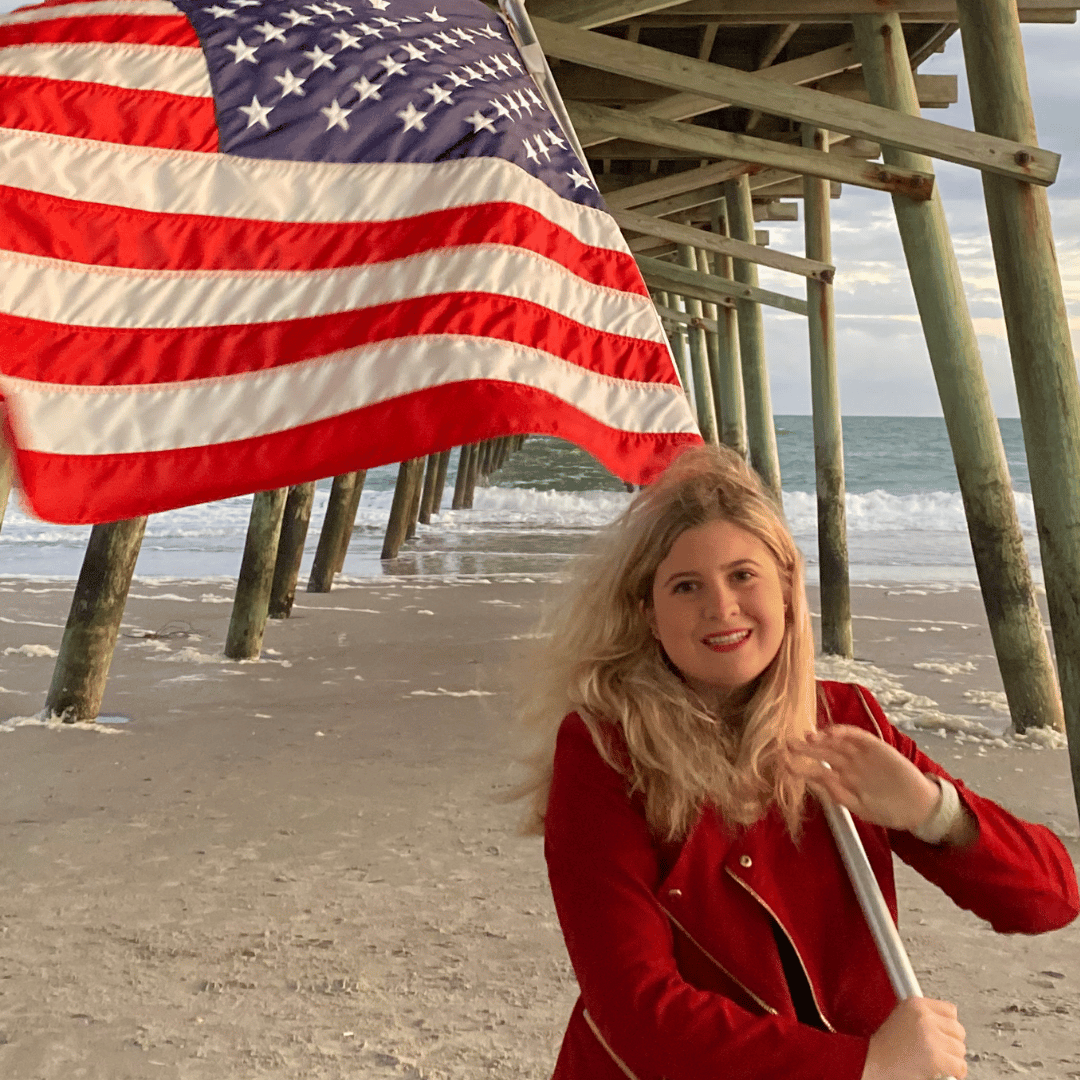 Reagan Faulkner is a student at the University of North Carolina Wilmington, where she currently serves as president of the university’s College Republicans chapter. Her leadership and passion for civic engagement have earned her national and local recognition, with appearances on The Ingraham Angle on Fox News, coverage in Fox Digital and The New York Times, as well as features in Wilmington-area news outlets and television stations.
Politics has been a lifelong calling for Reagan—fittingly, she was named after President Ronald Reagan. From an early age, she has been driven by a commitment to public service and a belief in the power of young voices to influence the future. She is especially passionate about educating the next generation of Americans on how to mobilize, inspire their peers, and create meaningful change.
Outside of her political work, Reagan finds joy in the simple things: reading, spending time at the beach with her boyfriend and friends, and boating with her family. Her values center on the preservation of American traditions such as the importance of the nuclear family, Christian principles, and cultivating respectful discourse across differences.
Reagan brings to the podcast not only her personal convictions but also an unwavering dedication to fostering conversations that challenge, encourage, and empower listeners to think deeply about the values that shape our society.
Opinion Articles

America: Reflections of a Grateful Immigrant on America's 250th Anniversary
Safe as Tylenol
