A Divided Christianity
What is the proper interplay between personal forgiveness and corporate resistance to evil?
Sam Ibraham
October 3, 2025
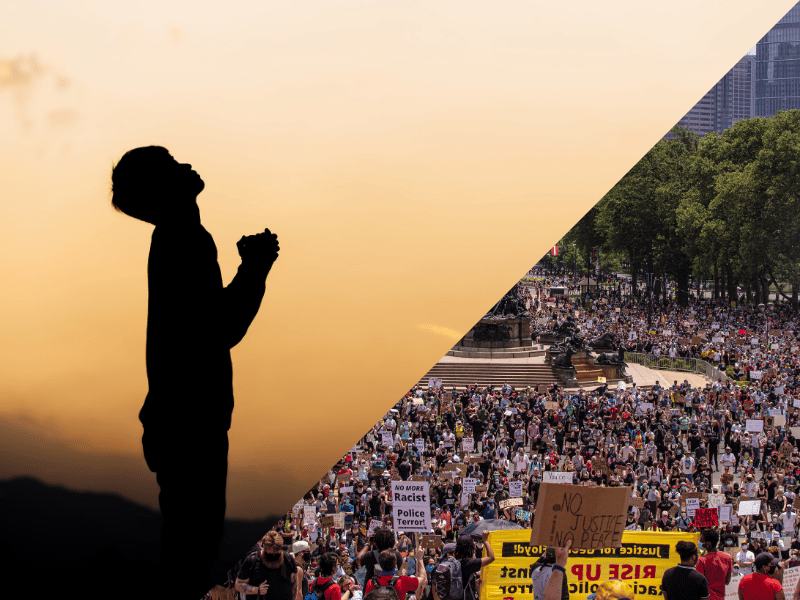 At the end of his September 30th daily podcast, Dr. Albert Mohler mentioned an opinion piece published in the Washington Post by Shadi Hamid. Hamid, a Muslim commentator, offered his reflections on Charlie Kirk’s funeral in an article titled “Two versions of Christianity battle for America’s soul.” In it, he opens with the claim:
“There are two forms of Christianity pulling American politics in opposite directions. At Charlie Kirk’s memorial service, tens of thousands of mourners witnessed something extraordinary: the explicit theological division of the American right. On one level, they saw faith calling for forgiveness and loving one’s enemy. But they also saw a faith that weaponizes politics through righteous anger — and the chasm between them might be unbridgeable.”
In essence, Hamid argues that Christianity is divided into two irreconcilable camps, one puzzling to him and the other more acceptable. Unsurprisingly, he expresses greater comfort with the vision of Christianity that remains quiet and compliant — praying, forgiving, and sitting passively in the pews.
I believe this interpretation not only misrepresents Christianity but also misunderstands how forgiveness and righteous resistance coexist in the faith. A response is necessary, both to clarify Hamid’s confusion and to assert the true Christian position.
No, Mr. Hamid, There Is No “Division” in Christianity
Shadi Hamid frames the memorial for Charlie Kirk as exposing “the explicit theological division of the American right” — one Christianity of forgiveness and another of righteous anger. But this is a false dichotomy. Other than former President Trump’s remarks, what we witnessed was not a division within Christianity but two very different contexts: the personal forgiveness of a grieving widow toward her husband’s killer, and the collective response of citizens to the dysfunction, confusion, and invasion undermining our nation.
Christianity has always distinguished between the personal duty to forgive and the corporate duty to protect the innocent and restrain evil. That is not a contradiction. It is precisely how Christian ethics are meant to function in a fallen world.
Mr. Hamid confesses that “for those of us who are not Christian, the contradictions of American Christianity can be puzzling.” Indeed, they are puzzling — to those who do not understand the Christian faith. But the deeper puzzle is how a self-described Muslim opinion writer can overlook the ongoing march of Islamism around the world while lecturing American Christians about forgiveness and power. I wonder if Mr. Hamid would preach the message of love, forgiveness and tolerance to his Muslim cohorts?
The record speaks for itself: North Africa and the Middle East, once the cradle of Christianity, have been hollowed out by centuries of Islamic conquest. In Nigeria alone, tens of thousands of Christians have been murdered in recent years by Islamist extremists — without a murmur of protest from the “peaceful” Muslim world, and without a word of outrage from the progressive Left in the West.
Hamid approvingly cites a “Christian political philosopher” who portrays Christianity as awkward in politics and who romanticizes early martyrdom as a model for Christian life. But Christians are not commanded to sit quietly in the pews while their culture is destroyed. We are called to personal forgiveness, yes — but also to collective action against unrighteousness.
Today’s unrighteousness is clear: the confusion of men and women, the murder of the unborn, sexual chaos, the destruction of the family, the demonization of law enforcement, open borders enabling criminals and terrorists, and yes, the infiltration of radical Islam into America, (please know Mr. Hamid, your side has already tipped their hand as we hear your imams and radical activists spew their messages of their intent to transform America.) These are not abstract “culture war” issues; they are spiritual and moral crises. A Christianity that refuses to resist them is not authentic Christianity but one that is in surrender.
Hamid derides those who frame politics as religious combat, claiming they see their opponents as “demonic forces requiring defeat rather than conversion.” But Scripture is unambiguous: Christians are engaged in a spiritual battle. We wrestle not “against flesh and blood” but against principalities and powers of darkness (Ephesians 6:12). That battle necessarily manifests in public life.
There is no contradiction or “shift” here. There is the proper interplay between personal forgiveness and collective resistance to evil. Forgiveness does not preclude action; it strengthens it.
It is telling that Hamid quotes Russell Moore to validate his point — a choice akin to quoting a dissenter to explain the core of the faith. As a Muslim, Hamid may prefer a Christianity that is docile and silent in the face of persecution, discrimination, and murder. But American Christians are awakening. The sleeping giant will not remain passive.
We will continue to forgive personally — but we will also take collective action to repel the forces of evil, restore our culture, and defend our nation. That is not hypocrisy. It is fidelity to the faith once delivered to the saints.
A Word to American Christians
Brothers and sisters, do not fall into the trap of believing that our faith demands only silence, love, and forgiveness while the world around us collapses. Yes, we must forgive personally, as Christ commanded — but forgiveness is not passivity, and love is not surrender.
We must be courageous, for when we stand against the lies and darkness of our age, we are not merely engaging in politics; we are doing God’s work. Courage is not optional. It is the defining mark of those who will not bow to idols, whether ancient or modern.
We must not be distracted by the sneers of the media or the accusations of those who shame us into silence. The task before us is too great. We are called to fight on — with conviction, with clarity, and with persistence — to save America from moral collapse.
We must win this war for the sake of our children and their children. If we falter, they will inherit a nation where truth is suppressed, faith is mocked, freedom is extinguished and foreign gods demand allegiance. That is a legacy we cannot allow.
And finally, we must remember that America was once, and must again be, a beacon of light to the world. Not a beacon of confusion or corruption, but a city on a hill — a nation that, despite its faults, sought to reflect God’s justice and truth. That light has dimmed, but it can shine again if we have the courage to resist evil and to restore righteousness.
The time for hesitation is over. Stand firm. Be bold. Forgive personally, but fight collectively. For the soul of America, for the generations to come, and for the glory of God.
Download Article
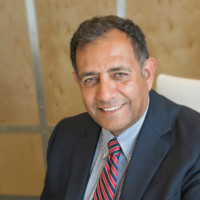 Samuel Ibrahim is a follower of Jesus Christ and a grateful immigrant who grew up in the Middle East before finding freedom and opportunity in the United States. A husband of 38 years, father of four, and grandfather of three, he built a four-decade career in technology and business, including founding and successfully selling a software company. His love for America is rooted not in sentiment but in lived experience: he knows firsthand what it means to leave repression and embrace liberty.
Samuel writes not from academic theory or professional title, but from conviction. His analytical approach, shaped by years of problem-solving in business and technology, informs a clear and sober assessment of America’s cultural and spiritual decline. His journey—from a region marked by authoritarianism to a nation founded on biblical truth and ordered liberty—gives him both perspective and responsibility.