
Episode 38 The Gen Z Power Play: Why Politics is Your Secret Career Weapon
April 23, 2026
Watch on YouTube
Listen on Buzzsprout
Like and Subscribe




Gen Z and Gen Alpha are stepping into adulthood in a time of AI disruption, insane housing costs, and questionable college ROI—and politics sits at the center of all of it. In this episode, Reagan Faulkner explains why tuning out of politics doesn’t keep you clean; it just makes you easier to control in a system already pricing you out. She shows how getting involved—especially at the local level—becomes your secret career weapon, giving you elite communication skills, networking access, and real leadership experience that most of your peers will never have.
What You’ll Learn / Key Moments
- [00:07] Gen Z and Gen Alpha are tuning out of politics
Why younger generations see politics as toxic background noise—and why that’s dangerous. - [00:49] How politics already controls your housing, degree, and future
The link between policy, the job market, AI disruption, and whether you can afford to start a life. - [02:13] Entering adulthood in a 2008-level disruptive era (plus AI)
Comparing today’s economy to the 2008 crash and the dot-com boom on steroids. - [03:31] Politics as ROI: the #1 skill employers want (communication)
How campaigns teach high-pressure communication better than any college lecture hall. - [04:00] Door-knocking: a masterclass in sales and rejection-proof confidence
Learning human behavior, persuasion, and how to turn rejection into fuel on the campaign trail. - [05:40] Networking cheat code: 70% of jobs come through connections
Why political volunteering puts you in rooms with CEOs, donors, and community power players. - [06:18] Early leadership, real grit, and why showing up beats a 4.0
How early political leadership and simply showing up matter more than a perfect GPA. - [10:35] Why your real leverage is local, not in D.C. drama
Federal dysfunction vs. the tangible impact of local GOP work, school boards, and county commissions. - [15:23] One simple challenge: do one thing this week to get involved
From attending a town hall to researching your school board—how to take your first step.
Key Takeaways
- Ignoring politics doesn’t protect you—it disarms you.
- Campaigns and local activism are a fast track to skills and connections most of your peers never build.
- You can start with one small action this week and still change the trajectory of your career—and your country
What You Can Do
If this episode challenged how you think about politics and your future, don’t just scroll on—do one thing this week to get more informed or involved, whether that’s a local GOP meeting, a school board or county commission meeting, or volunteering on a campaign. To support the parallel economy while you’re stepping up, check out 7 Weeks Coffee and use code REAGAN2026 for 10% off—they donate 10% of every sale to pro-life pregnancy centers across the country. Make sure to follow The Reagan-Faulkner Show and The Wilmington Standard on Instagram, Facebook, and TikTok, hit subscribe, and drop a rating and review with the next topic you want Reagan to tackle.
 What's up guys, and welcome back to the Reagan Faulkner Show. We are heading into a massive midterm season, and what I'm seeing is a lot of people my age, Gen Z and even the people younger than me, Gen Alpha, are completely tuning out of what's happening. They think politics is old people arguing on TV and Fox News, you know, hate comments and toxic comments on TikTok and Instagram, or social media rage baiting influencers that are just using clout for monetization and they don't actually really care about politics, to be quite honest.
But there's way more to it than that, and these should not be reasons for my generation to turn off and tap out of politics. Here's the reality. According to the Pew Research Center, we are the most educated, the most diverse, and the most online generation in American history, and by 2028, we're projected to make up nearly one third of the entire U.S. workforce.
We aren't the future anymore, guys. We are the present. Today, we're going to be breaking down why getting involved in politics is essential, whether it's a campaign, a local GOP in your county, or just understanding policy.
It's not just a civic duty. It is a career advantage, it is a personal growth accelerator, and quite frankly, it is a survival skill in a world that's trying to price our generation out of existence. They tell you to stay out of politics because it's toxic.
I've heard, oh, you really don't want to know how the sausage is made. Are you sure that you want to go into politics? Let me tell you, politics is the reason that you can't afford the house. It's the reason that your $100,000 degree is being replaced by a chatbot.
When you ignore politics, you aren't being above the fray, you're not being anything special, you are just being a victim that's easier to manage because you don't know what's happening in your own country. The institutions are at a record low for trust. If you aren't at the table, you're going to be the one on the menu and you're going to be the one being taken advantage of by said institutions.
Let's look at the facts. We are entering adulthood during one of the most disruptive periods in modern history. You talk about the dot-com boom, you talk about the 2008 recession, but we're entering at a time that we see our economy is a little unstable.
We see AI and we don't know what to do with it. This is almost like 2008, not as bad as 2008, obviously. We're not even in a recession or close to a recession, but we don't know what our economy is going to look like paired with the dot-com boom on steroids.
This is an extremely disruptive period to be entering into adulthood. The job market's being reshaped by AI, housing affordability is at historic lows for young adults, and college costs have skyrocketed while the value of those degrees are being questioned every single day. Just look at the episode from last week where we looked into why college is a scam.
These aren't abstract political talking points. These are the variables that determine if you can afford to rent or if you'll ever be able to raise a family or if you're ever going to own your own home. You can ignore politics, but politics will never, ever, ever ignore you back.
It is the system that shapes every single opportunity that you will ever have. Now, let's talk about the return on investment of getting involved in politics. A 2023 LinkedIn survey found that communication is the number one, I'm saying the number one skill employers look for across all industries.
That is every single industry that you could be interested in, communication is the number one skill that employers are looking for according to a 2023 LinkedIn survey. Where do you learn to communicate under pressure? I'm going to tell you it's not in a lecture hall, that's for sure. You learn it on a campaign trail.
For example, when you're knocking on hundreds of doors or making hundreds of phone calls to utter and complete strangers, you are learning human behavior. You're learning what motivates people to make a decision and what moves them to take action. Whether you want to be an entrepreneur or a lawyer or a doctor, you have to know how to sell an idea.
As Simon Sinek says, you have to start with why. In politics, if you can't explain the why of a policy or a candidate to a complete stranger on their porch in 30 seconds, you've lost. That is a masterclass in professional selling that most people don't get until they've had at least 10 years in a corporate career.
Most people in our generation are terrified of rejection. They can't handle a mean comment on the internet from a complete stranger, much less they can't handle a door getting slammed in their face or getting cussed out on somebody's front porch. But if you spent a summer knocking doors for a candidate that you believe in, you like them, you believe in what they're saying, you think they should really, really, really be in office, you've developed a level of tough skin that corporate America, quite frankly, can't break.
You don't just learn how to handle rejection, you learn how to use it as fuel. That's why campaigners win in business. That's why we see so many candidates that started off as business people or entrepreneur or professional sellers.
Because while everyone else is crying about a microaggression in corporate America at their accounting or law office, we're already onto the next lead. We didn't let it upset us. We didn't let it break us.
We were just like, ah, that stinks, and we moved on. Here's a stat that should utterly and completely change how you spend your weekends, especially in this midterm cycle, especially when there are opportunities every day, every weekend to get involved with a GOP, to get involved with a candidate, to get involved with a political action committee. A Georgetown study found that 70% of all jobs, 70% of all jobs are found through networking.
Politics is the ultimate networking cheat code. When you volunteer, you aren't just stuffing envelopes. You're in a room with business leaders, with donors, and community organizers, the exact people who can change your life with, quite frankly, one phone call.
Harvard Business Review has repeatedly found that early leadership experience is the single best predictor of long-term success, and what is a better example of being a leader early in life than literally going out and knocking doors on your own with nothing but a canvassing walkbook and a dream? Being politically literate, it signals maturity. It shows an employer that you aren't just passive. You're a builder.
You're somebody that wants to step up and take action and change your country for the better. You're someone who understands how the world works, and you're not afraid to get your hands dirty in order to change it. Stop spending $200,000 on an MBA just to quote-unquote network.
Y'all, that is so crazy to even have to say, but it's just not worth it. Go volunteer for a local GOP race. You'll be in the same room as the CEOs, as the lawyers, and the power players who actually run your city or your county or your state.
They don't care about your GPA. They care that you showed up when it mattered. I'll say, if your GPA is a 2.0 or lower, they might care about that a little bit, but it's not the competitiveness that we see in college where you might have a 3.988 and somebody else might have a 3.989, and you're fighting it out.
These people do not care about that. They do care that you showed up when it mattered, that you put yourself second to something more important, that you weren't sitting at home playing video games or you weren't hung over from a night at the bar the night before, that you got up and that you put politics and the future of America before yourself and whatever you wanted to do on your Saturday morning or your weekday morning. One campaign season will give you a contact list that a cubicle never could.
Think about it. I don't know if any of y'all have played GTA, but if you think about the GTA phone book, that is politics. That is what you will get from just accepting every opportunity.
Somebody in the political sphere, I can't remember who it was, told me that you will get more out of just showing up, even if you know nothing about politics. If you just show up and somebody tells you to do something and you do it and you complete it well, you're going to get asked to have more responsibility. You're going to be given more opportunities and you're going to be able to climb a political ladder.
And then if you graduate from high school or college and you don't want to climb that political ladder anymore, you don't have to, but you have had more experience than most people your age. You have more contacts than people your age. You've heard more stories from older people that have more experiences than you, than most people your age.
And all of that translates to greater marketability for your future in the career that you actually do want to pursue. I get it. Politics can be so incredibly exhausting, but burnout isn't a sign to quit.
It's a sign that you need boundaries. We cannot all be 100% into politics every single day, 24 hours a day, 365 days a year. That is not going to work.
You need to have boundaries. You need to focus on local issues where your impact is visible. I know that we all care about things that are happening at the federal level, but to be honest, there's very little that we can do to change it.
I saw a video this morning where Ilhan Omar, and I'm so sorry if I butchered her name, but a reporter was asking her if she wanted to explain the financial mistake that happened in her taxes or whatever that showed that she was just this exponential millionaire after it shouldn't mathematically even be possible. And you know, everybody kind of assumes that there's fraud. I personally assume that there's fraud.
And she said, I'm not going to tell, you know, I'm not going to tell you anything. And I think she called them Jack dot dot dot or Jack, the other version of that. But basically, she said, I don't have to tell you anything.
And we think that our elected officials, they work for us and they do work for us. That's how it should be. But there's a new dynamic on Washington at our federal level where our politicians, they don't want to be open and honest anymore.
They don't think that they work for us. They don't think that the constituents are the ones that employ them. So if you want to make a real difference, it is going to be at the local level.
It is going to be where your impact is visible. It is going to be with those community leaders at your local county GOP and getting involved there and bringing your friends to be involved there. And then eventually y'all can grow and send the candidates that you want to D.C. to replace these people, to replace the establishment, to replace the selfish ones that don't think that they work for you and that just are power hungry little goblins that are up in Washington, D.C. That is what you can do at a local level instead of whining and complaining on the internet about what's happening at the federal level.
But you're never going to make a dent in it. You can make a dent in it at the local level and do this by joining a campus organization. You can do this by attending one of your GOP's town halls or a county commissioner meeting or a board of education meeting.
Or you can do it by just generally learning how your government works and educating your friends or educating people on the internet. Getting involved isn't about being the loudest person in the room, the most successful person in the room, the smartest person in the room. It's about being the most prepared.
It's about being the most willing to get your hands dirty. It's about being the most willing to take on any job, even if you think that job is beneath you, even if you're pursuing an MBA and you think that door knocking is 120% beneath you. Politics is about stepping up and doing what your community needs.
It's about basically being just a work mule for your county party so that you can show people that you have grit, that you have hard work, that you have toughness, and that you have a determination that's not going to be broken by doing mundane tasks or boring tasks or getting rejected at people's doors. And I'll be honest, I've door knocked, I've phone banked. It doesn't happen as much as you think.
Even when you run across a house that might think differently than you or someone on the phone that might think differently than you, normally they're just happy to see young people involved. Even if they are a Democrat or a progressive or a liberal, normally they're just happy to see young people getting civically involved. It makes them feel good that their country is going to the hands of people that actually care.
They don't feel like our generation is apathetic or that the country is going to people who don't care about it or that our generation will never pick up the torch of our current elected officials. They're just pleased to see you out there. And very rarely do you get a door slammed in your face or do you get cussed out.
I know that's the fear of everybody, but it never really happens. Politics is about building a future that you actually want to live in. More than that, it's about building a future that you want to bring your kids into and that you want to bring your grandkids into.
Think today, if you're not politically involved, take a moment right now and think, is this a country that I would want to bring children into? If you said yes, then look at the way that our country is going. Look at how we're progressing, the morals and the values that our culture is upholding and say, OK, well, even if I want to bring kids into it right now, as we are here today, once my kids are mature, do I want to see my grandkids being born into whatever happens in the next 20 or 30 years? And that should really tell you whether or not you need to get involved in politics. If your answer to either of those questions is no, then then you need to get involved.
You don't want to bring your kids or your grandkids into the country as it is now. You have a vision for how you want the country to be. You have morals that you want brought back or values that you want brought back or policies that you think can make this country better.
And that's why you need to get involved, because you have very unique ideas. You have a very unique skill set that other people don't have or that other people do have, but they're too scared to say it. And if we all come together as Gen Z and Gen Alpha and get politically involved, we can make a lot of things happen that we want to see.
We can actually testify to what's happening in the housing market and what's happening on our college campuses. I think it's taboo for a lot of us to talk about what's actually happening in our classrooms. I know we all experience it, but nobody ever actually comes out and and says what's going on.
And I think it's important. And when we all go into politics together and work together and doorknock together, it's a lot easier to get these these things out to talk about it. And eventually, if you're in the GOP for long enough or you're running, you know, with an election for long enough or a campaign, you're going to meet some board of trustees members.
You're going to meet some professors from your college that think like you and you'll be able to tell them what's going on. You might just actually see some change. So here's my challenge.
Do one thing this week, just one. You only have to do one thing. I'm not giving you homework or stressing you out or anything, but do one thing this week to either get more informed or to get more involved.
This can be, you know, any type of research into something you're interested in. This can be finding out when your next board of education or county commission or city council meeting is. It can be going to a town hall.
It can be just finding out when the next town hall is and committing to going and maybe trying to recruit a friend to go with you. It's always better to go with a friend because you don't feel left out. You don't feel lonely, anything like that.
Just one thing this week to become more informed or more involved. And if you're looking for a way to support the parallel economy while you're doing this, be sure to check out 7 Weeks Coffee. Use code REAGAN2026 for 10% off.
They donate 10% of every sale to pro-life pregnancy centers across the country. It's coffee that actually stands for something. Thank y'all so much for joining me on today's episode of The Reagan-Faulkner Show.
Remember, if you want more, check us out at The Reagan-Faulkner Show on Instagram, Facebook, and TikTok and Instagram and Facebook at The Wilmington Standard. If you enjoyed today's content, like and subscribe and be sure to leave a comment for what topics you want me to talk about next. Thank y'all so much and I'll see you on the next one.
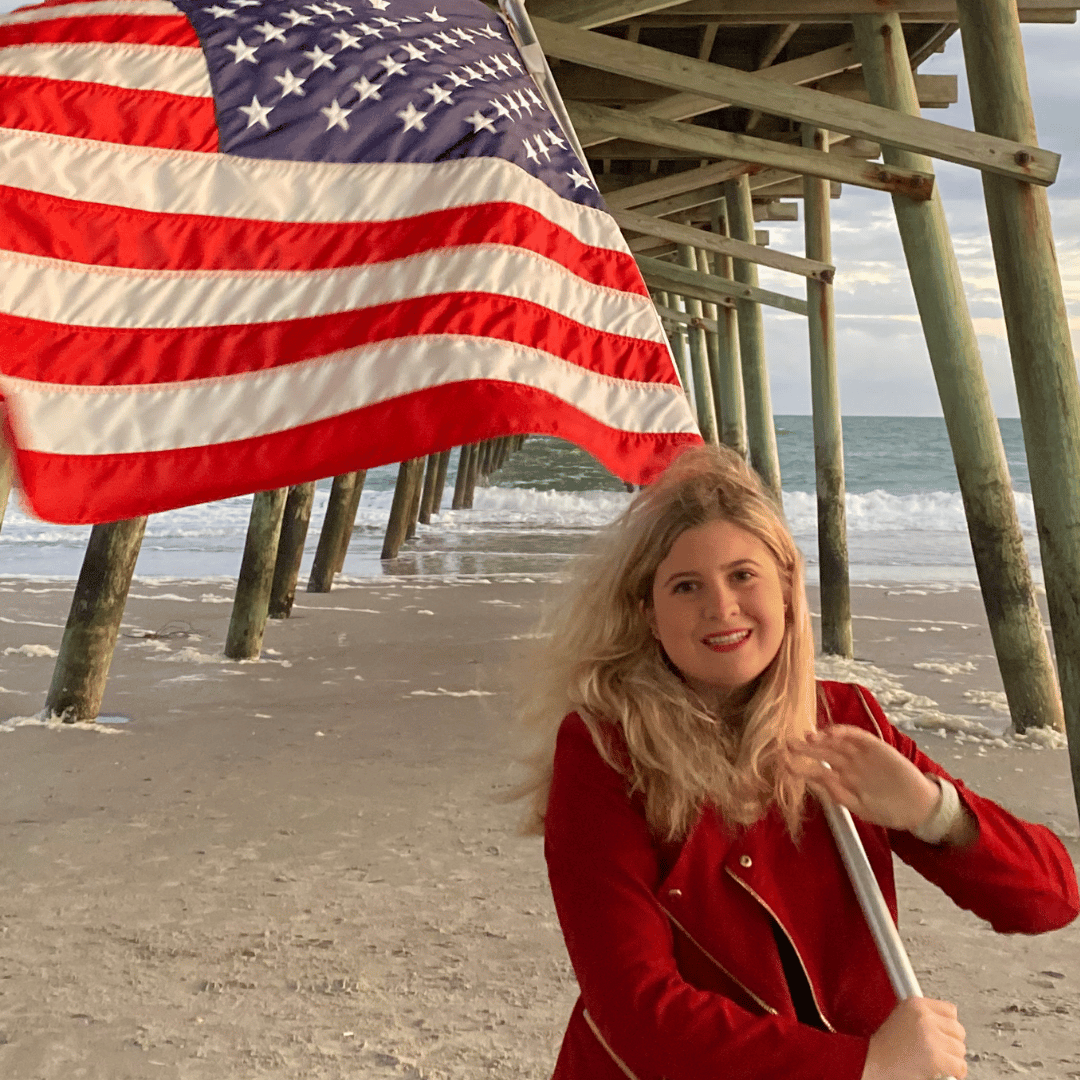 Reagan Faulkner is a student at the University of North Carolina Wilmington, where she currently serves as president of the university’s College Republicans chapter. Her leadership and passion for civic engagement have earned her national and local recognition, with appearances on The Ingraham Angle on Fox News, coverage in Fox Digital and The New York Times, as well as features in Wilmington-area news outlets and television stations.
Politics has been a lifelong calling for Reagan—fittingly, she was named after President Ronald Reagan. From an early age, she has been driven by a commitment to public service and a belief in the power of young voices to influence the future. She is especially passionate about educating the next generation of Americans on how to mobilize, inspire their peers, and create meaningful change.
Outside of her political work, Reagan finds joy in the simple things: reading, spending time at the beach with her boyfriend and friends, and boating with her family. Her values center on the preservation of American traditions such as the importance of the nuclear family, Christian principles, and cultivating respectful discourse across differences.
Reagan brings to the podcast not only her personal convictions but also an unwavering dedication to fostering conversations that challenge, encourage, and empower listeners to think deeply about the values that shape our society.
Comments
Opinion Articles

The Nehemiah Way
America: Reflections of a Grateful Immigrant on America's 250th Anniversary