Gen Z Conservatives and the Modern Conservation Movement – Episode 42
How The Next Generation Views Conservation in North Carolina
April 21, 2026
Watch on The Reagan Faulkner Show On YouTube
Listen on Buzzsprout
Like and Subscribe



Episode Summary

Gen Z conservatives are stepping up to reclaim the conservation conversation, and this episode dives into what that actually looks like on the ground in North Carolina and beyond. Reagan sits down with Trevor Blackwelder, North and South Carolina State Director for the American Conservation Coalition, to talk about market‑driven environmental solutions, local stewardship, and why “common‑sense conservation” resonates so strongly with younger voters. They cover everything from fisheries, flounder and shrimping fights, and PFAS in the Cape Fear River to data centers, nuclear power, and how infrastructure and environmental policy overlap. If you care about protecting coastal communities, keeping the economy growing, and giving conservatives a serious voice in environmental debates, this conversation is for you.
What you’ll learn / Key moments
- 00:00 – Reagan introduces Trevor Blackwelder and the American Conservation Coalition, framing the episode around Gen Z conservatives and conservation.
- 02:20 – Defining conservative environmentalism and how market‑based, limited‑government solutions can grow the economy while protecting land and water.
- 09:55 – Why Republicans are “leaving votes on the table” by avoiding environmental issues in local and state campaigns.
- 17:17 – PFAS in the Cape Fear River, clean‑water concerns, and why chemical pollution shouldn’t be a partisan fight.
- 27:49 – Data centers explained: what they power, real concerns about water and energy, and whether North Carolina’s infrastructure is ready.
- 44:48 – Coastal fisheries, flounder and shrimp debates, and how heavy‑handed regulations impact family businesses and local economies.
- 59:10 – Nuclear energy, modular power, and why conservatives should see energy policy as a pro‑growth conservation opportunity.
- 01:13:21 – Trevor’s closing call for local action—from park cleanups to joining ACC’s new UNC Wilmington chapter—to build a conservative conservation movement.
What You Can Do
If you want more conversations like this at the intersection of Gen Z, conservatism, and common‑sense conservation, make sure to follow The Reagan Faulkner Show on Instagram, Facebook, TikTok, and Substack so you never miss an episode. Stay plugged into local and state politics with The Wilmington Standard by following along on Instagram and Facebook, especially as North Carolina’s coastal communities battle over data centers, fisheries, and infrastructure.
And when you grab your next bag of ethically sourced coffee from Seven Weeks Coffee, use promo code REAGAN2026—10 percent of your purchase goes directly to crisis pregnancy centers, helping support moms and babies while you fuel up for the fight.
Transcript
 Reagan Faulkner
What's up guys and welcome back to the Reagan Faulkner Show. Today I am joined by Trevor Blackwelder, the North and South Carolina State Director for the American Conservation Coalition and a leading voice in the growing conservative environmental movement. Trevor grew up on a farm in North Carolina where stewardship of the land wasn't a political issue, it was simply a way of life.
Since then, he has become a strong advocate for conservation, market-driven environmental solutions and engaging younger generations in conversations about the future of our natural resources. Today, we're going to be discussing the future of conservative environmentalism and what that is, why environmental issues matter to Gen Z voters, the role conservation could play in expanding the conservative coalition, North Carolina's fisheries and waterways, the challenges facing coastal communities here in North Carolina and across the country, data centers and their environmental impact, which is such a massive topic of discussion right now and why some of the most prominent environmental policies being proposed today may not actually be the most effective solutions. Trevor, thank you so much for being here today.
Trevor Blackwelder
Yeah, absolutely. Thank you so much for having me. I'm really excited.
Reagan Faulkner
So the first thing that I want to ask you about is just tell us a little bit about what the American Conservation Coalition is. I know that's something I had never heard of until Rule was saying that you were coming on to the Wilmington Standard, and I looked at some of your articles and stuff, and just talk a little bit about who y'all are, what y'all do, and how you found the organization and really got involved.
Trevor Blackwelder
Yeah. So the American Conservation Coalition is a nonprofit that focuses on conservative environmentalism and specifically more market-based environmentalism. So what that is is essentially it's this idea that we can have a booming economy, we can have innovation in our workplace, we can have this great competition that lowers prices for everyone and kind of pushes us towards new and better things, at the same time is also prioritizing conservation.
So that's something that we at the ACC are really, really interested in. Most of what we do is kind of working with young individuals, so whether that's college branches or young professionals, just kind of working together and giving young conservatives a place to really put their passion into action. So whether that's doing something as simple as doing park cleanups, or whether we're going to the state legislature and we're advocating for certain things, working with different kinds of elected officials, full-spread conservation, but from a conservative focus is kind of what we're doing.
Reagan Faulkner
Awesome. That is really cool. I know something that was really surprising to me when I got to college and got involved with Turning Point was they had some pins about conservation, and it was one of those things that kind of clicked.
I was like, huh, I've never seen conservatives at the forefront of anything environmental, at least up until that point. So that is just really cool that you're involved with the ACC and just that they really are spearheading this initiative or all of these initiatives. Now kind of going off of that note, most people hear environmental movement and they immediately think of the political left.
They immediately think of things like the Green New Deal and lots and lots of regulation and electric cars that aren't Teslas and all kinds of stuff like that. How do you think the left really kind of took over environmentalism, I guess?
Trevor Blackwelder
Yeah, that's a great question. I know we spoke before in our email chain kind of about how Republicans in the past have really championed a lot of great conservation efforts, whether that's national parks or that's the EPA and just other general movements within that. I couldn't really point to a specific time in history when this kind of shift occurred where the political left has really adopted some very extreme environmental principles.
But as far as just speaking from personal experience, like we talked about, I grew up on a farm. Having stewardship and conservation has always been at the forefront of my mind. I've kind of always felt that it was a topic that was extremely dominated, at least large voice and loud voice wise, by the political left.
And it's really unfortunate because what I do for work is trying to show everybody that it doesn't need to be that way and there's plenty of voices on the political right that are conservative that would love to show this side of us. So I kind of think it's unfortunately been just a little bit of a while since we've been able to say that the general public views conservatives as the voice in conservation. I think things like the Green New Deal, like you noted, are really big examples of large steps taken by left-leaning individuals in the, I guess, realm of conservation, although it's talked about and I'm sure we'll discuss in a little bit whether the Green New Deal actually did anything for conservation or not.
But yeah, it's been quite a while since the left has really dominated this debate. And that's something that we're working really, really hard to change the opinion of.
Reagan Faulkner
Yeah, absolutely. Now, would you say that there is any sort of specific moment where you kind of, for lack of better words, woke up and realized how politically polarized environmentalism and conservation was? Like, was there any moment, whether it was while you were working on your family's farm or while you were in college, where you were like, oh my gosh, why is this such a polarizing issue?
Like, why is this so dominated by one party versus the other?
Trevor Blackwelder
Yeah, I think I really started becoming aware of it in high school. Because, you know, like I said, growing up, it wasn't really a political thing. It was just kind of, for lack of a better term, you live or die if you're a farmer by caring about the land that you work on, right?
So it's not exactly a political thing. But as I grew up and kind of became more aware of broader environmentalist topics, whether that's just, you know, habitat loss and water quality and things like that, and then also at the same time becoming much more politically aware, I'd probably say sometime in high school was where it really started to set in for me. And then when I got to college and decided that, you know, going the political route of things was kind of the career choice that I wanted to make, that was really, really when it started to set in for me.
And I started to realize as I was engaging with these conservative groups and members of Congress and things like that, that's when it really started to explode in my head, where it was like, this is much more partisan than I expected it to be, especially because, you know, a lot of the people that you think of when you're talking about conservation and conservatives is sportsmen, you know, people who go hunting, people who go fish. Those are some of our biggest conservationists in the country and around the world.
And the majority of those people, not to label, but demographically, right, those are conservatives most of the time. So I thought it was really interesting to see that, you know, as I grew older, beginning in high school and into college, that, you know, so much of our voter base is conservatives, cares about this stuff, but we're not the leading voices on it, which is very interesting.
Reagan Faulkner
Yeah, I think that's something I've always thought was interesting, too, was like, I live in a coastal community, so like my dad hunts, my family's always boated. Even when we lived in Raleigh, we would boat on the lake and stuff. So it's just general stuff that's like super not advanced, but like, don't litter, take care of your surroundings, you know, don't go after random critters just because you can, like various stuff like that.
And as an elementary student and even like a middle schooler and a high schooler, you just don't really think of that as being almost environmentalism or conservation at all. It just seems like the right thing to do, like almost the moral thing to do. And I feel like environmentalism and conservation have been spun up into this thing about, you know, only using paper straws and hybrid cars and stuff that's like way, I don't want to say more complex or advanced, but I mean, conservation can be as simple as just treating the world the way you're supposed to treat the world.
It doesn't have to be this crazy, like we're going to make it more expensive to have gasoline cars and all these regulations and make it hard on business. Like it doesn't, I don't feel like it has to be like that. Not at all.
I totally agree. I think that's a really interesting nuance. I think most people would agree with kind of where you're saying, especially sportsmen and fishermen and hunters and stuff, like they already take care of the world, but they need a pickup truck for their jobs or, you know, for their hobbies or whatever.
I guess kind of going off of that, what would you say people like misunderstand the most about conservative, the conservative environmental movement as a whole?
Trevor Blackwelder
Yeah, well, unfortunately, I think there's a real demonization of the political right in terms of when we attempt to, and when we do, you know, conversing in conservation talks, I think that, you know, just with how polarized politics is these days, there's a ton of gridlock on very specific subjects and when the general public kind of latches on to a very specific policy point, belongs in quotations to certain sides, the opposite becomes very demonized when it comes to talking about that.
So, yeah, I think it's very interesting how that kind of dynamic has grown, especially recently over the last decade. It's very, very, very complex and I'm just, you know, you got to chip away at it. And kind of what you were hinting at before is like, it is the exact common sense principles that we love championing as conservatives to take care of the land that you're on and not hunt things that aren't necessary that you aren't specifically going out there for, right?
There's no sense in, like you said, quote, finding any critter that you can, just do what you would like to do, enjoy what you like doing and take care of everything while you do it. It's very simple. It's very common sense.
And as you said, like, we don't need to make everything so super extreme and complex. Just start from the bottom, work your way up, make small incremental changes that make really, really big impacts. Something that I really am passionate about is making an impact on the local level.
It's always been my opinion that your town and the people who live there know what's best for you there than the state does. Just like I think your state knows better for what's good for your state than the federal government does. And that's what's beautiful about our governmental system.
But I think that's just kind of an overarching topic of why it's gotten this polarized.
Reagan Faulkner
Absolutely. I mean, I love what you said about your community knowing better than the state, the state knowing better than the federal government. I mean, we're going to get into talking more about the waterways and kind of the coastal regions.
But I know here there have been some policies that were trying to be proposed at the state level. And our local communities really rallied together. And we're like, no, guys, you don't understand what it's like here.
Like, this would literally destroy everything about our communities. It would destroy our local economies. And it's those communities that really, like you said, should be championing some of these different initiatives and stuff rather than the state government, because they understand how their communities work, how their economies work, how their businesses work, and even like how those local family businesses work and what's going to help and hinder them.
Trevor Blackwelder
Yeah, absolutely.
Reagan Faulkner
Now, if you like had to super simplify conservative environmentalism, like you had to you had one or two sentences to really explain what it was or to put it on a pamphlet, how would you break it down for those listeners that haven't really heard of it or, you know, have historically thought of it as more of a partisan issue?
Trevor Blackwelder
Yeah, I would say, to put it simply, it's the idea that you can take very realistic common sense approaches that prioritize conservation at the same time as it allows our economy to build, to grow, to innovate, to be competitive and to lower prices so that we can affect our own lives in a positive way that makes living simpler and easier for us at the same time as we protect the land that we love.
Reagan Faulkner
I love that. I think that's going to resonate with a lot of people because I feel like we keep coming back to this and it's only been a couple of minutes so far, but it doesn't mean more regulation, right? Like, you can do it with a very capitalistic approach.
You don't need a socialist like AOC telling you how to run your company. Like, we can use innovation. We can use capitalism.
We can use the free market to actually make our world better and to make our environment better rather than you can't do this, you can't do that, you can't do this, you can't do that.
Trevor Blackwelder
Yeah, absolutely. Totally agree.
Reagan Faulkner
So, as we're looking ahead at midterms and, you know, people are already talking about 2028 and stuff.
Trevor Blackwelder
Yeah.
Reagan Faulkner
Do you think that Republicans are leaving votes on the table by not engaging more seriously with environmental issues?
Trevor Blackwelder
Yeah, so I was really looking forward to talking about this. So, before I joined ACC, I come from a political campaign and consulting background. So, I would do the vast majority of speech writing and kind of policy positions for a lot of the candidates that I work with.
And it's, in my opinion, undoubtable that we are leaving votes on the table. And it's not really a question to me. The question for me is, like, how many positions, how many elected officials are we losing because of it?
How many votes is it? Not just if we are. So, you know, there's definitely some argument to be made about how, like, if a specific environmentalist position was adopted by a presidential candidate, if that would truly impact whether they were or weren't elected, right?
Because so many different topics are really, really enforced at that level, whether it's the economy and immigration lately, things like that, right? However, like we kind of talked about before, working from the bottom up, we're talking about local government. A hundred votes means the world to a town councilman or a mayor or even some state representatives, right?
I cannot be convinced personally that you can't find 100 votes, 200 votes by taking a very, very common sense approach to some kind of conservation topic or environmentalist topic in your area. I just, I refuse to believe that that's not true. Specifically working with some of those candidates, I know that it is, you know, simply working with someone from Fayetteville, North Carolina, right?
For example, they had a lot of grants just given to them to the city to redo a lot of their, I guess, infrastructure surrounding some waterways there. That makes a huge difference for a candidate to just simply be able to at least be conversationally competent about things like that. And if you can't do that at just the most basic level, it stands to, you know, question your constituents if you truly know what you're talking about.
So being able to have this kind of wide array of knowledge of topics and adding conversation to the bag of what we talk about as conservatives, especially within the Republican Party, for example, is extremely necessary. Working from the bottom up, for sure.
Reagan Faulkner
Now, do you ever think like environmental policy almost gets confused with quote unquote synonyms? Like, do you think that conservative candidates might almost talk about infrastructure and things like that where they could just replace that with environmental policy or they could reframe it a little bit? I know that we have like some candidates in New Hanover County that are running and they have talked so much about we have like flooding issues, like fixing that, fixing overdevelopment, but fixing it in a way where our economy is still growing.
And I feel like you could really insert just some of the key words that you're talking about to make people understand it better. People may not completely understand infrastructure, the engineering words that are being used, but they'll understand like we need to fix our environment or we need to fix our land.
Trevor Blackwelder
Yeah, no, I totally think I agree with what you said. I think it's purely a presentation issue and a speech, I guess, in a way issue. You can talk about very specific topics in an extremely crazy amount of ways if you really wanted to.
You can take infrastructure to the economy. You could talk about, you know, influx of migration for population for certain areas where Wilmington is expanding and exploding like crazy. You can talk about water quality or just erosion in general.
I mean, you can go all over the world when you're talking about flooding issues or, you know, erosion. So I think it really is just a lack of understanding for certain candidates, definitely not all of them, but certain elected officials, just not having the understanding of knowing exactly who they're talking to in some cases and how to present a topic in a way that's easy for them to understand and divulge. And I think if there's a little bit more effort put across the board, and this isn't just a conservative issue.
I think it is across the board politically. I think there was if there was a little bit more effort put into presenting topics that are important to everyone, very common sense and simple topics in a way that everyone can understand, we would be able to find so much more common ground on a lot of things and specifically conservation.
Reagan Faulkner
I completely agree. I mean, I know Wilmington on top of the things we just talked about, even the pollution of our waterways and the PFAS and all that has been a major issue. And I think we can all agree, regardless of partisan divide, we don't want chemicals in our water.
My boyfriend, bless his heart, ever since we moved to Wilmington, his skin, he almost got eczema or something. And it did not start until we went to Wilmington. And I haven't had the issue.
I've been fine. So maybe it's not water related. But I know when we go home, it gets thick.
It's so interesting to look at things like that, because that shouldn't be a partisan issue. We just shouldn't have chemicals in our water. We should all be against that.
But just like we've been talking about, more conservatives are talking about it. I know another candidate that's in a really competitive district. She's been talking about it a lot as a conservative, which I'm super excited about.
But it's really been dominated. And it almost makes conservatives look bad, because by not talking about it, it almost gives this look of, for people on the other side, not for us, but almost this look of like, well, if you're not talking about it, are you in favor of this issue? And obviously, they're not.
And obviously, common sense, we can assume that they're not. But it doesn't give a great appearance.
Trevor Blackwelder
Yeah, no, I agree. I think sometimes conservatives are really worried about toeing the line between government being overextended and not being limited or small government candidates. And this misconception that, no, you can put pressure on individuals who are doing wrong, who are complicit in wrongdoing.
For example, the PFAS, right? I haven't finished it quite yet. But the article, actually, I'm writing right now for tomorrow is about PFAS.
And it's about the Capri River Valley. So kind of just talking about that situation. It is really great to hear that conservatives are at least talking about this in a meaningful way during the campaign trail.
Because you're right, it matters to so many people that it's not a political thing anymore.
Reagan Faulkner
Absolutely. Well, transitioning a little bit, still talking about campaigning and candidates and elections. Do you see younger generations, younger conservatives looking for different messaging than older generations when it comes to environmental policy?
Trevor Blackwelder
So this is a really interesting question, because it's like a yes and no. So I think for the, to begin with, the differences between the generations, there's no denying the fact that younger people, the younger they are, the more they care about this. It's shown poll after poll.
It's shown in if you just simply yourself go and talk to people, it's abundantly clear that the younger you are, the more you care about this. So looking at it from that perspective, like, yes, they're definitely looking for new ways to get engaged and new ways to talk about this. However, I actually think surprisingly enough, the individuals from older generations who are interested in this conversation, sorry, conservation conversation, actually are looking for pretty similar things.
Because we're conservatives, those who are open to this idea and aware of this idea of environmentalism, kind of are on the same page that, hey, we can find a way to prioritize limited government and prioritize market-based kind of incentives and things of that nature at the same time as looking out for our public lands and looking out for water quality and water availability and making sure that we have a reliable energy grid, for example. These are all things that actually, surprisingly enough, all conservatives who are interested in this topic can get on board with.
So I don't really, I honestly don't think it's a problem of whether or not we can get on board together as conservatives. It's more so just being able to spread awareness that this does work together and that we have a place to be able to push it out onto the world and make an impact.
Reagan Faulkner
That makes sense. And I mean, I would totally agree with you. I mean, I know that you're talking more from a research perspective, but even from my own perspective, the people of older generations that I know that care about environmental policy care very much, but it may not be a super huge subset of them.
But when it comes to my generation, people that are in College Republicans, people that have been in Turning Point, people that I'm just friends with in general that might not even be conservative, all of us generally have some care about environmental policy, whether it be related to the waterways or related to the PFAS issue or related to overdevelopment. I think if you ask almost any Gen Z, relatively younger generation, they will have some sort of opinion on it, but it might not be as passionate as the older generations who have been following this for years and who have been voting on it for years and lobbying on it for years. But the interest is definitely there.
Trevor Blackwelder
Yeah, 100%.
Reagan Faulkner
Now, have you found any environmental concerns that are different across age groups? Like, are there any environmental concerns that are specific to younger conservatives versus older conservatives, or are they pretty much in line?
Trevor Blackwelder
I would say that it's much more geographically based than it is age. So, for example, an individual who lives in Asheville is going to have more or less in different concerns than someone from Wilmington like yourself. So, I would say in terms of that, there's some differences.
The really large overlap right now is a lot of concerns about data centers and the expansion of them, especially in North Carolina. But as far as different age groups go, I wouldn't say that there's too much of a difference. It's really just what's really pertinent and important to local communities where they live because they know exactly what's important there.
And that would probably be my best answer for that question.
Reagan Faulkner
That makes sense. I mean, it does make sense that there would be more of a geographical divide than an age group divide. But going off of the data centers, because that's something I was really excited to talk about, and it's something I don't know a whole lot about.
Hopefully, we don't lose any viewers for this. I am a fan of AI. I think that there's so much potential with AI.
I'm not a never AI-er or anything like that. But I also understand on the very simplistic level, the concerns of the data centers. But like you said, North Carolina is seeing a major growth in data centers.
And I know there are some other states that are talking about plans to build massive data centers. What are the actual environmental concerns that people should really understand about these projects? I know you hear buzzwords thrown around, but what is the realistic concerns?
Trevor Blackwelder
Yeah, so ACC itself is actually working on a policy position right now that on data centers, very comprehensive and extensive on it. And that should be published very soon. So this is going to come specifically from my personal opinion.
I believe that there are really two major concerns or two buckets of concerns for data centers. I'm on board with you. I think AI is extremely interesting and has tons and tons of different avenues for us to improve our daily lives in the future and is really, really great innovation for us.
The two major buckets, though, of concern, in my opinion, are surrounding water and energy. So first of all, water, right? In the event that a data center comes to town, whatever it may be, my concern would be how does it affect water quality and how does it affect water availability?
And then for energy, right, how does it affect the reliability of the grid and does it impact the cost of energy for the surrounding community? Now, it's my opinion, right, as we're pro building and pro economy, yada, yada, et cetera, less regulations that if you are a farmer and you're interested in selling your land and a company is interested in buying your land and building something there, you're well within your rights to do that. Right.
This is America. You're allowed to do that. I do think we should continue being worried about those impacts, water quality and energy wise.
However, it's my opinion, like if you can guarantee to me that the quality of my water will not be touched and its availability will not be in jeopardy and same with energy, my prices for heating my home aren't going to go up and it's not going to drop power when we get a quarter inch of rain as opposed to a huge storm. I don't have a problem with it, really. And I think a very big misconception also is that a lot of people think these are just for big, bad A.I. data centers. It's not just for A.I. This is for everything that you use. So just because it's a data center doesn't mean that it's powering open A.I., Chad GPT, Claude, that kind of thing. This is cloud computing.
This is Google. This is Safari. This is your Apple computer that you are on, your phone that you're on, Samsung, all of it.
So I think that's a very big misconception, something that people don't understand is these are necessary for the world we live in. It's not really a question of if they're necessary or not, especially with the influx of population that we were having and the way kind of our economy is turning towards this digital age more so even now. It's more so can we do this in an effective, efficient, and responsible manner?
And I really think we can. Something that I do know that we're big fans of, or at least me and a couple of my coworkers are, I would hope and assume ACC in general is something called modular power. So something that I'm really interested in is the ability for these data centers to be able to bring their own power at least to an extent to help support their needs, whatever that may be.
So I'm a big fan of a lot of the executive orders that came out as far as nuclear energy over the past couple of years. A couple of those had to do with small-scale reactors that are modular, and I think those open up a ton of avenues for making sure that our energy grid doesn't get overrun and it is reliable and it doesn't impact our prices. Duke Energy is a big topic of discussion around here in North Carolina, and so people are very worried about how different changes with the Utilities Commission as well as these data centers is going to impact our prices, and there's a conversation to be had about that.
But I would say my main concerns personally are simply water and energy. And if you can convince me and prove to me that you can plop this down on an old farm that isn't able to be worked anymore for whatever reason, whether the family is moving on or whatever it may be, I'm okay with that personally, yeah.
Reagan Faulkner
I love how you touched on the fact that the data centers don't just power open AI and cloud and stuff like that. I know I keep seeing content creators, conservative and left-leaning, just literally everybody, even relatively apolitical digital creators, talking about data centers and just don't use AI, just don't use AI, just don't use AI, we don't need AI. I saw one that said it just makes mediocre people dumber, which I thought was pretty funny.
I thought that was a funny take. But it is like you said, that was one question I was going to ask you, doesn't it power more than just AI? Because I was reading a statistic the other day about the different amounts of content that's uploaded to YouTube, Instagram, Facebook, all those different, Pinterest, things like that.
And it's tons and tons and tons, like billions of uploads every day, probably trillions across all platforms. And that data has to go somewhere. So it's always been humorous to me to watch these content creators upload content into YouTube and into Instagram and into TikTok, saying no to data centers, but they're putting their data in.
And then I saw another, I was at the Cheerwine Festival in Salisbury, there was a bookstore and they had like, say no to data centers and stuff. And again, it was like going back to that, just don't use AI. And I'm like, I don't think it's just AI.
So I'm really glad that you kind of explained that more.
Trevor Blackwelder
Yeah, no, it's just a simple misunderstanding that the genie is still in the bottle. It's out. Everybody is using AI.
If you personally are not, I'm telling you that every single company, nearly, that you interact with on your daily basis is using it anyway. So you're still by extension using it. The genie's out of the bottle.
It's about how we can responsibly, in an efficient manner, do our justice to make sure that it's going to be safe and beneficial for us.
Reagan Faulkner
Absolutely. And I know this isn't a discussion about AI, but kind of going off of that, I feel like the people that are refusing to use it, like the never AI-ers are going to be the ones who like, they're not using it because they're afraid it's going to take people's jobs. But if you adapt to it, you're going to be the first one whose job isn't lost because you have an asset to sell to your employer.
Where if you're one of these people refusing to use it, you are going to lose your job because you're not skilled with the new technology. I mean, that would be like in the early 2000s, refusing to use an iPhone. And then you couldn't contact anybody.
You couldn't talk to your employer. You couldn't do emails on the go. And like, obviously nobody's going to want to employ you if you still have a flip phone.
Trevor Blackwelder
Yeah, no, I totally agree.
Reagan Faulkner
Now, do you think that North Carolina itself is prepared for the long-term environmental and infrastructure demands that these data centers could create?
Trevor Blackwelder
So that's a great question. And unfortunately, to answer some of it, you would need someone in a different sector of my pay grade to be able to do it. You would need to be talking to someone for Duke Energy, for example, who really knows a lot more about our energy grid here in North Carolina.
If I had to give a general overarching opinion on what our infrastructure looks like in North Carolina based off of population, which I would then be able to kind of account for what data center usage would look like here in North Carolina, I would probably have to lean towards no. I currently, it's my belief personally that North Carolina, because of migration from other states, is expanding population-wise far more than our infrastructure can account for. And when I say that, I mean literally just traffic on the roads, how many lanes of a highway we have available, and things like that.
I just, I think that's something that really needs to be invested in at the state level personally. I'm a big proponent of infrastructure expansion and kind of updates. I think that is something that they're going to prioritize in the coming years, and I think unfortunately, with the rising rates that we're seeing energy-wise, I think that is part of the justification for that, is that they want to reinvest a lot of that into our energy grid.
So, as by and large, I'm a pretty big fan of the things that our state legislature has been able to do over the last eight years. And despite their hiccups in the very recent few months, state budget-wise, for example, I do have faith in them to have enough of a heads-up and an understanding of our state issues to know that this is a problem. And I do still have faith in them to go out and be able to make these changes infrastructure-wise and be able to house all these data centers and whatever we need.
So, at the moment, I would probably err on the side of saying we're not quite ready yet. However, I wouldn't sound a big alarm, and I do still have faith in the fact that if I – and I may be wrong. Like I said, I don't know too much about what our energy grid looks like right now.
I don't know how outdated or not outdated it is. But I would probably err on the side of it might not be there yet, but also err on the side of I think we've got time to catch up, just in case.
Reagan Faulkner
I would agree with you. I know, you know, talking about infrastructure as a whole, I definitely agree that with the influx of people coming to North Carolina, again, roads, electricity, like everything, in my opinion, we've got some catching up to do. I know my family lives around Emerald Isle.
I graduated from here, lived in Raleigh for a while. But at least on Emerald Isle, we were driving around the other day, and one of the most interesting things to me is that the – and I don't know the reason for this, so I could definitely be speaking out of turn, but our power lines aren't buried. And I'm thinking like from an infrastructure perspective, the Outer Banks is one of the most likely areas to get hit by a hurricane.
And then when we think about the environmental factors of where North Carolina is situated, and we think about our infrastructure, and we think that like our coastal communities aren't even – you can never be foolproof for a hurricane. I think Hurricane Helene taught us that, but that we literally still have our electrical grid on our coastal communities, like not buried and things like that. Then what impact does that have?
Because I think that's pretty outdated. Again, in my personal opinion, when I go to Raleigh, most things are buried. When you see big cities, most things are buried.
So if we're not updating our infrastructure and you have a hurricane or some other – a blizzard, some other weather phenomenon in North Carolina because we love those here, what impact will that have if we build a bunch of data centers or a bunch of RTP? You've got so much research there. You've got so much technology and stuff.
If we just keep growing and adding data centers and research places and different technology innovation companies and stuff and think tanks, what's going to happen when we have a weather situation like a hurricane or a blizzard and our infrastructure isn't updated or isn't capable of withstanding something like that? I think for all of the southeast, that's probably a major issue because of the weather that we do get.
Trevor Blackwelder
I totally agree. That's part of the beauty of the modular energy systems that I was talking about earlier. Also, in those two buckets, being able to have a reliable grid and not straining it in that manner.
I totally agree. There's definitely concerns across the state where – we've still got a lot of places in northeastern North Carolina. They've made great steps in the last few years, but they're still not broadband in a lot of areas.
It's a very tough situation. It's kind of funny. I kind of liken it to how when individuals in Europe talk about how things that are kind of accommodating and able to be in Europe like extensive train systems are in the United States.
Yeah, we'd love to have that. The problem is it's not as conducive here as it is in a country that's a quarter of the size of our state of North Carolina. We only have so many resources at our disposal.
Priorities are priorities to different individuals in our state legislature because of where they're from. That's how it is. You're supposed to be there for the constituents in your area.
It's definitely a topic that needs to be brought up more as far as infrastructure being brought up to date on a wide array of areas as opposed to just the more populous ones. But yeah, I think that kind of just goes back to like modular systems and ensuring that these data centers when they are put in because it's not really an if anymore. It's a when that they aren't going to put strain on everyday Americans, everyday North Carolinians.
So when something like unfortunate like Colleen inevitably happens again, we're able to bounce back a lot quicker.
Reagan Faulkner
Now, do you think this might be going outside of your skill set? But I know in a lot of different communities, they've kind of halted construction or discussion of some of these data centers. Do you think that's ultimately going to be like a hindrance for North Carolina that we're not getting ahead of other states or trying to get a competitive advantage on any of that?
Or do you think it's good because we're letting our infrastructure catch up?
Trevor Blackwelder
So it's just, it's super complicated. I wouldn't say it's quite above my pay grade. I have a pretty decent understanding of it.
But it also goes hand in hand with some other topics that we might talk about later, like fisheries. But there's a very large, I would say grappling and kind of gridlock between federal powers, state powers, and local powers. So for example, I'm not exactly up to date on what a permitting process would look like for a data center.
I'm not sure if you have to go to the federal government, but let's just for a second, assume you do. You got to get some kind of permit from the federal government. Okay, you got to go there.
So you get passed by the feds, right? Okay, now you got to go to the state. So you get passed by the state.
That's all well and good. But if you want to buy the land in a city or a municipal area, right? You still have to buy that land or at least put down your good faith payment, whatever it is.
And then you have to go to town planning meetings or whatever they call it in that area. And guess what? If the feds told you yes, and the state told you yes and local votes on it and they say, no, you're out of luck.
So that's something really interesting that I think is going to be brought up a lot just because of how many counties we have in North Carolina. We have a hundred counties, which is absurd. So that's going to be talked about a lot, but I'm not really sure about how I feel with different, I would guess levels of government being the ones to block or not block it.
I would revert back to what I said, you know, local governments and local people know what's best for their localities and the state and the federal government does most of the time. But I think there needs to be a very healthy compromise between allowing the expansion of things that will eventually become necessary for our way of life, as well as kind of just having a little bit of pushback to maybe wait in certain situations to make sure that we are actually in an environment that's conducive. And when I say environment, I just mean, I don't necessarily mean environmentalism environment, but you know what I mean that's conducive to have these things on the land.
Reagan Faulkner
Now, when we talk about that, you can pass the feds, you can pass the state and then you can get into these kind of municipal areas, whether it's County commissions or city councils or public votes. Do you think that, and I don't want to like sound disrespectful of our elected officials or any of our population, but do you think that there is a firm enough understanding of how data centers work and some of the protections that they actually do put in? I know something I saw that again, social media skewed.
So I just kept seeing like, Oh, it pollutes the water, pollutes the water, pollutes the water. And then I saw something about how a lot of data centers reuse the water. Like they'll, they'll reuse it or they'll produce it themselves and reuse it to the point where it evaporates.
And there are a lot of systems in place to prevent it from being harmful. Not that it's not going to be, but do you think these elected officials or these people that are having public votes, understand the situation enough to have like an educated vote on it?
Trevor Blackwelder
I certainly don't think the general public is quite on top of the information necessary to build out a, a, a real strong opinion on, on how it works. I would hope, and I would like to assume that at least, you know, our elected officials, even at the smallest local governments, have some form of understanding of it, but to kind of switch focus is just a hair. I actually think that this is a problem that is centered on whatever company it is.
That's building the data center. Because it's their job to be able to convince the people of the local community and those local elected officials that this will be okay for them. And if they can't just simply show up to a town planning meeting like that and go, we have all of these studies to show that there will not impact your water quality or your water availability, or like I said, your energy prices, things like that, then that's a presentation issue on their part.
And it's not the fault of elected officials or the general public for the knee jerk reaction to this, to be negative. And quite honestly, if I had to pick, I'm much, I'm much happier with the general public having a low hold on, you know, kind of opinion of new things that come about, as opposed to an all gun ho kind of approach, right? We live in the United States.
We're very blessed. Things are generally good for us, especially in the state of North Carolina. Very proud to be from here and live here.
So if we're already in a situation where things are good and people are uneducated on a topic that will likely impact their lives in a certain way, I'd rather than err on the side of caution. But I would, I would think that as time passes, because it really has only been a year ish since these topics really exploded in kind of in the public sphere, I would hope. And I would think that these large companies just get a grip on what it means to present simple things to the public and ease their concerns, because it really doesn't take that much to ease the concern around this.
Right. People are very simple, especially in these rural communities, which I come from. We live simple lives.
We like it that way. Convince us that you're not going to bother us and you don't bother me. And that's all there is to it.
Reagan Faulkner
No, I totally agree. And I mean, I think as conservatives and conservationists, we should prefer our communities to err on the side of caution. I think it would be deeply concerning if you saw all 100 counties in North Carolina saying, yeah, take our farm land and maybe or maybe not pollute our water.
And like also going off of that, when we talk about how environmental or conservative environmentalism and free markets and capitalism can all kind of work together, it really is the job of those businesses to explain it because our hardworking North Carolinians and Americans as a whole, like they're not going to go home and research data centers when they need to raise their kids and cook dinner and, you know, take people to soccer practice and gymnastics practice because we're Americans and like we have everyday lives.
It's the job of the business that wants the opportunity to be in that community, to deliver a sound pitch of why they can benefit that community and why they can benefit the lives of the people in that community. And if they can't, then yeah, the people aren't going to vote for it.
Trevor Blackwelder
Absolutely. It's a privilege to be in North Carolina and to be in our communities and it should be proven to the people of those communities that you appreciate that privilege before it's given to you a hundred percent.
Reagan Faulkner
Absolutely. Well, moving a little bit away from the data centers. I want to talk a little bit about the waterways and our coastal communities.
I know we've seen a lot of things moving there in the last year, year and a half. Now, first question is, how should North Carolina really think about protecting our waterways while also protecting the people whose livelihoods depend on them? And I guess going off of that, how would you kind of break that down to people who don't live in those couple of counties that use our waterways and that use our ocean for local business and economy and stuff like that?
Trevor Blackwelder
Yeah. So the first and foremost thing I would say is that I think that there's a misunderstanding of how, not recreational, but forgive my slip up here, commercial. Good Lord.
I think there's a misunderstanding of how commercial fishermen and just businesses of that nature impact the environment in North Carolina. It's a complete misconception that we are a laissez-faire in North Carolina when it comes to these regulations. North Carolina actually has some of the strictest regulations around fisheries in the country.
And the impact of these commercial fisheries is felt, but there are very, very specific laws and policies in place to protect our environment. And for example, the populations of certain fish or shrimp, whatever it may be against this, right? So there's already a surviving and a working dynamic there that is conservation focused and environmentalist focused.
I think that is something that the general public doesn't really understand, especially like if we talk about the flounder fishing, right? There's a huge gridlock between people who just think, it's BS that recreational fishers have like three days where they can catch a flounder, but then there's completely different rules for commercial fishing, which is an entirely different topic, right? But it's not like that for the majority of things, right?
These are families and businesses who have been doing this for hundreds of years, and they absolutely have the right to continue doing so. And I would say for our waterways, just kind of based off of how the environment and habitats in North Carolina are because of how unique we are with our outer banks and our sound system. I think that it really just sticks with the water quality thing in that topic more so than anything.
And you can also throw in erosion in there absolutely as well. But I think that local governments and just people in general focusing on how they can push, whether that be policy or elected officials, or just themselves on the local level, making an impact on water quality and erosion and kind of implementing policies or just even everyday things that help aid against those. Is the most positive thing that they can do.
I don't have the view that commercial fishing is a detriment whatsoever in North Carolina to recreational practices, at least. And absolutely, you know, there's some arguments to be had about trolling in land and things like that, which is what surrounds the bill that was almost passed last summer that we may talk about that. But it's a very classic example of the public having an opinion on commercials and commercials have an opinion on the public.
And then also there being these extremely complicated gridlocks in state and federal legislatures about how these things should go. So I think that it would be best if in this case, business kind of stayed out of it, as there's not really much that they can change the way that these trolling shrimpers have been doing it or these commercial fishers have been doing things for hundreds of years. I think it's more of a, just a very general conservation topic where we need to protect our water systems.
We need to protect our water quality, protect these amazing habitats that we have here in North Carolina and don't really have anywhere else in the United States. And then we can go from there, especially with erosion. That's going to be something that is a growing topic in North Carolina for the next 10 years as we watch our outer banks get destroyed.
Reagan Faulkner
Absolutely. I mean, I know, gosh, for the last 10 or 15 years, my family had a place at Topsail, Sneeds Ferry. Then I've been in Wilmington for the past couple of years, family moved to Emerald Isle.
Like in every single community that I've been in, they dredged at least once. And it's interesting to watch that when you talk about erosion. And then when we worry about water quality and things like that, because you don't really want to swim in the ocean while they're dredging or be close to the dredge or any of that.
Now, one question I have for you kind of going off of all this is we talked about erosion. We talked about bycatch. We talked about the difference between commercial and recreational fishing and different concerns there, water quality.
What would you say are like the biggest environmental concerns facing North Carolina's coastal communities right now?
Trevor Blackwelder
Yeah, I am sticking with it. It's going to be water quality and erosion. And I don't really think that there's, you could add things to that conversation, but I don't think anyone would ever tell you the neither of one of those two isn't something that has to be a part of this conversation.
I mean, if you go on YouTube, you go on X Instagram every single day, if you're on North Carolina stuff, you're watching a video of a beach house fall into the ocean every single time. Or you're reading about how a company dumped PFAS into, into the Cape Fear River for 20 years and nobody ever knew about it until people started getting sick. So, I mean, we, we have a really interesting tributary system in North Carolina.
And as everyone knows, all roads lead to Rome, it's all rivers lead to the ocean, right? So our coastal communities feel absolutely everything that it, that happens across our state in the waterway. So, I mean, there, I, I read kind of an article a few weeks ago, maybe a month ago about how, some of the erosion and some of the impact that happened to Helene in near Asheville actually was still impacting the Pamlico Sound, which is just crazy to think about that, that, that would ever happen.
And I'm sure it was a, it wasn't quite a, a super super research based thing. And it was just a simple, simple statistic where, Hey, this is some form of whether it was a kind of runoff or whatever it may be that had affected it. But it's still scary to think about that.
Like a very small, well, not so small in the case of Helene, but a very small thing in central North Carolina, for example, can still be a huge impact on the coast. So I'm not very privy to, you know, certain infrastructure and construction practices. I don't have an answer for how we can slow and stop erosion on the outer banks and our coastal communities.
But it's definitely something that needs to be prioritized. And I mean, you can't not have clean water. And that's goes back to one of those most common sense principles that we're hoping to bring to other people as we grow the movement.
Reagan Faulkner
Absolutely. Shifting a little bit away from water quality and erosion back to fishing policy and things like that for the listeners who might not be familiar with Eastern North Carolina, what is really happening with the flounder or the people who have been miseducated on the flounder situation?
Trevor Blackwelder
So does anyone really know? I'm joking, but I don't, it's, it's such a, I like the word for it, but it's, it's such a mess just in general. And it's, it's a combination of federal powers that want to oversee certain things that happen with fisheries and with populations of certain species, such as flounder as well as like I mentioned for the gridlock between commercial and recreational fishing.
There's also, you know, different priorities in state legislature where people are really, really interested in allowing the kind of whatever they perceive to be the tourism boom of recreational fishing in coastal Carolina and coastal North Carolina by allowing these, these seasons of fishing to be opened up more or less. And it's to be put simply, and it's kind of a cop-out answer quite honestly, it's just a thousand people with a thousand opinions and nobody's willing to give up theirs and compromise on anything. So until that happens, we're stuck with the way it is.
Reagan Faulkner
That makes sense. I mean, I know you kind of see all of the opinions here. Like I have friends who would flounder gig and stuff and like my parents and grandparents and aunts and uncles all grew up doing it.
So they're obviously with the opinion of like, this is terrible. This is an infringement on my rights. I want to go flounder gig and take as much flounder as I want.
And like three per season. Really? I mean, that's not a lot.
Or is it three per day per season? I'm blanking right now.
Trevor Blackwelder
I think it's, I think it's three per day per season, but the season's only like for three days. Yeah, exactly.
Reagan Faulkner
So, and then you have people that are like, well, the flounder population was getting low. So it makes sense. And then you've got my opinion, which is that how did the flounder know where the state line is?
Like, you know, you've got flounder from South Carolina and North Carolina. Like they're not just going to go to one state or the other when flounder's out of season. So it's really interesting because all of our waterways are linked together.
So like if you have a really open policy in South Carolina or different States, I don't see where it would really help North Carolina, but there are so many different opinions, like you said, and nobody is willing to give up their opinion at all. Like it's almost heresy to have the different opinion if you're talking to a pro flounder and anti flounder opinion holder.
Trevor Blackwelder
Yeah. I will also say, I think from a more just scientific point of view, also there's some annoyance between those who would like to see the season open up and the science behind it, which is the fact that North Carolina is some of the best spawning habitat possible in the country for flounder. And it should in theory allow our season to be longer and be able to take more than the majority of others because of how conducive it is to reproduction.
But yeah, it's, it's, it's a mess. It's very, it's unfortunate that so many people are, have such passionate opinions about it. But at the end of the day, I will say, you know, while I would also love to go finder fish more than I am able to in North Carolina.
Right. And I am on that side of wishing that I could, if we're going to take a while to finally formulate a final plan and opinion of something, at least we're on the conservation side of it for once. So at least there's that as a, as kind of a, I guess looking at the glass half full.
Reagan Faulkner
That makes sense. Now, another, I don't want to use the word toxic, but contentious, I guess, highly contentious bill. Do you want to talk a little bit about the shrimping bill from last year and why so many coastal communities were worried about those proposals versus people who might be more inland that didn't really kind of understand the nuance behind it.
Trevor Blackwelder
Yeah. So something that was really beautiful last summer was the fact that virtually everybody who had any understanding on the coast of what the shrimping business looked like, including, including elected officials in state legislature was on the same page that this shouldn't be passed, at least in the, in the way that that bill was presented at the time. Right.
But as an overview and happy to be corrected, if I'm wrong on anything on this, my understanding is that the bill very simply and at a basic level was that it would ban shrimp trolling within X amount of miles of the coast. And it was very specific about how it would work inside of the outer banks and our sounds, which is where a lot of these inland fishing communities are based, right? This is where they do their trolling.
So very simply, it was going to cause hundreds of people to go unemployed and to lose their family businesses that they had had for hundreds of years and would have been a gigantic economic disaster if it had happened in the way that it did. I'm not entirely privy to the way it was introduced in the first place. I've been told certain things, but I have not confirmed those.
So I'm not going to say that. But I think it was a very good thing that it didn't pass there personally, just my view. I will say that there is definitely arguments to be had about how trolling impacts our natural habitats and specifically the sounds in the North Carolina coast because of how unique they are.
And I do believe they need to be protected. However, I think the knee jerk reaction to ban it in the way that it was with this bill was really irresponsible and didn't really take into account the economic kind of implications of it and the implications of these families who have been North Carolina natives forever. So if it comes up in the future again, which I would expect it to probably after some very heavy revisions, different conversation to be had then depending on what those are.
But they definitely need to have the stakeholders at the table this time. They need to have the shrimping families at the table for those conversations because it's just not fair to them to do that.
Reagan Faulkner
Absolutely. I mean, my best friend, her family has had an overall fishing company for, I don't know how long, a very, very long time, local to Swansboro. And it would have changed everything about them.
And then when you look at kind of how the bill was framed again, from my understanding, which I'm not in the shrimping business or the fishing business. So I could also be mistaken, but they would have to go offshore. And I believe it was six, three, six or nine miles.
It was a multiple of three. And depending on where your boat is located, you have to get to an inlet. You have to get offshore, you have to fish, you have to come back where they would historically kind of troll the same areas for however long they would do it or at night or whatever the season would be.
And it would cost gas. It would cost some companies to not even be able to get their, their vessel like offshore at all because of where they were located. And then you talk about erosion and our channels have changed so much just since I've been here.
And I know like for my friend, like they've kind of changed when their boat can go out and where they troll and things like that because of the change of the sounds and everything. And like you said, it would have just been a massive economic disaster. And we're not even as heavily influenced by it as other parts of North Carolina.
We're, we're pretty heavily influenced by it, but nothing, nothing like Pamlico sound and you know, the northern outer banks and stuff like that.
Trevor Blackwelder
Yeah.
Reagan Faulkner
Now going into a little bit about conservation and economics shifting away from our waterways, what is one thing that kind of comes up repeatedly or one thing that does come up repeatedly? Sorry about that. Is the idea that conservation and economic growth are opposites.
We kind of talked about that a little bit. Are they actually opposites? And I think we've kind of answered that, but why wouldn't they be?
Trevor Blackwelder
Yeah, no, they're, they're simply not opposites. And I, I think that the reaction of some individuals, especially left-leaning ones is that private company equals bad and bad means that they can't possibly care or help prioritize in conservation. And that's a notion that needs to be completely rejected in my opinion.
So for example, you know, a private company who would like to bring a nuclear pallet to the United States to North Carolina specifically, that is a positive thing. It is more power generation. It is clean power.
And that is good for us. Point blank. Are they doing it to profit on their own company and sell energy?
Of course they are. We live in a capitalist society. That's how it works.
But here's the thing. We can benefit from that at the same time. So you really have to prioritize working with private companies, working with individuals who are going to spur along economic growth and just have conversations about how, Hey, you win here.
I win here. That's what we care about. Right.
And that can happen. And the closed mindedness of the fact that it can't is just that. It's just closed mindedness.
And it's just individuals who either a haven't been kind of I guess out there enough and to see it happen or just those who have their mind made up and aren't really willing to open it up to anything else, to another notion.
Reagan Faulkner
So I completely agree. I mean, I think we can really look at like you were saying, like, obviously businesses are trying to make money. We are capitalist.
If a business moves into any sort of location, they've done the market research. They think they can be profitable. Like doesn't mean that they're trying to hurt the constituents or the people of that area, but they definitely think they can profit off of it or else they wouldn't move there.
So you have that, but you also can see that conservation, like what you're talking about and different types of energy and things like that, that they can kind of be an economic development strategy because they can help people. Now what would be an example of a policy where environmental protection and economic growth really can reinforce each other?
Trevor Blackwelder
Yeah. I mean, I would go back to nuclear energy. I know we have one that helps power Charlotte and some surrounding areas in North Carolina.
I think that Duke power has some plans to add another one in the next few years. And this is something that's incredibly efficient and popular, should be popular to everyone. It's clean energy that is very cheap is extremely safe and is extremely reliable.
There is no reason that anyone should be against those things, right? If you can keep things safe, you can keep them cheap. You can keep them reliable.
That makes everybody happy. Right? And if we go away from some more fossil fuels in the future by doing so, that's also a positive where we take a realistic approach where, you know, it's, it's not realistic, as you mentioned before, like for AOC to stand up and go, okay, 20, 27 hits, 50% of the cars on the road have to be electric.
That's not reasonable, right? You can't do that. Just like you can't go and stand up in the state legislature in North Carolina and go, Hey, 20, 28 hits.
Half of our energy is going to come from wind and solar. It's just not possible. You can't get that much energy and all that infrastructure in place that quickly.
Could we eventually get to a place where we get that much energy from those, those ways? Possibly. Yeah.
You can't snap your fingers and make it happen though. And a great way to kind of bridge the gap between what people consider truly renewable energy and fossil fuels is by using something like nuclear energy, which is so great for so many people.
Reagan Faulkner
Awesome. Well, what would be like a serious conservative environmental agenda at the state level? What would that look like?
Obviously nuclear energy, I think would be at the forefront of it. Like you were talking about, what else do you think would be included in like an actual conservative environmental agenda?
Trevor Blackwelder
Yeah. So taking it at a basic level, right. As conservatives, we don't want extreme regulations and we want, you know, our free market to truly be free, have market based solutions.
So I think the way you do it is, is a nice analogy that I I've been given is for example, say you wanted to limit the amount of pollution that comes from a car. Okay. So is the smarter way to do it to put limitations on an engine or exhaust or whatever it may be in the car to meet certain requirements, or just say that the car has to meet a certain requirement altogether and allow a company to find their own way to get there, to innovate and do it in an efficient cost-efficient, however, it may be manner on their own.
That's what common sense conservatism would be in this case. So finding a way that we can at a very simple level, just say, Hey, you gotta for construction, for example, right. You have to control your runoff in a different way in the future, whatever that may be.
Right. Because we have some runoff laws in North Carolina and they do a good job. I think there's still a little bit that we could work with and improve upon there.
And that doesn't hinder our ability to build anything. That doesn't hinder a construction company's ability to go out and do the work that they need to do to make their money, to pay their people. Right.
It just impacts our, it just impacts our environment in a positive way. So yeah, just, just things like that. So making energy easier to innovate, making water quality solutions easier to innovate.
And also you have, I mean, you have great opportunities that have, have shown up in the last 20 years. I mean, think tanks have kind of become a joking thing to some people, but there's a lot of great ones out there and startups out there that are technology-based firms that are bringing great environmentalists, I guess, products to the market and are going to be able to, again, grow a company, grow an economy, pay people, make jobs and things like that. And also are going to, you know, positively impact our environment.
Reagan Faulkner
Awesome. Well, kind of going on that note, are there any conservatives running for office right now, 2026 or people who are expected to run in 2028 that are campaigning on some of these policies, some of these ideas or conservative environmentalism kind of as a whole?
Trevor Blackwelder
Yeah. So the way ACC is structured is we have ACC, which is a C3 nonprofit. We also have ACC Action, which is a C4 nonprofit.
And that is where the majority of our, or all I should say, of our kind of working together with elected officials comes from. So at accaction.eco, they have a long list of endorsements that they put out for 2026. I think there's still some more on the way.
It ranges everything from some statewide offices like governor to different house representatives and senators as well. And those are all going to be people who align with us on a variety of issues, whether that means that they are proponents of nuclear energy, whether they really care about how we interact as a market-based approach to conservation, whether they are interested in water quality or protecting national parks, the whole shebang. So those are, that would be what I would defer to on that front.
I think that they've endorsed at least 20 people at this point. I'm not sure if there's more on the way. I think there are, but there are absolutely a lot of elected officials out there in state and federal government that we've been working with that are really, really passionate about what we do.
Reagan Faulkner
Awesome. Awesome. Well, that's super exciting to hear.
I actually didn't know that y'all had the C4 aspect of it. I'm not surprised because almost every, I feel like conservative nonprofit has like the action side and the C3 side, but that's really cool that y'all have endorsements and that you can, you know, go online and find out who they are, if they're in your community, especially for communities that are explicitly impacted by a lot of these policies, like coastal Carolinas. And, and I mean, all of us are, but, you know, those real specific geographic areas that you were talking about.
Trevor Blackwelder
Yeah.
Reagan Faulkner
Now for, for our last question, if you had like one takeaway or one idea that you really want listeners to, you know, walk away with and to hold on to, what would that be? And then after that, where can listeners go if they want to get involved in these initiatives and like further the conservative environmentalist movement?
Trevor Blackwelder
Yeah. So the first thing I would say as far as like how they can get involved and what they should do is really cliche. And I'm sorry for saying that, but it's no change is too small.
We've talked about over and over today that, you know, local governments know best local people know best make an impact in your local community first. And that will spread. And that was, that would really be what I would tell you to do.
So if there's a park, that's been, you know, kind of left to hang out in the dry, go clean it up one day. Or if there's a Creek that looks like crap, go clean it up. And very simple stuff like that.
It's not, it's not, you know, entirely the most glamorous thing in the world, but it really does make an impact. And then what I would say is, is take those small wins and turn them into big ones. So you can get involved and find groups of people who care about this anywhere you go, pretty much.
Especially from the conservative point of view, you'll be able to find people because there's not really another venue out there other than ACC, for example, that gives a safe space for conservatives who care about this kind of thing. So that kind of would lead me into what I would say is if you are interested in getting involved in this from a conservative viewpoint, you can go to acc.eco and you can scroll through our website and find all kinds of things. We're also, you know, on social media.
So on Instagram, ACC North Carolina, that's an account that I run. You can contact me personally. Something really cool that we're actually launching.
I'm glad I got to talk about this on here is we're starting a branch at UNC Wilmington this coming fall. So that'll be our first time being on campus there at UNC Wilmington. We're already in, I think, seven other colleges in North Carolina.
So really excited to be moving towards the coast with UNCW. So that will be starting up this fall. And if that's something that any listeners are interested in, please feel free to go to our website and inquire about that or go to our social medias, find me on social media and inquire about that.
And I would be super excited to work with you on kind of getting that off the ground and running.
Reagan Faulkner
Awesome. Well, thank you so much for joining us today. And that is so exciting.
I did not know that we were getting a chapter at UNC Wilmington. So I'm super excited to hear about that. Lots of beach cleanups and fun stuff on the horizon, I'm sure.
But thank you so much for joining us today. And I think this was a really great discussion. I learned, I learned so much.
Trevor Blackwelder
Yeah, absolutely. I'm so glad you had me. This was awesome.
Thank you.
Reagan Faulkner
Awesome. Thank you.
About Reagan Faulkner
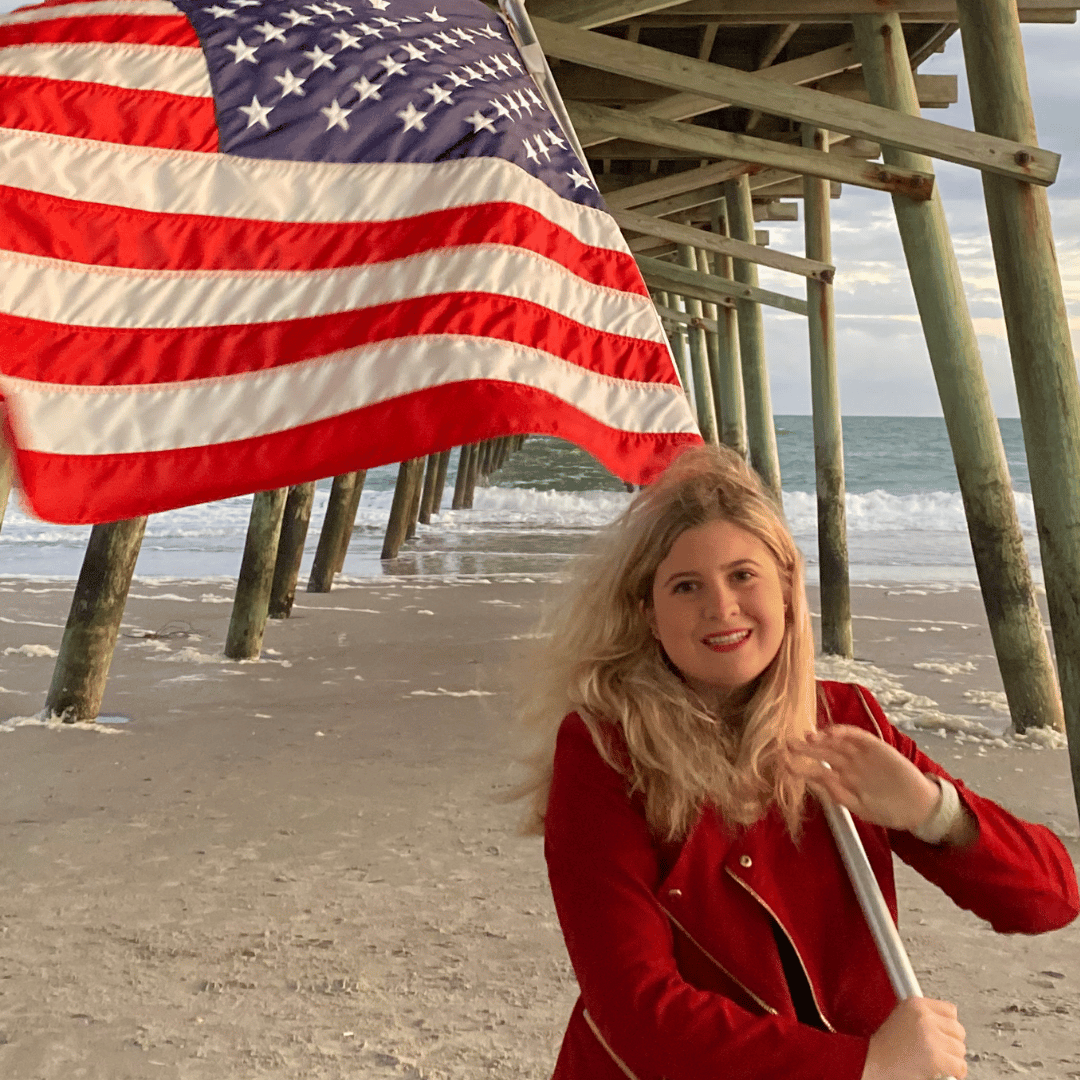 Reagan Faulkner is a student at the University of North Carolina Wilmington, where she currently serves as president of the university’s College Republicans chapter. Her leadership and passion for civic engagement have earned her national and local recognition, with appearances on The Ingraham Angle on Fox News, coverage in Fox Digital and The New York Times, as well as features in Wilmington-area news outlets and television stations.
Politics has been a lifelong calling for Reagan—fittingly, she was named after President Ronald Reagan. From an early age, she has been driven by a commitment to public service and a belief in the power of young voices to influence the future. She is especially passionate about educating the next generation of Americans on how to mobilize, inspire their peers, and create meaningful change.
Outside of her political work, Reagan finds joy in the simple things: reading, spending time at the beach with her boyfriend and friends, and boating with her family. Her values center on the preservation of American traditions such as the importance of the nuclear family, Christian principles, and cultivating respectful discourse across differences.
Reagan brings to the podcast not only her personal convictions but also an unwavering dedication to fostering conversations that challenge, encourage, and empower listeners to think deeply about the values that shape our society.
Opinion Articles

The Nehemiah Way
America: Reflections of a Grateful Immigrant on America's 250th Anniversary