Episode 28: The Real Stakes in the Middle East: Energy, Security, and America’s Future
March 10, 2026
Watch on YouTube
Listen on Buzzsprout
Like and Subscribe



 This episode of The Reagan Faulkner Show argues that the real stakes in the Middle East are about energy, global shipping lanes, and America’s long-term security, not just another “foreign war.” Reagan walks through how China illegally propped up Iran’s oil industry via dark fleets, sanctions evasion, and renminbi payments, creating a symbiotic alliance between Beijing and Tehran that strengthened both regimes while undermining U.S. power. She explains how U.S. action against Iran directly targets that corrupt partnership, weakens China’s supply chain advantage, and forces Beijing back onto a level playing field for energy.
She then focuses on the Strait of Hormuz, where Iranian threats and attacks have driven marine insurance costs through the roof, stranded ships, and helped push global oil to around 80 dollars a barrel. By eliminating Iran’s radical regime, she argues, the U.S. can stabilize this vital chokepoint, lower insurance risk, and reduce oil prices for America and its allies. Finally, she connects the takedown of Maduro in Venezuela to the same strategy: cutting off another major Chinese oil source, providing alternative supply for nations blocked by the Strait, and disrupting cartel and fentanyl pipelines that are killing Americans and crippling the U.S. workforce. Taken together, she concludes, this three-tier approach is unapologetically America First—aimed at cheaper energy, safer commerce, weaker China, and a more secure homeland.
What's up guys and welcome back to the Reagan Faulkner Show. So there's been a lot of disagreement, a lot of hostility, a lot of discourse online concerning the Iranian conflict and why it's not America first and why it's bad and why it's causing all these problems. So today I wanted to take a minute to break down what's actually happening in the Middle East, why it is America first strategy and the benefits that it's going to yield to the United States long term.
So we're going to look at the three-tier strategy that the U.S. is using on Iran and across the globe and dive into all of the problems that it's solving despite a lot of the bloodshed that we're seeing right now and a lot of the immediate effects why it's going to be positive in the long run. So first we need to break down and analyze Iran's relationship with China. So in March 2021 during the Biden administration, China pledged about 400 billion dollars to Iran through their Belt and Road Initiative.
Now if you don't know a lot about the Belt and Road Initiative, it's basically China's initiative to build infrastructure throughout developing countries and foreign countries to increase their ability to trade with these countries. So they pledged 400 billion dollars to Iran through the Belt and Road Initiative within a 25-year agreement that they had to support each other and it's also tied in, so China was the purchaser of about 90% of Iran's total oil exports. So they were holding together basically Iran's entire oil industry, only 10% of Iran's oil was going to countries and people other than the Chinese Communist Party.
So this was only about 12% of China's total oil imports though, so they were propping up Iran's total oil industry with only 12% of their total oil imports, which is kind of crazy. So by 2022 they were importing about 17.8 million barrels per day from Iran, which sounds like a lot but in the grand scheme of the amount of oil that countries use, it's really not that much. So 17.8 million barrels per day from Iran.
But they did all of this by illegally skirting US sanctions, so that's why it actually is a lot and why it's actually extremely relevant because not only were they propping up Iran's complete oil industry, but they were doing it completely illegally and violating US policy and US sanctions that other countries were following and they were getting huge, huge, huge discounts for doing this. So we're gonna dive into what they were doing and it gets a little confusing so bear with me here. Basically, independent Chinese refineries.
So these are refineries that are not state-owned, refineries are not owned by the Chinese government and it was not large private sector refineries. These were relatively small private refineries in China. They're called teapots.
They would buy the sanctioned Iranian crude oil and it would allow the government and like these bigger private refineries to not get busted for violating the sanctions, which protected their economy and their government. So after these teapots is what they're called, or these small private refineries would buy the Iranian crude oil, Iranian vessels would load up the oil and carry it to places such as the Middle East Gulf, the Strait of Malacca, and in some cases even off the coast of Malaysia. Now at this point they would transfer the oil off of the Iranian vessels and on to quote-unquote non-sanctioned tankers and these tankers are normally referred to as a dark fleet.
So this would happen sometimes like multiple times. It happened over and over and over again in order to lose track of who purchased the oil, where it originally came from, where it was actually going, and how it eventually got to China and got to these small private refineries. Now other tankers loading in Iran would participate in what's called quote-unquote spoofing, which is where they purposely broadcast false shipping information and raw information to distract from the real purchaser and the real destination of the Iranian oil.
This was again to avoid US sanctions and oftentimes these dark fleet ships that we were talking to just lack transponders. They just don't have transponders, they don't follow maritime rules. Russia does this as well and that keeps their real-time locations unknown so that they can get the Iranian oil, send it to places it's not supposed to go and not get caught by the US or other countries that are following sanction rules.
Usually once the oil reaches China it will be rebranded as either Malaysian oil or just general Middle Eastern oil to avoid detection and to avoid people figuring out that it is coming from Iran at this discounted price and avoiding US sanctions. And then finally all of the payments for this oil are made through small Chinese banks and all payments are made in Chinese currency. Again this is to avoid major major major Chinese banks from getting US sanctions placed on them and to avoid detection since our global currency is pretty much the dollar and not Chinese currency or other currencies.
Chinese currency isn't even close to being the dominant currency of the world right now. So now we see we see Iran getting tons and tons and tons of this Chinese currency which is called renminbi and I apologize if I'm saying any of this wrong but the Chinese currency is called renminbi is the actual name for it and it's strengthening Iran's government to a degree because they're not getting US dollars because the US isn't supporting Iran. They don't have an economy and they're completely cut off from the entire rest of the world because of their extremely religious leadership and a leadership that doesn't want to be part of a globalized system that doesn't want to work with the world.
So China's basically their only ally. They have all this Chinese currency. They are buying Chinese goods.
They're participating in trade with China. They're strengthening China's supply chain and it's just kind of like this symbiotic relationship where they're both strengthening from each other because nobody else really wants to work with Iran and China's breaking the rules and strengthening itself. So most countries refuse to do business with Iran because of their government's leadership, because of the human rights abuses that's happening in the country, because of US imposed sanctions and the threats that that puts on other countries and also just how expensive it is to buy goods from Iran specifically oil.
So by destroying Iran's corrupt and authoritarian government one of China's key allies is completely eliminated and China must start playing by the rules again. They must start abiding by rules that other countries including America have to abide by which cuts down their competitive advantage. This forces them to be more competitive in comparison to other countries and it lessens the power that they have over the US, over other countries and over the spread of Chinese communism.
So that's our first main point and then we're jumping into our second one which is generally related but this is talking about the Strait of Hormuz. So this is a waterway that separates the Arabian Sea from the Persian Gulf and it reaches its narrowest point of about 34 miles or 55 kilometers where Iran and Oman kind of come together. It's a very narrow gap of about 55 kilometers 34 miles between Oman and Iran.
So about 13 million barrels of oil pass through this waterway daily which accounts for about 20 to 31 percent of total global oil shippage. So this waterway is used by Iraq, it's used by Kuwait, it's used by Saudi Arabia, United Arab Emirates, and Iran. So it's used by a lot of different countries that sell a lot of different things and specifically all of these countries sell oil which every country on earth needs in order to have energy, in order to run their infrastructure for their country, in order to make sure that their citizens have jobs, make sure that their citizens have homes, have electricity, all of the things that people need to live, all the things that a country needs to not be a third world country for all intents and purposes.
So while Iran has at this time they've officially closed the strait so nobody can really pass through it, oil can't get through it, nobody can trade, no commercial vessels can go through, a quieter issue is also playing behind the scenes that not a lot of people are aware of and this is referring to marine insurance. So marine insurance must be held by all commercial vessels not just oil tankers and things that are carrying oil, all commercial vessels to be allowed to dock at ports, to be able to obtain credit from banks, and for crews to willfully sail on the ships. So it's kind of like for the crews it's kind of like a union, like they need to make sure that the ship is insured before they're willing to work on the vessel.
So after the initial strikes from Operation Epic Fury, many insurance providers just started canceling marine insurance for any vessel that was passing through the Strait of Hormuz. They were just canceling it because it was so risky, the war risk was too high for them to feel comfortable insuring these boats any longer. So this has left many ships just literally stranded in the strait, out of the strait, some have oil on board that they can't unload, others are waiting to go load oil to take it to other countries, and they literally can't do anything because if they leave the strait or enter the strait and they get blown up, they will not be covered by insurance, and the lives, the property, everything on there, anything that they're selling will all be lost, all be uninsured, will not be covered.
So they are just literally stuck. I think I read it's over a hundred ships that are just stuck around the strait, in or out of it, without insurance, and they literally cannot do anything. So because of supply and demand, as well as these increased premiums, because for the people who haven't completely canceled the marine insurance, they've raised the premiums so much that it's extremely, extremely expensive to insure these boats, and basically what they'll do is they'll insure each trip, instead of insuring the boat as a whole, they'll insure the trip.
So it's so expensive to insure any trips going in and out of the Strait of Hormuz that it's raising the price of oil altogether. Like I said, supply and demand, the fact that there's not enough oil coming out of the strait, as well as the increased premiums, the price of oil is going up. I believe it's about $80 per barrel right now.
So this is also playing into rising oil prices. Now, to be fair, Iran has a history of just randomly threatening to close the strait, and they also have a history of just threatening to bomb and destroy vessels going through the Strait of Hormuz for like no reason. So this isn't necessarily a new issue, it's just more credible now.
So like I said, instead of just raising the price a little bit, these companies are either raising marine insurance a lot, or they're just completely canceling the insurance on the trips. So this has been an issue before, but not to the degree that it is right now for the commercial shipping vessels. And again, this isn't even just oil.
This is anything going in and out of the strait. This is anything commercial going in and out of the strait, whether it be oil, whether it be food, whether it be like just goods, just general goods like clothes and kitchen items and things like that. This is anything that can go in and out of any of those ports that is not able to be accessed right now.
So by eliminating Iran's unpredictable, radical leadership, tensions in the Middle East and the risk of selling and selling goods that have to pass through the Strait of Hormuz are likely going to lessen, which again is going to reduce the cost of marine insurance and consequently reduce the cost of Middle Eastern oil, which is a net positive for everybody. Now thirdly, the last point that we're going to cover regarding Iran and our global interventions right now is in response to all of the complaints over arresting Maduro, and this was really essential to maintaining an oil alternative while this Iranian conflict is being carried out. It was great strategy to make sure that Maduro was handled before anything escalated in the Middle East because now there's an alternative for oil.
Again, the U.S. doesn't need it. We get the majority of our oil from Canada and Mexico, so this is not an issue for America except for the fact that oil is $80 per barrel across the globe. Like that is just the price of oil right now regardless of where it's coming from, and again we barely got any oil from Venezuela either.
So Iran and Venezuela does not affect the U.S. hardly at all compared to other countries like Canada and Mexico, but it affects countries that are not us. It affects allies. It affects a lot of other people that are in a situation and don't have oil right now, and again eliminating Maduro also helped with the cartel and the drug issue, but like I said, while the U.S. does not receive a lot of oil from Venezuela, it offers an alternative for other countries that utilize the Strait of Hormuz, and while it's not passable, while they can't get oil in and out of those areas, it also prevents a dictator like Maduro from charging more from the oil due to the rising costs and benefiting himself, his government lackeys, and cartels.
It allows the U.S. to actually work through oil negotiations with other countries on behalf of Venezuela to help other nations make sure that they have the energy and the oil that they need during this conflict. Now China, because it all goes back to China, China was purchasing about 68% of Venezuela's total oil exports, so again they're practically holding up Venezuela's entire oil industry, and if you know anything about Venezuela, their ability to refine the oil was extremely archaic. They were hardly getting any of the sheer amount of oil that they could be tapping into and refining and selling.
They were getting very, very small percentage of that, so China's purchasing about 68% of Venezuela's total oil exports. They are holding up Venezuela's oil industry. They're allying with another authoritarian dictator that's human rights abuses all over the country, and this is actually really important to China because they're importing about two-thirds of their reported oil from Venezuela, so if you thought what they were getting from from Iran was a lot, which it's 12%, it's really not that much, two-thirds of their oil is coming from Venezuela, so that's about, what is that, that's 78% of their total oil coming from those two countries alone.
That is really not good for China, really not good for China, so by arresting Maduro and working with assisting their regime change and working to solve the drug and cartel issues in the country and the trafficking issues, the U.S. has crippled two massive sources of China's energy reserves and protected our domestic homeland from foreign threats, so what does all of this have to do with America First? It sounds very global, it sounds very foreign, it sounds very risky, it sounds like we can lose a lot of American lives, so why am I sitting here trying to convince you that it's America First? Well, it's a three-tier strategy that's being played out right in front of our eyes, and if it weren't for the distraction and the noise in the 24-hour news cycle, it'd be fairly easy to see and to grasp. The conflict in Iran is crippling China's influence and their energy independence. It is crippling the growing strength of their currency and their supply chain and it's destroying their trade with Iran, and Iran was absolutely dependent upon China because nobody else on the globe will work with them and trade with them to the degree that China was.
It will also limit China's spread of communism and force them to buy oil at the general price that every other country has to buy their oil at, at retail value, instead of these discounted rates that was allowing their supply chains to have a competitive advantage, so now China's supply chains are going to be a little bit more expensive, they're gonna be more competitive with US trade and other countries that trade and other countries that manufacture, and they're going to be more on an equal playing field with the rest of the globe instead of having this advantage over everybody where everybody's buying Chinese goods and China's so much cheaper and China's so much more advanced. They're just gonna be more equal playing field, more even with everybody else. Now, by destroying Iran's radical regime, the Strait of Hormuz will become safer and marine insurance will become cheaper.
This is going to yield cheaper oil from the Middle East overall. By eliminating Maduro's regime in Venezuela, the U.S. has created a new source for oil for other nations which it can help negotiate the pricing of during the Iranian conflict. This move also destroys the push of fentanyl, which is being produced by China and distributed to cartels and drug dealers to be sold in the U.S. with other drugs to cause death, destruction, and addiction and cripple the U.S. workforce.
So yes, my argument is that this is 100% America first, as it will yield long-term cheaper oil for both America and the rest of the world, safer passage for all commercial vessels, including American vessels that are trying to increase trade with other countries that are accessible through the Strait of Hormuz, and it's also going to reduce China's influence, destroy many foreign proxies that are spreading radical Islamic terrorism, which we didn't even have time to touch on today, but there's so much to go into there regarding Iran's clerics and their radical Islamic takes and the human rights abuses and what they're doing to the women there. There's so much more to touch on that we didn't even have time to do today, and it's also going to work to eliminate the force of cartels that are being controlled by foreign dictators like Maduro. So instead of listening to newscasters and influencers and social media figures, it's crucial to conduct your independent research and find out for yourself why our leaders are doing what they're doing and how it will actually decrease your cost of living and increase your quality of life here in America.
Thank y'all so much for joining me on today's episode of The Reagan Faulkner Show. Remember to follow us on TikTok, Instagram, and Facebook at The Reagan-Faulkner Show, Instagram and Facebook at The Wilmington Standard for more content if you want something before our next episode. Make sure to leave a like and comment on today's episode what you want us to talk about next, and subscribe if you enjoyed this content, and I will see you on the next one.
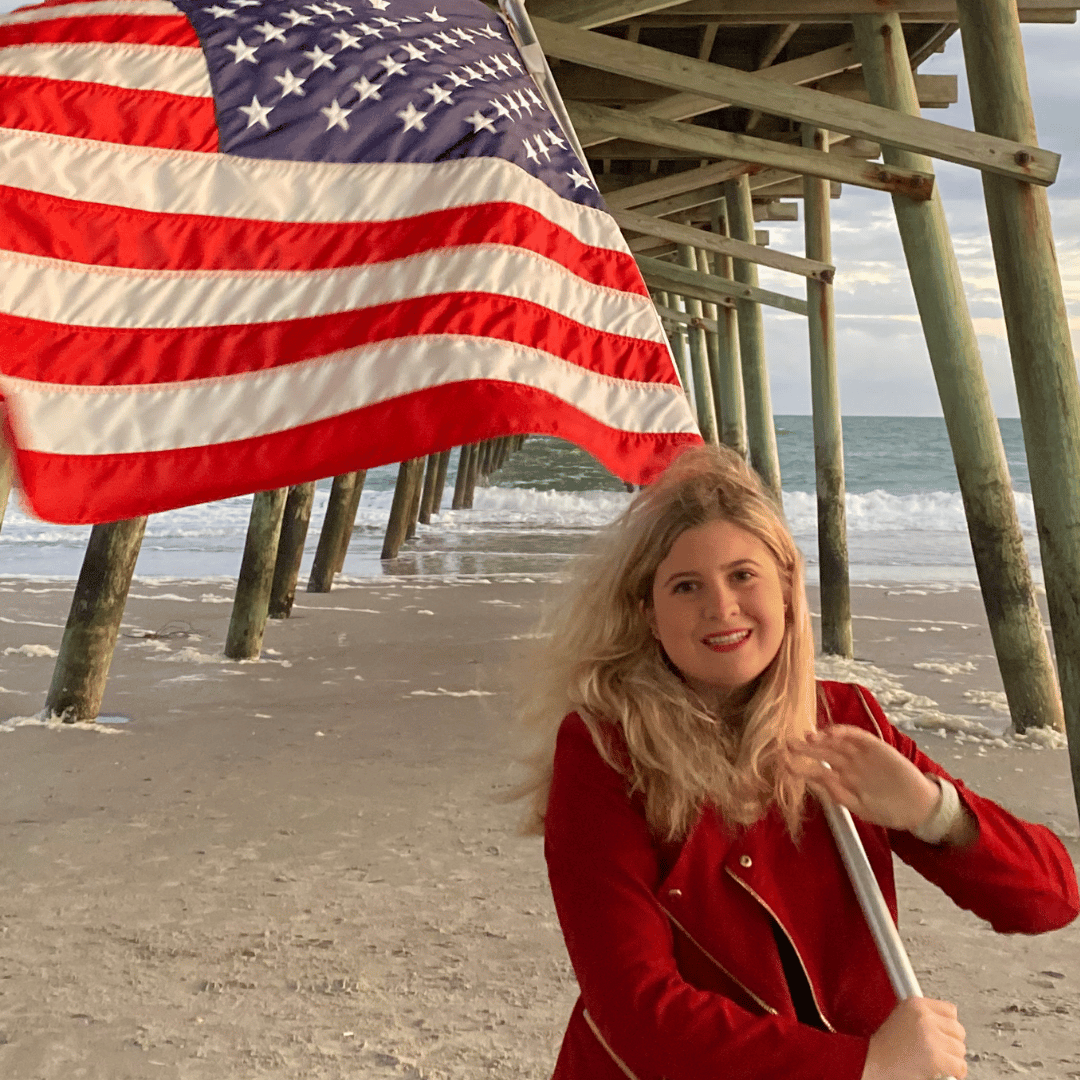 Reagan Faulkner is a student at the University of North Carolina Wilmington, where she currently serves as president of the university’s College Republicans chapter. Her leadership and passion for civic engagement have earned her national and local recognition, with appearances on The Ingraham Angle on Fox News, coverage in Fox Digital and The New York Times, as well as features in Wilmington-area news outlets and television stations.
Politics has been a lifelong calling for Reagan—fittingly, she was named after President Ronald Reagan. From an early age, she has been driven by a commitment to public service and a belief in the power of young voices to influence the future. She is especially passionate about educating the next generation of Americans on how to mobilize, inspire their peers, and create meaningful change.
Outside of her political work, Reagan finds joy in the simple things: reading, spending time at the beach with her boyfriend and friends, and boating with her family. Her values center on the preservation of American traditions such as the importance of the nuclear family, Christian principles, and cultivating respectful discourse across differences.
Reagan brings to the podcast not only her personal convictions but also an unwavering dedication to fostering conversations that challenge, encourage, and empower listeners to think deeply about the values that shape our society.
Comments
Opinion Articles

The Nehemiah Way
America: Reflections of a Grateful Immigrant on America's 250th Anniversary