
What Happens When Communities Stop Passing Down Traditions? - Episode 43
Reagan Faulkner on Big Rock, loneliness, and why saving local traditions might just save our country.
June 16, 2026
Watch The Reagan Faulkner Show on YouTube
Listen on Buzzsprout
Like and Subscribe


Episode Summary
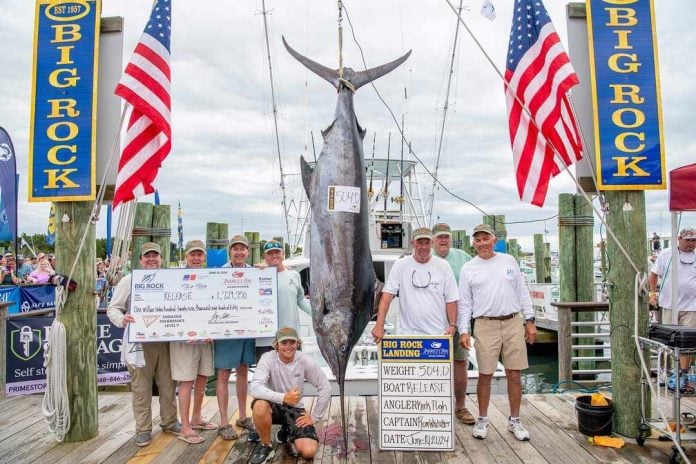
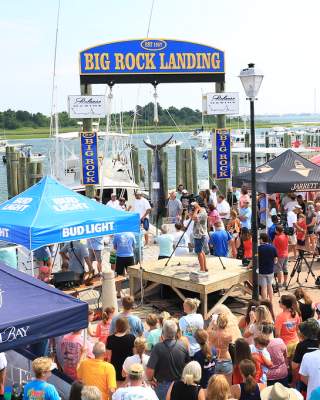
On this episode of The Reagan Faulkner Show, Reagan takes you from the docks at Big Rock in Morehead City to the heart of America’s loneliness crisis. Using one of the world’s biggest offshore fishing tournaments as a case study, she asks what happens when communities stop passing down traditions that give people identity, purpose, and a sense of place. Reagan breaks down the data on social isolation, political tribalism, and collapsing trust in institutions, and makes the case that strong families, local traditions, and bottom‑up communities—not new federal programs—are the real answer. If you care about the future of your town, your church, and your kids, this conversation will challenge you to protect the traditions that are still worth keeping.
What you’ll learn / Key moments
- 00:00 – Why Reagan skips the usual talk about elections and DC to start with a story about fishing instead of politics.
- 01:35 – The Big Rock origin story: five local fishermen, Captain Bill’s Restaurant, and a red wagon full of silver dollars that grows into a world‑class offshore tournament.
- 04:08 – Redefining tradition as a kind of “technology” for transferring values, identity, and community from one generation to the next.
- 07:49 – The loneliness epidemic: the Surgeon General’s warning, APA data, and why the most digitally connected generation is also the loneliest in American history.
- 12:25 – How trust really collapses: when family, church, and local relationships break down first, institutions follow.
- 17:00 – Big Rock as a working model of grassroots tradition that creates jobs, charity, summer rhythms, and multi‑generational belonging on the Crystal Coast.
- 19:46 – The uncomfortable truth: when communities stop producing belonging through traditions, people turn to politics and other substitutes that can’t carry that weight.
- 23:54 – Reagan’s conservative answer to the crisis: subsidiarity, strong families, local communities, and intentionally keeping the traditions that are still worth passing down.
Call to action
If this episode gave you something to think about, do not stay on the sidelines—take a step toward real community today. Follow The Reagan Faulkner Show on Instagram, Facebook, TikTok, and Substack so you don’t miss future conversations on faith, culture, and the future of the country. Stay connected with The Wilmington Standard on Instagram and Facebook as we keep covering the stories and local traditions that still hold this region together.
And when you grab your next bag of coffee, support a company that actually lives out pro‑life values: order from Seven Weeks Coffee and use code REAGAN2026 at checkout—10% of your purchase goes directly to crisis pregnancy centers. Let’s choose to belong to something real, local, and life‑giving, and then pass it on.
Transcript
What's up guys and welcome back to the Reagan Faulkner Show. So this week we are going to be talking about something a little bit different than usual. We're not going to be talking about elections, although I know we've had a lot of primaries recently and we're not going to be talking about Congress, although I know there's been a lot going on in DC.
We're definitely not going to be talking about the latest political controversy because there is so much to even keep up with right now. To be quite honest with you, what we're going to be talking about today is phishing. And I know that sounds kind of silly, you're probably thinking, Reagan, what does phishing have to do with politics or our country or quite frankly, what does phishing have to do with anything? And we talked about phishing last week with Trevor.
What are you going on about phishing? Well, you're going to get the idea here in a minute, but today we are in fact talking about phishing and it's going to all tie into what we've been talking about over about the last month. And we're going to be highlighting some important context about tradition and what is happening to tradition in the United States. So kind of to start off, what really got me thinking about this is I fished the Big Rock Lady Angler Tournament about a weekend ago in Moorhead City, North Carolina, and my dad is fishing the Big Rock Blue Marlin Tournament with my boyfriend's family.
So there's just a lot of fishing going on. It's really got me thinking. Now, if you're not from the North Carolina coast, you're not from North Carolina, you're not like a fisherman or an angler or anything, here's a little bit of context because Big Rock isn't just a fishing tournament.
It's not just about blue marlin and mahi and seeing which fish is the heaviest. It's actually one of the oldest and largest offshore fishing tournaments in the entire world, which is really crazy for it to be right here in Moorhead City, North Carolina. It actually started in 1957 when five local fishermen met at Captain Bill's Restaurant in Moorhead City, North Carolina, to form a fishing club out of the hopes that they would finally put their community on the map.
And the original prize back then was a little kid's like red wagon, you know, what we used to get towed in by our parents back in the day, filled with silver dollars. Now, today, Big Rock features over 270 teams. They've awarded more than six million prize dollars in one tournament alone.
And I believe that this tournament, they're awarding nine million dollars in total prize money and giveaway. And it's recognized as the largest nonprofit fishing tournament on the planet in the entire world. And it's been nationally recognized in magazines and is recognized among fishermen all across the world.
I mean, it's a big deal in the entire globe, not just here in North Carolina or even here in the United States. Nearly 70 years of tradition built by a community and passed down through generations and generations. Now, over the past week, weekend, standing on the docks, watching these families gather and these crews prepare, I found myself thinking about a much bigger question than who's going to win.
And I definitely was not thinking or questioning whether we would see Big Rock history broken with a 919.9 pound fish. We did see just a couple of days ago, but the question I found myself thinking about is what happens when society cut? What happens to a society when communities stop passing down traditions like this, like Big Rock, like other traditions, like the traditions that we're going to see with America 250? What happens when these traditions stop being passed down? And I don't think this is really a question about fishing or tournaments or America 250 or anything like that. I think it's more of a question about the future of America.
And I know that kind of sounds corny and you're like, how are we going to tie Big Rock into the future of America? What are you even talking about? Just hang with me here for a second. Think about it. Big Rock started with five men and a red wagon full of silver dollars because they had a mission and they had a goal.
Today, it's one of the most celebrated fishing traditions in the entire world. That didn't happen by a simple accident or because these guys were really determined or because they had a really strategic plan and they knew how to carry it out. It happened because a community ultimately decided what they valued and they passed that along.
Now, let's be kind of direct about something before we move any further. When most people hear the word tradition, and I'm sure you're along with me when you hear the word tradition, you think about nostalgia. Maybe you think about sentiment.
Maybe you think about something old fashioned, like a car. Or for me, it's like Christmas and those traditions that you do at Christmas time or Easter time or like seeing family thing about stuff like that. That's not what I'm going to be talking about today.
That's not what we're going to be covering in this episode. We're going to be kind of defining tradition differently. We're going to be defining tradition as almost a type of technology.
They are the most efficient systems that human beings have ever developed for transferring values, for transferring identity, relationships and community knowledge from one generation to the next. Now, research from the field of cultural heritage studies makes this point clearly. They say that cultural traditions passed between generations don't just preserve history.
They actively shape identity, provide a sense of belonging and establish the framework through which individuals understand their place in the world. Heritage and wisdom, as one body of research describes it, is, quote, passed down not by accident, but because it is deemed important and worthy of being shared with future generations. So let's think about what it actually means when a family or a community gathers around a tradition or, you know, heritage or something like this.
It isn't just an activity. It's the relationship between the grandfather who's fished these waters for 40 years and the 12 year old who's never been offshore or the teenager who's never caught their first fish. It's the stories that are told on the dock by families early in the morning before you go offshore or late in the evening when you get back.
It's the lessons that are learned through failure and patience and you get the fish right to the boat and you lose it at the last second or you hook it and you think you've really got something special and you lose it and you learn patience and diligence. And quite frankly, you learn just how to keep going even through the disappointment. The shared identity created by belonging to something larger than yourself is what we're talking about.
Traditions are how communities answer the question that, quite frankly, every single generation asks, which is, who are we and what do we ultimately stand for at the end of the day when everything's over, when you're like Job from the Bible and you don't have anything, there's nothing left. What do you ultimately stand for? Where do you draw that line? When traditions disappear, that question goes unanswered and something else fills the void or someone else will fill the void for you. Here's what I want to ground.
Here's where I want to ground this in what's actually happening in our country right now where we're going to kind of step aside from the whole fishing story and case study, because this isn't just a philosophical concern. This isn't just me kind of sounding like Matt Walsh saying, oh, my gosh, tradition is disappearing. This is actually rooted in fact, y'all.
It's documented and it's a measurable crisis. In May of 2023, the U.S. Surgeon General made a rare and striking declaration. He called loneliness a public health epidemic in the United States of America.
The data behind that declaration is stark. I mean, it's it's wild. According to the American Psychiatric Association's 2024 Healthy Minds Monthly Poll, 30 percent of American adults say they have experienced feelings of loneliness at least once a week.
Ten percent say that they are lonely every single day. Among young Americans ages 18 to 34, that Gen Z group that we've been talking about a lot recently, 30 percent report experiencing loneliness daily or several times a week, and only 46 percent of adults under 30 say they feel genuinely connected to other Americans. Now, let's contrast that with the fact that 83 percent of adults over 65 say that they feel genuinely connected to other Americans.
Eighty three percent of Americans over 65 compared to 46 percent of adults under 30. Let that sink in. The generation that grew up most connected digitally is also the loneliest generation in recorded American history.
The generation that we've been saying, oh, they have so many friends and it's great. They've learned how to be friends with people across the country and in other other countries and across the globe. And they're so connected and they know what's going on.
That is the loneliest generation in recorded American history. A 2025 American Psychological Association survey found that more than 60 percent of U.S. adults report feeling that societal division is a significant source of stress. Societal division.
We have a lot of societal division right now. That makes sense. And more than half say that they feel isolated, left out or lacking companionship often or some of the time.
Nearly seven in 10 said they needed more emotional support in the past year than what they actually received. The Survey Center on American Life put it plainly, saying, quote, Regular attendance at local events and participation in community activities have become exceptions rather than the norm. So let's take a pit stop and go back to Big Rock.
You look at those videos, maybe you were there, maybe you don't know what I'm talking about. And if you don't know what I'm talking about, look it up on TikTok or Instagram or YouTube and you'll get the idea pretty quick. All of the people that are turning out to watch that fish get weighed, that is not the norm.
That is the exception. According to the Survey Center on American Life, going to things like the State Fair nowadays, going to things like the Seafood Festival, also in Moorhead City, going to things like the Azalea Festival in Wilmington, going to things like America 250 celebrations. Those are exceptions rather than norms.
Doing stuff like that as a community with fellow Americans or with your neighbors, that is not normal anymore the way it was when our parents or grandparents talk about going to stuff like that. And it's just, quote unquote, what you did. That is not what young Americans do anymore.
And it's going to be a huge detriment to our country. And we're already seeing the impact of it because of how lonely people are nowadays because they'd rather, you know, think that they're connected on their phone, I guess you could say. This is not a small problem.
This is not something that's like, oh, it's being blown out of proportion or anything like that. And it's not a problem that institutions created in isolation. It is at least in part the result of communities failing to hold the line on the things that produce belonging in the first place.
We talk constantly about the collapse of trust in America, at least over the past month. We've talked about that quite a lot. And like we've discussed, trust in media is at historic lows.
Trust in government, universities and major institutions continues to decline. And we debate endlessly about how to rebuild it. You have every podcaster and commentator on the planet talking about, well, we need to destroy it or no, we need to fix it or it needs to burn before it can be rebuilt or no, I think it's fine as it is.
We just need to reframe it. There is constant discussion about what needs to be done to fix it. But that conversation, at least in my opinion, is missing the deeper problem and the crux of the issue at hand.
Trust, quite frankly, doesn't collapse on its own. It collapses when the structure that produces trust in the first place collapses first. For most of human history, trust wasn't built by institutions.
It was not administered or created by bureaucrats. It was built by relationships, by families, by churches, by local organizations, by neighbors who showed up year after year after year at the same events, on the same docks or in the same communities. Robert Putnam, the Harvard political scientist who wrote the book Boeing Alone, documented this collapse over decades.
His research showed that Americans have become increasingly disconnected from family, friends, neighbors and civic structures. People are still doing the same activities, but their quote unquote league, as Robert Putnam describes it, is gone. The recurring gathering, the shared identity, the community that forms around consistent participation, it's been replaced by one off events and isolated encounters.
The AmeriCorps civic engagement research found that only 57 percent of Americans report talking with their neighbors even once a month. Only 8 percent speak to their neighbors daily. And I can tell you that this is pretty accurate.
I know who my neighbors are, but I don't really ever see them. If I do see them, I'll wave or we might say hi. We don't talk.
I don't know a whole lot about my neighbors. One neighbor I met at the pool when I first moved in and we talked for maybe 30 minutes, and that's probably the longest conversation I've ever had. We don't have a relationship.
The other people that live in my neighborhood, I don't know any of them. I don't talk to them at all. One of them actually found out I was one of my friends at the GOP.
I didn't even know that she lived in my neighborhood. So, I mean, this is true, at least in my personal experience, at least in my boyfriend's personal experience. This is true.
I don't know if y'all talk to your neighbors. Drop it in the comments if you do, because I'm actually interested. My parents talk to their neighbors on occasion because we live at the beach and it's tight, but I think it really is the norm that people don't talk to their neighbors like they used to.
It's not like the 80s when everybody was hanging out and had these great relationships and their kids all played together and rode bikes together. Now, the Survey Center on American Life's research that we discussed earlier confirms a troubling class divide in this breakdown. The institutions that once gave working class Americans social capital, being marriage, religious community, civic organizations, those have declined sharply and the decline has hit hardest among those without college degrees.
The people who need community the most are losing it the fastest. And if we kind of look at that, I think that you have to have a college degree to have this social capital, I guess you could say. Then what does that say about the bureaucracy and institutions and what we're being taught? That the only people that have community are the ones that have gone through the entire collegiate system.
I think that is also quite interesting in and of itself because we don't see community in the blue collar, hardworking Americans that didn't go to college. We don't see them interacting with each other. That's what this study is saying.
But we do see that with those who have graduated, those who have had similar experiences, those who have been taught generally the same thing and believe generally the same thing due to their college education. This is what I mean by the collapse of cultural inheritance. It's not just that we've lost the traditions, it's that we've lost the transmission mechanisms, the structures and gatherings and relationships that moved values, identity and belonging from one generation to the next.
So let's come back to Big Rock for a minute because I think like I said earlier, this is a pretty useful case study in what community transmission looks like when it works and when it works properly. Big Rock wasn't created by a government program. It wasn't engineered by a consultancy or funded by a federal grant.
There was no like bureaucratic help to make Big Rock happen, to make it succeed and to make it last 68 years. It was created by five men with a shared vision, a local waterfront and a little red wagon full of silver dollars as prize money. What those five men built in 1957 became something the Crystal Coast has organized around for nearly 70 years.
It has generated millions of dollars in charitable giving. It has employed captains. It's employed crews, local businesses across multiple generations.
It has created an annual rhythm that entire families plan their summers around. I mean, there have been so many things this week that I've had to turn down because it's Big Rock week and because my family plans a good chunk of our summer around this one week, along with my boyfriend's family. And critically, it passes something down every single year to the newest members of our society and to the youngest members of the rising generations behind us.
The grandfather who competed in the 1970s brings his grandchildren to the docks today. The families who grew up watching weigh-ins become the families who crew the next boats. The community shows up together.
We celebrate together and we send the next generation offshore with a sense of identity and belonging that no algorithm can ever replicate. That's not an accident. That's what happens when a tradition is intentionally built and consistently maintained.
When there's no institutional distrust, when there's no dishonesty, when it's pure, when it's honest, when it's just naive almost, when it's that sense of just innocence that we have as kids. Yes, they have a lot of rules in Big Rock, but very rarely do you see any institutional distrust or dishonesty happen within it. It's fair.
The best team wins. There's a lot of luck within it. It makes people motivated to keep trying and to keep doing it.
It motivates parents and grandparents to bring their kids up within it and to take them to watch the weigh-ins or to teach them how to be mates and eventually captains or for the wealthier individuals in our society to own a boat like their parents did one day and to help contribute to society by owning it and employing a captain and mates and competing every single year. It's worth asking, what would Carteret County look like if Big Rock had faded away 20 years ago or 30 years ago or if it wasn't nearly as big as it is today, if people didn't latch onto it in a way that they have and turned it into this amazing tradition for our community and for our state? What would be missing from the community, not just economically, but socially? What relationships would have never been built? What values would have never been passed down? What kids would have never grown up with the motivation and drive and determination that they have today? Every tradition that disappears leaves behind a vacuum and, quite frankly, something else will fill it and it'll probably be something that's engineered to fill it rather than something that gets built organically like Big Rock. Here's the uncomfortable truth.
When communities stop producing belonging through traditions, through relationships, and shared identity, people don't stop needing belonging. They find it somewhere else. People will never stop needing belonging or companionship or leadership.
They will simply go somewhere else and find it somewhere else and that somewhere else may not be as good or as organic or as pure or as innocent as where they were receiving it before. And the perfect example is that increasingly people are finding it in none other than politics. And this helps explain something that we talked about in last week's episode.
Why politics has become so emotionally intense, so identity driven, and so tribal. We talked about this in the interview with Trevor and we talked about it the week before as well. It's not primarily because people love ideology.
I've never met somebody that just genuinely is so fond of ideology that that's why they are politically interested and politically motivated and politically driven. It's because politics increasingly provides what communities used to provide and that is identity, belonging, moral certainty, purpose, and a sense of being part of something much bigger than your own personal self. When a 25 year old has no church community, they're not married, they have no civic organization, no multi-generational gathering place, and no local tradition that ties them to a place and a people, they're told that their political identity is who they are.
That is the crux of their person. That is their integral identity, you could say. Their sole purpose.
So of course, that identity is going to become emotionally charged. Of course, criticism feels like a personal attack when you've been told that that's your personal identity. And of course, the tribe must be defended.
I would argue to the point that this is why we've seen an increase in political violence. Not because people can't handle their emotions as well, but because people feel like they are personally being attacked by the opposing party or the opposing person or that they feel that their tribe and their little discord community or whatever is being personally attacked or personally persecuted by a certain person or identity group or political sect or whatever it may be. Politics became a substitute for community precisely because community has collapsed.
And that substitution is extremely dangerous. Not because political engagement is wrong. It's not wrong.
People probably need to be more politically engaged in the right way. But because politics was never designed to carry the full weight of human belonging, it just wasn't built for that. Even in the Roman Empire, when we see such heavy involvement in politics, it wasn't carrying the full weight of their human identity and their belonging.
It was something that they did and they also had community. That was not the sense of their community and their identity. And when it's asked to serve that function, when politics is asked to serve the function of carrying the full weight of human belonging, it becomes distorted.
It becomes more emotional, more extreme, and increasingly more fragile. The Surgeon General wasn't wrong to call this problem a public health epidemic. Social isolation carries mortality risks that researchers have compared to smoking 15 cigarettes a day.
It's linked to cardiovascular disease, depression, anxiety, and cognitive decline. We are not just watching a political crisis. We are watching a community crisis that is expressing itself politically because it has nowhere else to go.
This is where I want to make a direct argument, not just as a podcaster or a commentator or someone who is interested in politics, but as someone who believes that conservatism has the right answer to this problem if we're willing to articulate it and share the message in an appropriate way and in a successful way. The answer to the loneliness epidemic is not a federal program. We have enough federal programs.
We need less federal programs. It is not going to be solved through a federal program. I promise.
It is not going to be a government-funded belonging initiative or a new bureaucratic community building framework managed from Washington. That is not where we are going to find the answer because, like we've already discussed, we don't trust institutions, so more institutional builds from bureaucracy and administrators is not going to solve this problem. The answer is what we as conservatives have always known.
Even if we don't always say it clearly and even if, as I've argued before, our messaging is not as effective as it should be. Strong families, strong local communities, strong traditions, strong civic institutions that are built from the bottom up and not administered from the top down by corporate bureaucrats or government bureaucrats. Subsidiarity, which is the principle that decisions and functions should be handled at the smallest, most local unit capable of addressing them.
This is something that de Tocqueville praised back in the 1700s. It is not just a political philosophy. It is a description of how belonging actually works.
Belonging is produced locally. It's produced relationally. It's produced through repeated, consistent, intergenerational participation in things that actually matter.
Tournaments, churches, civic organizations, family rituals, community events that have been running for decades and decades and decades and that are passed along through generations. You cannot manufacture belonging at scale. It's not like something that you can buy on Amazon that you can just order or buy the cheapest version and hope that it works.
You can only create the conditions for it to grow. It's like a plant or a child that you want to nurture and raise up in just the right way to yield the absolute most success or the most reaping at the end of it, like a farm or something like that. And conservatives who have always understood the limits of centralized power and the irreplaceable value of civil society should be the loudest voices in making this case right now.
I think we're doing a really good job of it. You see people like Isabel Brown arguing for more marriage and earlier births and things like that. She's catching a lot of flack for it, but ultimately she is right, along with Brett Cooper and others that are making these appeals.
But the left's answer to this is more institutions. They want to solve this crisis through more administration, more bureaucrats, more institutions, more government funding, more government programs, more government generally, and more managed community from above. But like we just said, community can't be managed.
It can't be mass produced. It can only be nurtured and grown and helped along the way. Our answer should be more family, more local, more tradition.
And I like to think more Big Rock. Now, standing at the docks at Big Rock this week, I thought about those five men who met at Captain Bill's restaurant back in 1957. I thought about what was that time period like? What were their goals? How did they think they were going to get their message out? Because they didn't have social media back then.
They couldn't mass produce a Yeti with the logo. They couldn't ask ChatGPT to make a really cool flyer and post it up everywhere. I thought a lot about what this undertaking really meant for them and for just five businessmen that were trying to eat lunch one day.
They didn't wait for someone to build the community for them. They built it themselves. They built it literally from the ground up without technology, without AI, without social media, without SMS marketing and MailChimp email campaigns.
They built it with a vision, with a waterfront, and with a little red wagon full of silver dollars. Nearly 70 years later, that decision is still producing community. It's still producing belonging, and it's still passing down something worth having.
It's still teaching and mentoring and saving people from going down the wrong path because it gives them a sense of purpose. Whether they're a mate or a captain, a perfect case study is the boat builder's choice. If you haven't heard of it, it's worth looking up.
We won't get into the whole story right now, but definitely check it out and check out their captain because he's the perfect example of this. This is the model. Passing down that belonging, that sense of something worth having, that mentorship, that is the model.
More family, more grassroots, more local. Not every tradition needs to become a world-class tournament. It doesn't need to become a must-do in the fishing magazines or anything like that.
It just needs to work, and most don't become world-class like that. Most really don't. Most are just small, local, hallmark little festivals.
If you've ever watched Gilmore Girls, yeah, it might have been in the Stars Hollow Gazette or something like that, but it wasn't some sort of nationally recognized festival. It was something local that was managed by the citizens of that community. Most of these very important traditions happen around dinner tables.
They happen at family dinner tables or on family boats, or here they happen at beaches under shibumis. They happen in church parking lots. They happen at youth sports leagues or county fairs that have run for 50 years in their community organized.
What matters is that someone decides they're worth keeping. What matters is that they stay local. The research is unambiguous on this.
Cultural heritage and tradition are not passive. They don't maintain themselves. They require active, intentional transmission from one generation to the next.
The knowledge, the values, the identity that are embedded in traditions are, quote, often learned from previous generations and are considered an integral part of our identity, but only if someone takes the responsibility to pass them down. That responsibility doesn't fall to institutions. It falls to normal, everyday people like you and me, to communities, to the kind of people who grow up on the docks every June because their parents showed up and their grandparents showed up and they intend to make sure that their children show up too.
If you are someone who cares about tradition, fish it, tend it, and protect it. Bring the next generation into it and don't assume that someone else will because either they won't or they'll bring them into something that's not as innocent as what we've been talking about. They'll have an ulterior motive behind what they're doing.
If you're someone who has lost the connection to tradition, go find one that's worth belonging to. Join something. Show up consistently and let those roots grow so that you don't become one of those statistics because the most important things in a community are not the ones that get built.
They're, quite frankly, the ones that get kept, that get nurtured, and that get maintained and passed down through multiple generations. Here's what I want you to take away from today. The loneliness crisis in America is real.
The collapse of community participation is documented and very, very measurable. The political tribalism and identity-driven extremes we see all around us is, at least in part, the downstream consequence of a society that stopped passing down the things that produce belonging. But this isn't a hopeless story.
This isn't where it stops. This isn't saying that we're entering the dark ages or anything like that because we the solution is not complicated at all. It doesn't require a new law or government program or a think tank report.
It requires people who decide that something is worth keeping and then, quite frankly, they keep it. They nurture it. They maintain it.
Big Rock has been worth keeping for nearly 70 years. The families who built it and the community that gathers around it every single June are doing something more politically significant than most of what happens in Washington. They are producing belonging.
And that is the foundation for everything. That is the foundation for every voter turnout, for every community that is successful, for every program that is not government-funded, for every charity and nonprofit that actually does meaningful work without a grant behind it. So what I want to hear from you is what traditions are you carrying? What did someone pass down to you that shaped who you are, who your family is, or who your kids are? And what are you doing to make sure that the next generation receives it? If today's episode gave you something to think about, be sure to like and subscribe and follow us on our socials.
Thank y'all so much for joining me today and I can't wait to see you next week.
About Reagan Faulkner
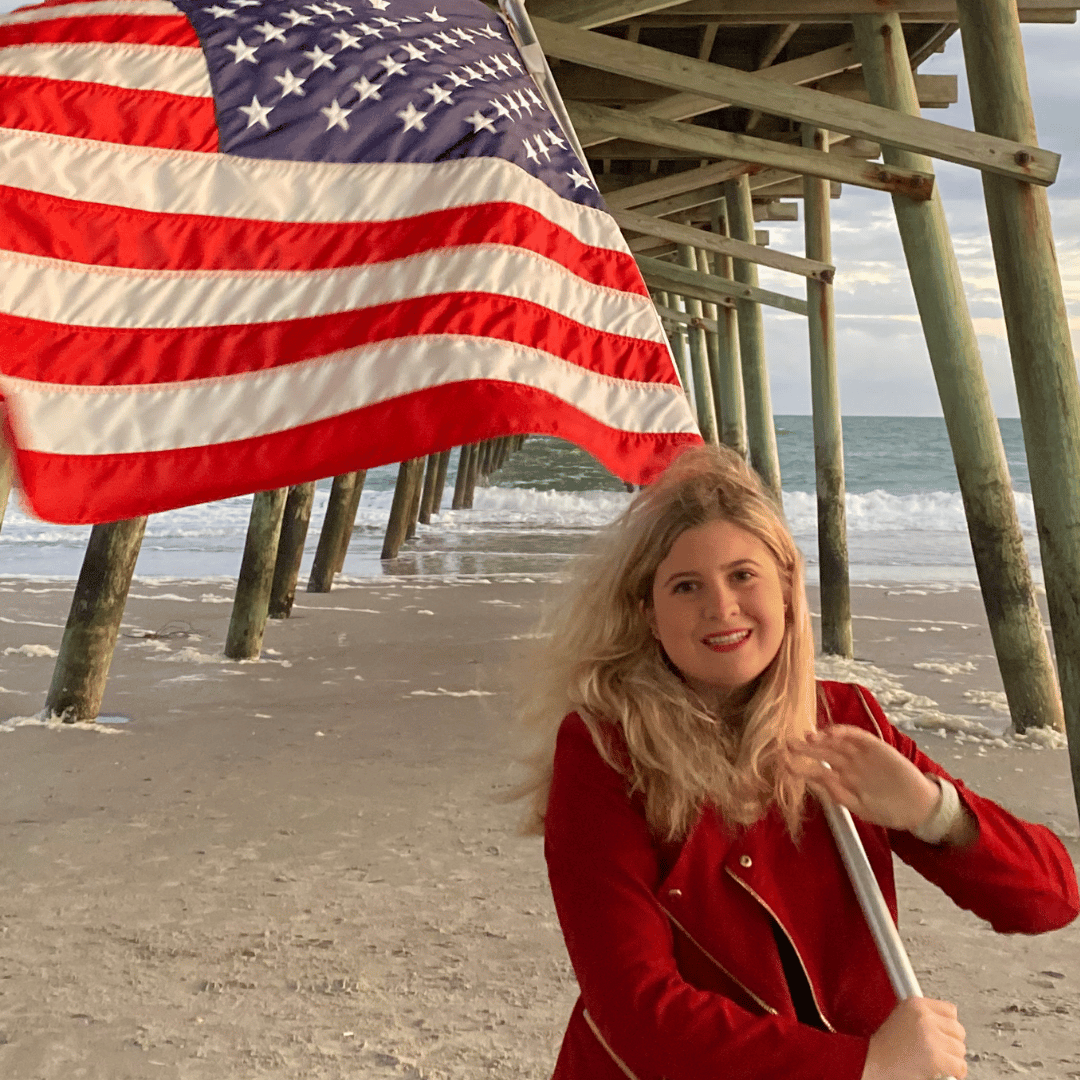 Reagan Faulkner is a student at the University of North Carolina Wilmington, where she currently serves as president of the university’s College Republicans chapter. Her leadership and passion for civic engagement have earned her national and local recognition, with appearances on The Ingraham Angle on Fox News, coverage in Fox Digital and The New York Times, as well as features in Wilmington-area news outlets and television stations.
Politics has been a lifelong calling for Reagan—fittingly, she was named after President Ronald Reagan. From an early age, she has been driven by a commitment to public service and a belief in the power of young voices to influence the future. She is especially passionate about educating the next generation of Americans on how to mobilize, inspire their peers, and create meaningful change.
Outside of her political work, Reagan finds joy in the simple things: reading, spending time at the beach with her boyfriend and friends, and boating with her family. Her values center on the preservation of American traditions such as the importance of the nuclear family, Christian principles, and cultivating respectful discourse across differences.
Reagan brings to the podcast not only her personal convictions but also an unwavering dedication to fostering conversations that challenge, encourage, and empower listeners to think deeply about the values that shape our society.
Opinion Articles

100,000 Cameras and Counting
Free Speech, If We Can Keep It