
Why Politics Became Identity First - Episode 44
Identity, trust, and why politics now feels personal instead of merely political.
June 24, 2026
Watch The Reagan Faulkner Show on YouTube
Listen on Buzzsprout
Like and Subscribe


Episode Summary
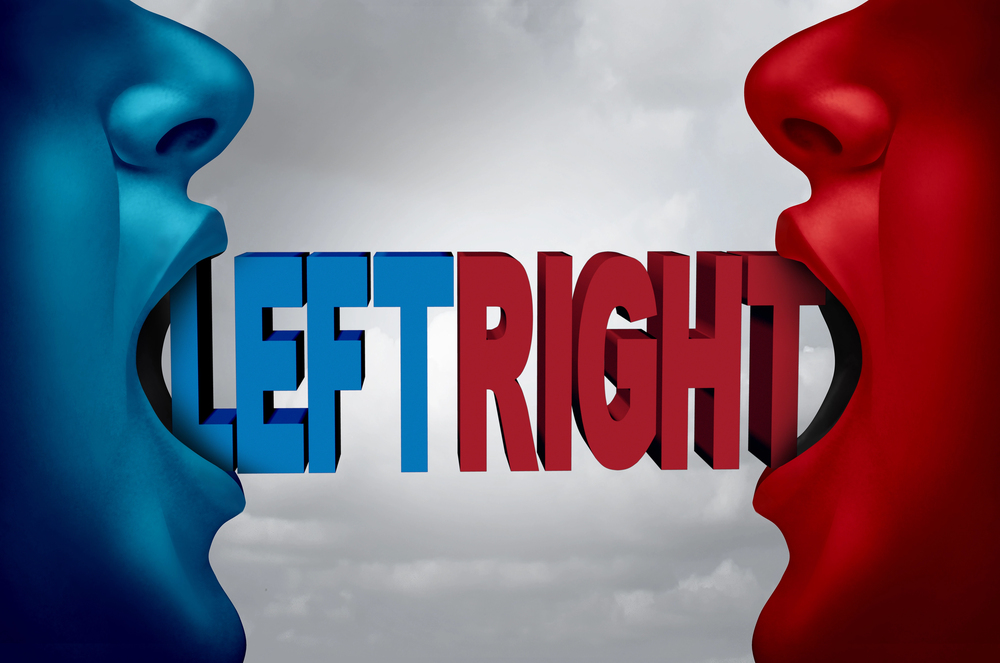
In this episode of The Reagan Faulkner Show, we look at why political fights today feel less like policy disagreements and more like personal attacks on who you are at your core. We walk through how belonging collapsed in churches, local communities, and institutions long before politics turned into a primary identity, and why that shift is driving exhaustion, anger, and even political violence. Reagan breaks down what Pew and other researchers are seeing in younger Americans’ trust and media habits, and why the rise of creators and news influencers is changing the conservative movement’s future. Most importantly, we talk about how conservatives can respond with authentic voices, real relationships, and content that offers belonging instead of just outrage.
What you’ll learn / Key moments
- 00:00 – Why political disagreements now feel like personal rejection and identity attacks instead of normal policy debates.
- 03:05 – How Americans historically rooted their identity in faith, family, work, and local community, with politics running parallel instead of on top.
- 05:44 – The massive cultural shift from political opinions to political identities and why that change is reshaping American life.
- 06:04 – What Pew’s data shows about exhaustion, anger, and our “toxic relationship” with politics in the 2020s.
- 09:59 – The slow-motion collapse of institutional trust and why younger Americans feel less attached to their communities and traditional news.
- 11:01 – Why humans are inherently tribal, what Genesis and social identity theory tell us about in‑groups and out‑groups, and how the internet supercharged it.
- 14:40 – How online fandoms, influencers, and niche communities turn disagreement into rejection and intensify polarization on both the Left and Right.
- 18:40 – Why people now live, date, move, and consume media along political lines, and what that reveals about politics as identity.
- 21:51 – Why politics was never designed to carry your whole identity and how that failure shows up in protests, violence, and comment‑section wars.
- 22:46 – The hidden opportunity: trust migrating from institutions to individuals and why durable conservative influence will come from trusted, consistent creators.
- 23:34 – How institutions get captured and degraded, versus how relational trust with real audiences is built and protected over time.
- 24:28 – What it will take for conservative movements and creators to build genuine belonging instead of just rage‑bait content.
What You Can Do
If this conversation helped you rethink why politics feels so personal right now, make sure you’re plugged into the communities that are actually building something better. Follow The Reagan Faulkner Show on Instagram, Facebook, TikTok, and Substack to stay connected to clear, grounded, conservative commentary that takes identity and belonging seriously instead of just chasing outrage. Follow The Wilmington Standard on Instagram and Facebook for local reporting and analysis that keeps you rooted in your community, not just doom‑scrolling national headlines.
And when you’re ready to put your dollars behind your convictions, check out Seven Weeks Coffee and use code REAGAN2026—every purchase sends 10% to crisis pregnancy centers supporting moms and babies across the country and strengthening the pro‑life movement in the real world, not just online.
Transcript
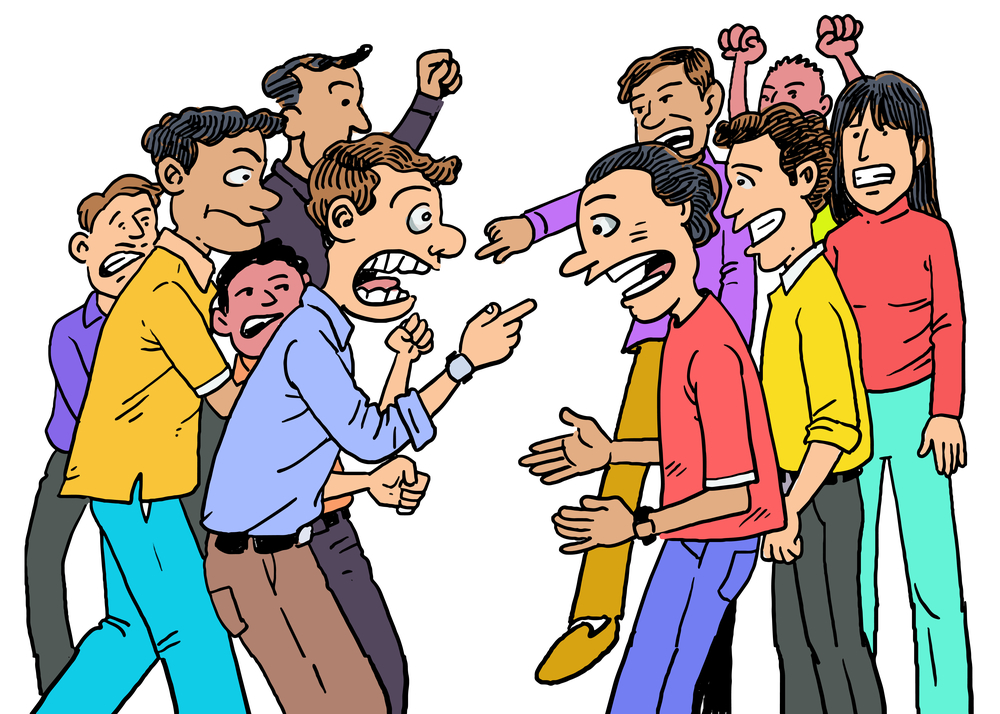
What's up guys and welcome back to the Reagan Faulkner Show. Today we're going to start with a question that I think most of y'all have already felt the answer to even if you haven't quite had the opportunity to put it into words. Have you noticed that political disagreements don't feel like just minor disagreements anymore? Friendships end over them, families stop talking, people get unfollowed or blocked on social media or even on literal like your iPhone contacts.
People often get labeled, sorted, and assigned to a team before anyone's even finished their sentence or their discussion and people can even get fired over these political opinions nowadays. And here's the part that should genuinely stop everyone. Most of these fights aren't actually about the thing that they claim to be about.
They're not about tax policy, they're not about regulatory reform, they're not even about transportation funding or the specific language of that piece of legislation that you're discussing. At their core, they're all about identity because increasingly politics in America isn't about answering the question, what do you believe in? It's about answering the question, who are you? At your core, at your most basic level, at your quantum level, who are you? And what do you, yeah, what do you believe in is kind of there, but who are you is really what it comes down to. And that's how we get so many labels that we see nowadays.
That's how so many people are labeling each other this or that. They're trying to establish an identifiable label for who that person is, not what they believe in. That's why we see these labels.
They don't match the ideologies of these people. They're not trying to. They're not trying to establish what they believe in.
They're trying to establish who they are. I think that distinction is one of the most important and least understood shifts in American life over the last 20 years, we might say. Today, we're going to be digging into how we got here, why it happened, and honestly, in my opinion, most importantly, what it means for the future of our country and the conservative movement as a whole.
Because I don't think we're just living through a minor political transformation or something that's going to stay in the realm of only politics. I think what we're living through is a total social transformation, and politics is simply where it's manifesting or showing up first. Let's go back to the basics for a second, because I think this is where most people get their history wrong.
Historically, Americans have always had political opinions. Let's look back at 1776, 250 years ago, when we were debating over the Declaration of Independence, the wording, whether it was going to say this or that. Thomas Jefferson went through multiple drafts.
Let's think about the Constitution and what it took to ratify it, and the Federalists and the Anti-Federalists. We, as Americans, have always had political opinions, quite divisive political opinions, I might add. Look at Aaron Burr and Alexander Hamilton.
We have not had just this nice political discussion and discourse. We have always had quite heated political opinions and political disagreements. But today, increasingly, Americans have political identities rather than opinions.
That sounds like a somewhat subtle distinction, but at its intrinsic level, it's really not all that subtle. For most of American history, political affiliation was one piece of a much larger identity puzzle. A person might primarily identify as Christian, or a farmer, maybe a teacher, or even a small business owner.
They will identify with something that they really feel their identity falls into, you know, a mother or a father, something like that. Grandmother. It can be anything, but it's kind of the actions that they portray, whether it be their job, or their role in the family, or just generally, if you're like a volunteer or something, you might think of yourself as a kind person, or a compassionate person, or a generous person.
These primarily have been how humans, and specifically Americans, have really labeled themselves over the last 250 years. Someone deeply rooted in a specific town, neighborhood, or congregation is another way that they could identify their identity, who they are as a person. Now, politics existed alongside those identities.
So, if you think about like a railroad track, you would have the identities we just talked about, mother, father, parent, business owner on this side, and politics was generally running parallel to it. It existed separately from their core identity. It might have somewhat made up who they were, might have somewhat been how they identified, but at a basic level, it ran parallel to those other identities.
Very, very, very rarely did it actually dominate those identities, until now, and now we see a change, and we see a very rapidly changing change, and I use change so many times, because it is changing. What we are seeing is new. It is a shift.
It is something that as Americans, we have not really had to deal with in the great way that we're dealing with it now, I guess you could say. It's just, it's massive. It's hard to even put an adjective to how this change is affecting culture, affecting politics, affecting candidates, affecting legislation, and affecting America and humanity as a whole.
Researchers increasingly describe modern political affiliation not as a simple collection of policy preferences, but as a full-blown social identity group from the same psychological category as your religion, your ethnicity, or even your nationality. Pew Research Center's 2023 survey on American political sentiment found something striking. Nearly two-thirds of Americans, that's 65 percent that they found in this survey, say they always or often feel exhausted when they think about politics, while another 55 percent say they feel angry.
Compare that to the people who say that they feel hopeful or excited about politics. That would be 14 percent of people. Read that gap again, guys.
We are a country that is simultaneously addicted to political conflict and exhausted by it. That is not a normal relationship with a topic. If that were eating, if that were drinking, if that were smoking, if that were somebody that you were dating or a friend that you were simultaneously exhausted and addicted to, it would be deemed toxic.
It would be deemed an unhealthy relationship. It would be deemed an eating disorder or a drinking disorder or an addiction to smoking or some sort of relationship, friendship, romantic partnership that you would need to get out of. In any other circumstance, this would be deemed unhealthy and your therapist or your family or your friends would be telling you, you need to get out of that.
You need to stop. You need to go to rehab. You need to do something because this is not going well in your life.
But when it comes to politics, we have seemed to become okay with it. We have seemed to bypass every other red flag and just accepted that this is how culture and politics and political identity are now. But again, it is not a normal relationship for literally any topic, nor should it be normal for politics either.
That's the signature of an identity system, not a policy debate, not something that can be legislated in and out or changed. It's not really worth losing friendships over and just having these all-out debates and the rise in political violence that we have seen. And when researchers asked Americans to sum up their feelings about the political system in a single word, 79% reached for something negative.
They reached for words like divisive, corrupt, broken, and dysfunctional were among some of the most common responses. People aren't just voting differently anymore. They are literally living differently, consuming different media, choosing different neighborhoods.
They're even dating differently, guys. And more than anything, they're starting to see politics as a part of who they are and not what they think. Instead of this being an intellect thing or an opinion thing, it is becoming a central identity thing, almost part of your core nervous system.
So what actually changed? I think this is the single biggest factor in the slow-motion collapse of trust in shared institutions. We've talked about this a lot. We've talked about how institutional trust is collapsing, how young people don't really trust these institutions anymore, how people my age don't really trust much of anything anymore, to be quite honest with you.
But at its core, I think this change that we're seeing really boils down to that slow-motion institutional trust collapse that we've been talking about for the last couple of weeks, which is why we started with that topic. Because if y'all have noticed, almost every other topic that we've covered since then has kind of had that as a root or one of the main premises behind each of the last couple of episodes. Government, media, universities, corporations, political parties, and maybe most importantly and least discussed, the local institutions that used to physically connect neighbors to one another.
These are all different aspects that have suffered from that institutional trust collapse that we've been talking about. This collapse again hits younger Americans the hardest, and the data here is not subtle, it is quite evident. Pew's 2025 research on news consumption found that young adults are now far less likely than older Americans to feel attached to their own communities, and researchers explicitly suggest this lower sense of community attachment may help explain why younger Americans are also disengaging from traditional news and civic life altogether.
This is where I think a lot of commentary on this topic stops far too early. Most analysts treat this purely as a trust problem. Institutions broke trust, so now we need to rebuild trust.
Plan A, Plan B. I think the deeper issue is ultimately a belonging problem, because here's the thing about human beings. We are inherently tribal by design. We need community, we need purpose, we need a sense of us.
I mean, it's literally all over um cut. It's literally all over the book of Genesis. This is what we need.
I mean, God designed us to be this way, so when traditional institutions stop providing that, people don't simply stop looking for it. They go and they find it somewhere else, and right now that somewhere else is increasingly political. Here's a mistake I see constantly in political commentary, which is blaming social media for creating identity-based politics from scratch.
It's almost like 10 years ago when people blamed video games for every bad thing that happened, and then we realized that it's not video games. Again, it's something else. I mean, maybe in some cases it could be, but predominantly, in my opinion, it's not, but that's besides the point.
That's not what we're talking about in this episode, but blaming social media for creating identity-based politics all by itself from scratch as a lone wolf issue, in my opinion, is not true, and it doesn't give the attention to this phenomenon and the research to this phenomenon that it actually deserves. Social media didn't invent tribal politics. We already went over that.
That is something that humans were born with from their inception back when God created us in Genesis. It supercharged a tendency that's been baked into human psychology literally for our entire existence. Psychologists studying social identity theory, which is the framework developed by—I'm going to butcher these names, and I apologize— developed by Henry Tatchell and John Turner in the 1970s—John Turner was a lot easier than the first one, I might add—developed in the 1970s have long shown that human beings naturally and instinctively divide the world into in-groups and out-groups, and that we derive a meaningful share of our self-worth from group membership.
As one summary of this research puts it, social identity theory explains how individual self-concepts are shaped by their group memberships, which directly influences their attitudes and behaviors toward people inside and outside of their group. That tendency has always existed. We know that tendency has always existed.
Most people watching this have been to high school and they found that this exists for themselves. You don't need a lot of research. These men obviously did a lot of research, but just go into a high school and you're going to figure out the in-groups and out-groups and belonging and all of that.
It exists and it's real. What's new is the speed and scale at which the internet let us act on it. So think about in-groups and out-groups on the internet.
You have your Facebook groups where people are constantly getting kicked out or muted or whatever. You have fandoms. You have Discord.
You have Blue Sky. You have X. You have all these different places where people can organize in small groups or tribes. The internet allows people to find and organize around identity faster than any technology in all of human history.
Your tribe, your community, your people are all instantly locatable all in one search away. Now you literally have websites that allow people with like certain hobbies to find each other. Like if you really like pickleball or painting or this or that and you can go to different classes and like meet your group if you move to a new town.
You also again have the crazy rise of fandoms and now fandoms aren't just like for things like Taylor Swift, like fairly mainstream things. You have fandoms for some of the most niche groups and obscure hobbies and obscure topics. I mean it's insane that you can find all of these groups just in a couple of clicks.
This has a real upside but it has a serious cost as well because once political identity turns into one of these hobbies or fascinations or something, once it becomes central to your sense of self, that's when disagreement stops feeling like disagreement. It starts feeling like rejection. I disagree with your argument quietly becomes I reject your group and sometimes even I reject you and we can see this if we use that fandom example.
We can see this in people who follow certain influencers. If you disagree with a single thing that that influencer says or you say one thing about like anything that they said it oh that was a grift or that was weird or I don't know if I really agree with that one thing that they said. All of a sudden you're a hater or you don't agree with them or you hate them and that person becomes like almost obsessive in defending that influencer.
It's a really interesting phenomenon. This is on both sides. This isn't me calling out the right or calling out the left.
This is literally both sides. If you say anything about anyone that somebody like relationally follows they will get extremely defensive and sometimes yeah they you won't have that friend anymore. This is precisely why political polarization becomes more most intense exactly when political affiliation becomes a core social identity rather than a policy preference.
It's also why as Pew documented 86 percent of Americans now believe that Republicans and Democrats are more focused on fighting each other than actually solving real problems right now. That's not a French sentiment. That is the overwhelming consensus of a country that has watched its political system stop functioning as a debate and start functioning as a war between identities.
Now here's where things get genuinely interesting and where I think the future of the conservative movement is currently being decided. As institutions lose trust creators are gaining real measurable influence and the scale of this shift is way bigger than most people realize. Pew Research's most recent data which was gathered in 2025 found that 38 percent of adults under 30 say that they regularly get news from news influencers more than four times the same share of adults 65 and older who sit at just eight percent and it's not a fringe behavior anymore.
There is virtually no partisan gap here with 21 percent of Republicans and 22 percent of Democrats saying they regularly get news this way. There's no partisan divide. It is on par with both Republicans and Democrats.
So why are people making this switch? Pew's research found that the people who turn to creators for news most often say it's because those creators actually help them better understand current events, they help report breaking news more quickly than mainstream media, and they come across as just genuinely authentic. A generation that increasingly distrusts institutions is now placing its trust in individual people, not organizations, not networks, not legacy newspapers. People.
Specific, identifiable, consistently showing up human beings. Normal, everyday people. This is why podcasting has literally exploded into a dominant cultural and political force.
It's why long-form unscripted conversations now carry way more credibility with younger audiences than a polished five-minute network segment. It's why certain podcast hosts have more genuine cultural influence today than the majority of sitting members in Congress. The shift underway isn't just technological, it's relational.
Trust is migrating from institutions to individuals and the political movements that understand this fastest are going to define the next decade. Now let me explain when I say this isn't technological. Think about your average podcaster.
Think about somebody like me. They've got a mic, they might have a banner, if I'm at my house you've got a bookshelf, otherwise you have my blue bookshelf which is not as nice as this, am I right? You have a pretty basic setup. There's not a lot of technology going on, there's not a lot of long-term expenses, it's one-time costs that you invest in and that's pretty much it.
Then I talk into my iPhone, a lot of other people talk into their iPhone as well. There's no $3,000 cameras, new setups, things scrolling behind me with projections and media. You don't see me editing a lot of stuff and popping it up on the screen.
Same thing with people who are super popular like Joe Rogan and Sean Ryan. It's a pretty low cost, it's not technologically heavy, podcasting isn't, so that's why it's more relational. It's about looking into the camera, it's about being normal, it's about saying normal things, it's about not using complicated political or industry-level jargon.
It really boils down to just being authentic, genuine, and not even really a nice person. If you watch Financial Audit, Caleb Hammer is not a nice person, but he's real. You feel like that's the real Caleb Hammer giving financial advice to crazy people online and that's what it really boils down to.
Now, for conservatives specifically, this should be read as an enormous opportunity rather than a threat. Pew's in-depth analysis of 500 popular news influencers actually found slightly more explicitly right-leaning influencers than left-leaning influencers. It's a 27 versus 21 split, which tells you something important.
Conservatives are not just participating in this shift. In some corners, they are actually leading it, which is shocking for conservatives. We don't normally lead much in messaging or technology or the younger generations, but leading a corner of the internet and leading the broader political conversation are two wildly different things.
They are not the same, and the gap between them is where the real work still needs to happen. So, where does all of this leave us? We've been through everything. It's a lot of information, a lot of percentages, a lot of studies and statistics.
Where are we now? I think the honest answer is we're at a genuine inflection point. The collapse of institutional trust is not going to reverse anytime soon, and frankly, I really don't know if it should even be treated as a problem to quote-unquote fix so much as a structural reality that we just need to build inside of and kind of accept. The belonging that people need to get from churches, civic organizations, political parties, and local community is not going to come back in its old form.
I mean, I haven't seen anything like that since pre-COVID, and people who are older than me probably haven't seen it since pre-iPhone, so we're probably not going to get it in its OG form. People are going to keep looking for identity and connection wherever they can find it, and right now an enormous amount of that searching is happening inside of politics itself, and like I said before, that is not entirely healthy. It's probably less than entirely healthy.
It's probably not healthy at all. Politics was never designed to be the primary source of a person's identity, their belonging, and their meaning. When it gets asked to do that job, things get more emotional, things get more tribal, and they get way more fragile than they should be, and that's why we see people rooting for algae at the reflecting pond and trying to cut the reflecting pond floor, and we see more political violence, and we see more protests, and we see people just fighting in comment sections with random strangers.
That's why we're seeing all of that, because politics was never designed to bear the weight of your entire identity. So while there's real unhealthy aspects of this, there's real cause for concern, there might also be real opportunity buried within this shift, a way to make it not so dangerous, not so dark, and not so negative. If trust is migrating from institutions to individuals, then the conservative movement's future depends less on rebuilding institutional credibility, which may not be realistically achievable in the short term.
It's going to take years of going into these institutions and rebuilding them from the ground up. It's going to take cleaning out house, reappointing and hiring new people. I mean, it's going to take full-on tear it down and rebuild it back up for all intents and purposes through all of the institutions that have been claimed from the inside and taken over.
It's going to take less of trying to rebuild those institutions and more on cultivating individual voices who are trusted, consistent, and authentic enough to carry ideas the way the institutions used to. That's not a consolation prize. It might actually be a better and more durable foundation.
Institutions, again, like I just said, they can be captured, they can be politicized, they can be hollowed out from within, they can be polarized, you can have new leadership that makes people leave or they fire people. I mean, literally anything can happen inside of an institution. Just because you rebuild it doesn't mean it won't become degraded again.
Genuine relational trust, however, can be built consistently over time with a real audience and it is much harder to take away unless that influencer, that person holding that trust, does something just absolutely insane to destroy the trust, which at least in my opinion, in my experience, doesn't happen as often as institutions collapsing and becoming captured or politicized or degraded or whatever it may be. The leaders, creators, and movements that understand this, that politics today runs on identity and relationships as much as it runs on policy, are the ones who are going to shape what comes next. And guys, for all intents and purposes, this shouldn't be shocking.
Every political campaign runs door knocking and phone banking because door knocking and phone banking build relational trust and only relational trust can build campaigns. So why are we surprised that these polished institutions no longer have the trust of the people but that when we have the opportunity through technology to have individual, what feels like individual, one-on-one connections with influencers and real everyday people like us, not people who went through media training in college and journalism classes to become one of the 12 Fox News hosts or whatever it may be, why are we not surprised? Because we literally build entire campaign strategies. People pay tens of thousands of dollars for political consultants to tell them that relational identity, relational trust, one-on-one connection with the candidates is what makes or breaks a campaign.
This shouldn't be surprising to anybody in politics that's at least somewhat familiar with campaigns or getting people elected. Here's what I want you to leave with today. Politics became identity first because belonging collapsed everywhere else first.
That's the real story underneath the polarization headlines. People aren't fighting this hard over policy. They're fighting this hard because politics has some of the last remaining places where a lot of Americans feel like they actually belong to something.
That's not a reason to despair, it's a reason to build intentionally to understand exactly what people are actually looking for when they show up in a comment section ready for a fight and to offer them something better than outrage. Real ideas, real consistency, and a real sense that someone trustworthy is in their corner. And again, that's way different than what we see online from a lot of users today which is just rage baiting people.
We don't want to rage bait people. We don't want to just get the max amount of views and the max amount of follows, the max amount of interactions. We want to actually help change the hearts and minds of our country and influence people to do something worth doing, to do something where they can make a change, where they can feel like they're actually helping their community and helping their country and helping their families.
I'll leave you with the question I want you to sit with this week. If belonging is what people are actually searching for when they engage in politics, what would it look like to build movements and content that meet that need honestly instead of just exploiting it? If this episode gave you something worth thinking about, subscribe and share it with somebody who needs to hear it too. Be sure to check us out on Facebook, Instagram, and TikTok at the Reagan Faulkner Show and Facebook, Instagram, and at the Wilmington Standard.
You can check us out at reaganfaulkner.com and thewilmingtonstandard.com as well. If you haven't already, be sure to check out 7 Weeks Coffee and use code REAGAN2026 for 10% off your next order. Again, 7 Weeks gives a percentage of all of their sales to pregnancy care centers across the country to help babies and moms who are in need and to help support the pro-life movement.
Thank y'all so much and I can't wait to see you next week.
About Reagan Faulkner
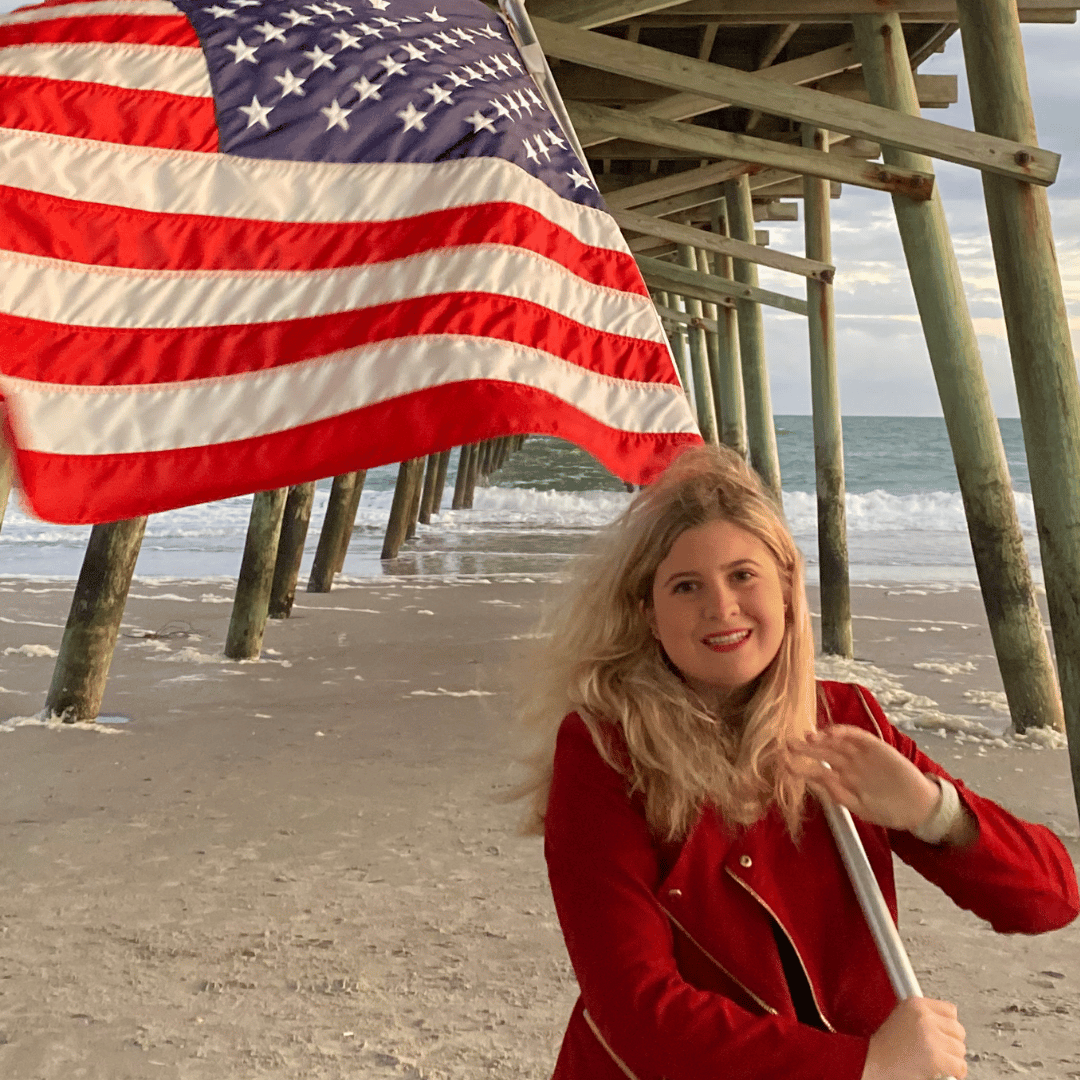 Reagan Faulkner is a student at the University of North Carolina Wilmington, where she currently serves as president of the university’s College Republicans chapter. Her leadership and passion for civic engagement have earned her national and local recognition, with appearances on The Ingraham Angle on Fox News, coverage in Fox Digital and The New York Times, as well as features in Wilmington-area news outlets and television stations.
Politics has been a lifelong calling for Reagan—fittingly, she was named after President Ronald Reagan. From an early age, she has been driven by a commitment to public service and a belief in the power of young voices to influence the future. She is especially passionate about educating the next generation of Americans on how to mobilize, inspire their peers, and create meaningful change.
Outside of her political work, Reagan finds joy in the simple things: reading, spending time at the beach with her boyfriend and friends, and boating with her family. Her values center on the preservation of American traditions such as the importance of the nuclear family, Christian principles, and cultivating respectful discourse across differences.
Reagan brings to the podcast not only her personal convictions but also an unwavering dedication to fostering conversations that challenge, encourage, and empower listeners to think deeply about the values that shape our society.
Opinion Articles

100,000 Cameras and Counting
Free Speech, If We Can Keep It