
100,000 Cameras and Counting
What Flock's Surveillance Network Means for North Carolina
Johnston Smith
August 17, 2026
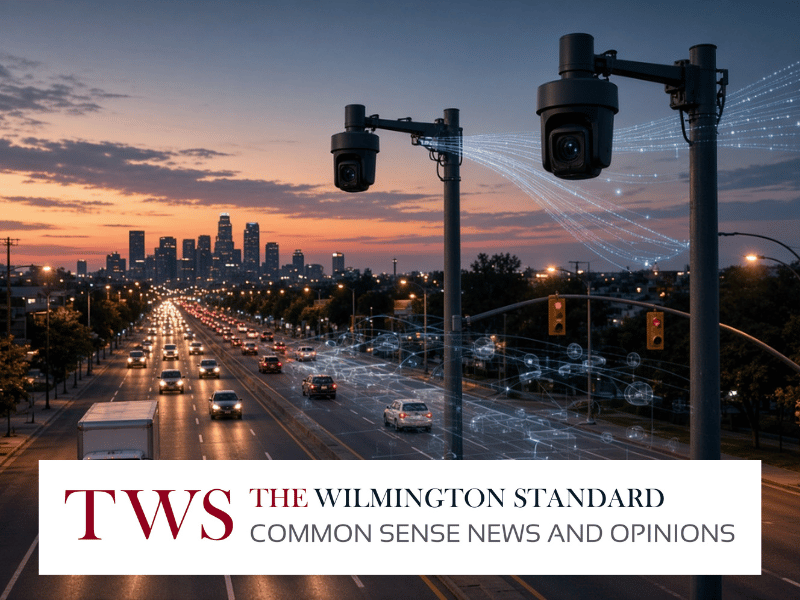
Flock cameras are a disconcerting technology whose prevalence is spreading rapidly around our country. These cameras have been created to record vehicles and people who pass within view. They note make, model, color, and significant markings and these cameras are everywhere. According to the DeFlock website, more than 100k of these cameras now cover the United States.
The cameras have become intensely unpopular, taking fire from across the political spectrum. Neither side has much excitement for the lack of respect for personal privacy these devices herald. Conservatives find themselves wary of an even more omniscient government and liberals consider the cameras' impact on policing and deportation operations a definitive negative. The cameras, recognizable and common, provide targets for those upset with the tech and its results.
Most people would agree that in the modern day surveillance is far too common. The invention of the individual portable smart device has created a constant window into our personal lives. We can look out and see the world as it looks back. A “surveillance state” has wrapped Americans in its grip since the Patriot Act of 2021. These cameras provide further tightening of the governmental grip, yet Flock cameras have the capabilities to make the lives of law-abiding citizens safer than ever. These cameras placed in strategic locations can locate AMBER Alert vehicles and catch active shooter vehicles with a quick search through a directory. A simple Google search will reveal a consistent flow of stories where Flock cameras were used to solve crimes, often horrific ones. Flock cameras assisted in solving over a million crimes just last year. The technology seems to have exceptional potential when used to combat crime, but it also has tremendous capabilities for abuse. One could stalk a romantic partner. An innocent could be accused of a crime. There is all this information often handed to a government with little to no protections for privacy or safety. These cameras are like all technologies, tools. A tool must be handled well and protected from those who would warp its use. A brick is a tool. It can be used to kill a man or build his house.
A company that sells cameras for security on a national scale should not be allowed access to the data. Ring cameras, sold to private individuals and companies are different. Flock as a company has an alarming potential to place backdoors and similar measures allowing for unfettered access to its camera’s networks.
These surveillance problems require a solution. The systems should be protected by warrant. A handful of states have laws already in place to protect such data, similar to Minn. Stat. § 13.824. But these laws are scattered and often miss important features of the cameras. North Carolina’s laws prevent the unauthorized access, preservation, and propagation of government camera data. This leaves private companies free to market extensive data recorded through their cameras. These systems often capture people who are not customers or criminals and allow for their data to be collected. Both forms of data collection private and public should be limited.
A concrete policy plan regarding ALPRs (Automatic License Plate Recognition) should not revolve around banning them. It should revolve around protecting the data and ensuring it is only used for equitable purposes. A secure America is not one that is monitored without end. It is one where Americans defend themselves and use the technologies they possess to do so.
Download Article
 Johnston Smith was born and raised in the Wilmington area.
He has yet to receive a college degree from any educational institution but he is a senior at a local classical school. He enjoys exploring his ideas and those which he does not agree with. He finds himself fascinated with our Country and with society in general. He writes to test his ideas in the public square and to inform people of why participation in our country is important.