
Gen Z Gender Divide
Are Gen Z men and women now living in completely different political universes?
Episode 45
July 29, 2026
Watch The Reagan Faulkner Show on YouTube
Listen on Buzzsprout
Like and Subscribe


On Page Navigation
Show Notes
Episode Summary
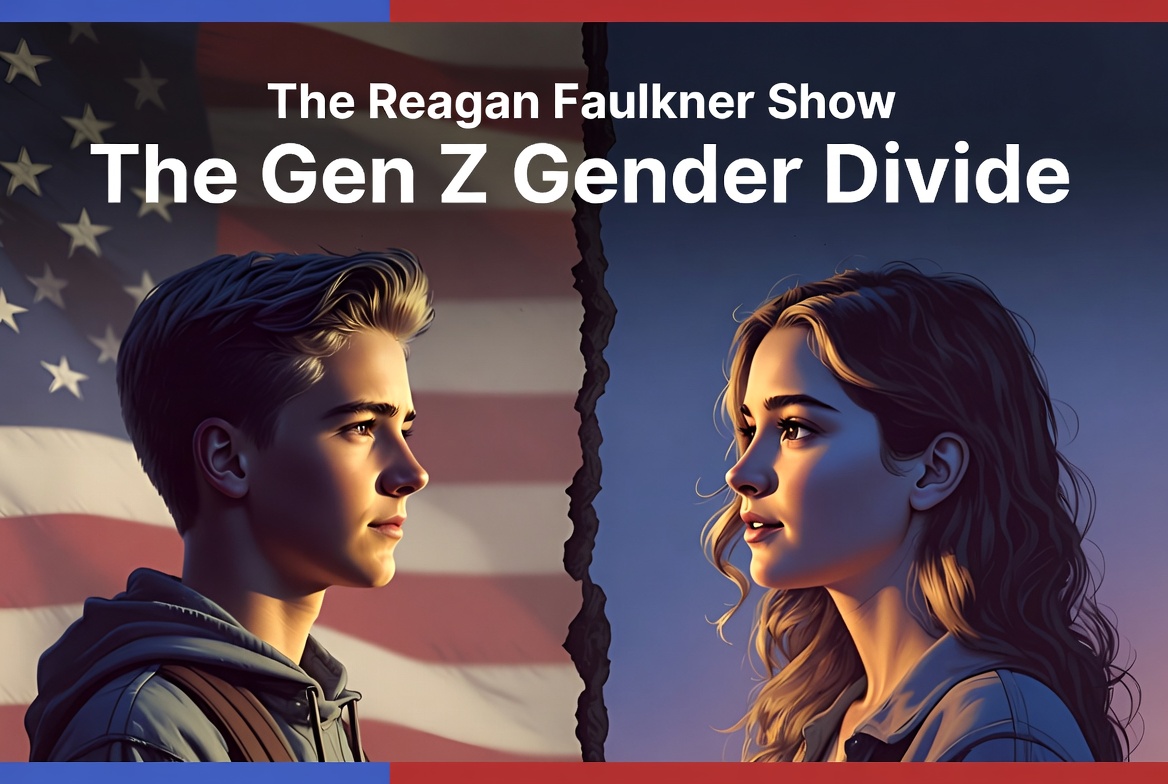
This episode digs into why Gen Z men and women are now living in almost totally different political universes—and what that means for faith, family, and the future of the country. Reagan walks through both the data and the real‑world stories behind the gender gap, from campus culture to TikTok feeds to the way major political shocks like Dobbs landed differently for young women and young men. Instead of blaming “brainwashing,” she traces concrete causes: education trends, deaths of despair among young men, and the content ecosystems that monetize anger while hollowing out real community. And she ends where conservatives should always end—on responsibility and hope—offering practical steps Gen Z can take this week to close the distance the algorithm has built between the sexes.
What you’ll learn / Key moments
- 00:07 – How Gen Z men and women ended up in separate political universes, and the opening data on the partisan gender gap.
- 01:47 – The NBC and AP VoteCast numbers: Democrat‑leaning young women, Republican‑leaning young men, and a 31‑point gender gap that goes beyond voting.
- 06:08 – How 2016, MeToo, and Dobbs stacked together during Gen Z women’s formative years and helped push many of them left on politics.
- 10:05 – The education flip, stalled ladders into the middle class for young men, and the “deaths of despair” crisis driving male alienation.
- 16:52 – The anger‑driven content ecosystem aimed at lonely young men—and why it clashes with biblical, conservative manhood.
- 21:27 – The Axios TikTok experiment and how algorithms sort men and women into different political realities without anyone asking for it.
- 24:08 – What happens when dating, marriage, and even decisions about having children get pulled into the gendered political divide—and why Reagan thinks conservatives can’t just “win young men” and ignore young women.
Call to action
If this episode helped you see the Gen Z gender divide more clearly—and gave you real ways to start bridging it—don’t stop here. Follow The Reagan Faulkner Show on Instagram, Facebook, TikTok, and Substack so you don’t miss future deep‑dives on what’s happening inside your generation’s politics and culture. Then come join us at The Wilmington Standard on Instagram and Facebook, where we connect these national trends to what’s happening on the ground in North Carolina and beyond.
Support life while you support this show: grab your next bag of Seven Weeks Coffee and use code REAGAN2026—every purchase sends 10% to crisis pregnancy centers serving moms and babies who need help, while you stand unapologetically for the pro‑life movement. This moment is urgent, but it isn’t hopeless; if Gen Z can choose real relationships over algorithm‑driven caricatures, there is still time to rebuild a culture of faith, family, and responsibility.
About the Host
Reagan Faulkner
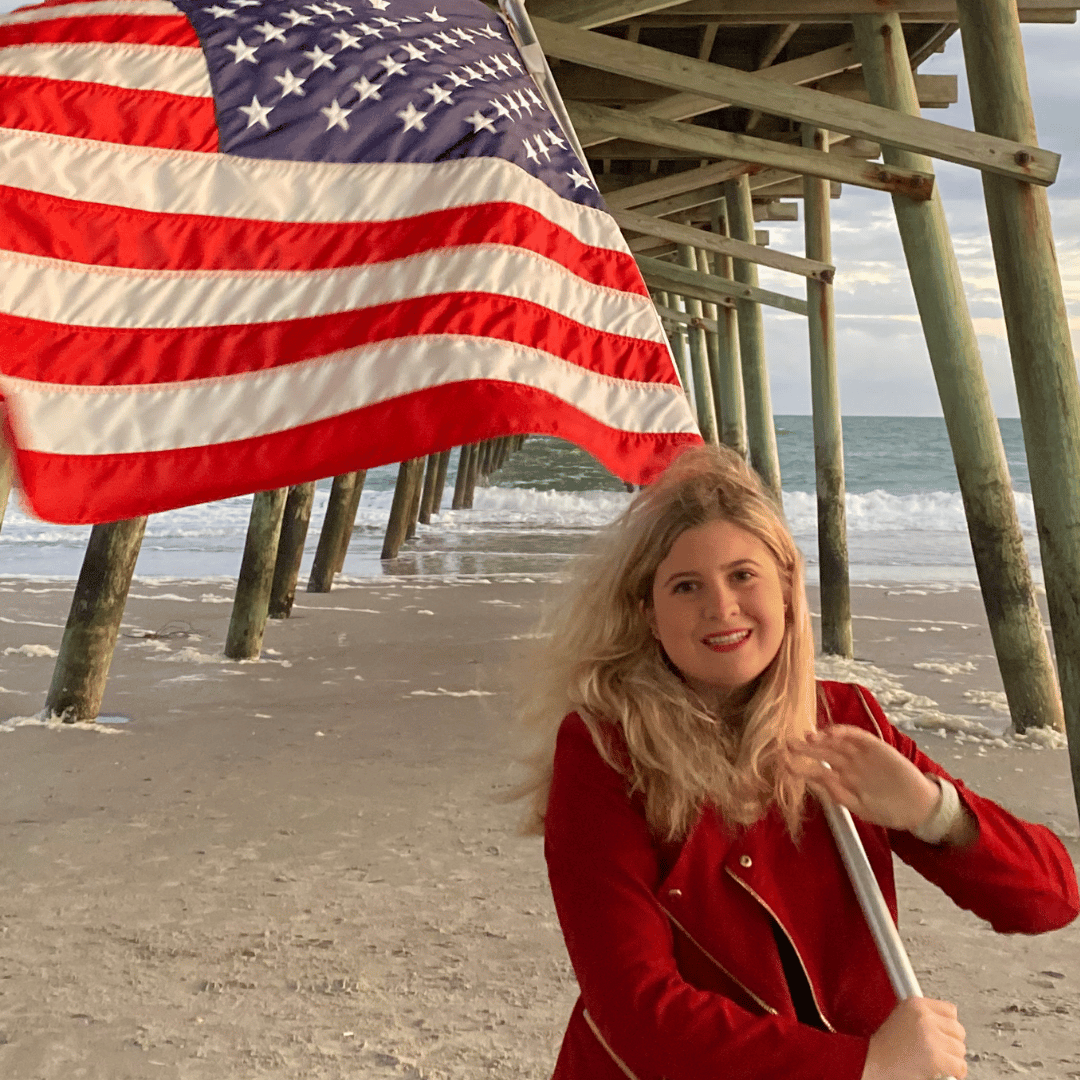 Reagan Faulkner is a student at the University of North Carolina Wilmington, where she currently serves as president of the university’s College Republicans chapter. Her leadership and passion for civic engagement have earned her national and local recognition, with appearances on The Ingraham Angle on Fox News, coverage in Fox Digital and The New York Times, as well as features in Wilmington-area news outlets and television stations.
Politics has been a lifelong calling for Reagan—fittingly, she was named after President Ronald Reagan. From an early age, she has been driven by a commitment to public service and a belief in the power of young voices to influence the future. She is especially passionate about educating the next generation of Americans on how to mobilize, inspire their peers, and create meaningful change.
Outside of her political work, Reagan finds joy in the simple things: reading, spending time at the beach with her boyfriend and friends, and boating with her family. Her values center on the preservation of American traditions such as the importance of the nuclear family, Christian principles, and cultivating respectful discourse across differences.
Reagan brings to the podcast not only her personal convictions but also an unwavering dedication to fostering conversations that challenge, encourage, and empower listeners to think deeply about the values that shape our society.
Full Transcript
What's up, guys, and welcome back to the Reagan Faulkner Show. Now, I don't know about you, but I know that I've seen a massive chasm between the two genders in my generation and their partisan affiliations. Normally, you wouldn't think about gender and partisanship, I dare say, going hand in hand.
I know we kind of always say that women might tend to be more liberal or that men might tend to be more conservative, but I don't know that people have really put a whole lot of thought into that or, you know, talked about it quantitatively and qualitatively. It's just kind of been something that at least I've heard growing up, but didn't really put much thought into. Now, what I've seen from my generation is actually qualitative and quantitative analysis that shows that there actually is some defining characteristics between the two genders in my generation and their partisan affiliations.
On campus, in old friend groups, and even in the news and in the media, I have seen an increasing number of Gen Z men leaning more conservative and Gen Z women leaning more and more liberal. And like I said, based on the current research, I don't think I'm the only one. So let's jump right into it.
Now, imagine a scenario where a girl and a guy, they grow up in the same town, same community, they attend the same school, their parents are even friends and have fairly similar parenting styles. The literal only difference is that one of them is a girl and one of them is a guy. That is the only differentiating factor here and that they are not siblings.
Those are the only differentiating factors here. Now look at how they vote. An April 2025 NBC News Stay Tuned poll found that 52% of Gen Z women identified as Democrats, the largest concentration of any age and gender group within a single party.
38% of Gen Z men identified as Republicans compared with 20% of Gen Z women. So look at that. We have 38% of Gen Z men identifying as conservatives with only 20% of Gen Z women identifying as Republicans, I should say, not conservatives.
And with that being said, 52% of Gen Z women identify as Democrats. So you put those two numbers together, that's 72% of total Gen Z women. That means 38% more are identifying as unaffiliated or independents or libertarians or something else that's not Democrat and Republican.
In that same poll, Trump's approval rating stood at 45% among young men and only 24% among young women. In AP VoteCast's estimate of the 2024 election, young women favored Harris by 17 points while young men favored Trump by 14 points. That is a 31 point gender gap, you guys.
And it goes past voting. A few weeks ago, we did the America 250 episode, if y'all remember, the one about whether my generation feels proud to be an American and proud to be from this country, proud that we have survived 250 years. Take that same question and split it by gender.
In that same NBC poll that we just referenced, 37% of young men said that they are or were extremely proud to be American, twice the share of young women, 22% of young women said they were not proud at all. So even patriotism seems to be a little bit sorted by gender now. There are a lot of takes on this.
There are a lot of opinions about what's going on here, causes, effects, etc, etc. Most of them boil down to telling one half of Gen Z that they've been brainwashed. And whether it be by their school, by social media, by their friends, by the news, or by some other culprit that's, you know, like I said, half the time, that's generally where we go when we're talking about what happened.
I don't fully buy that narrative. And I think that instinctual, like that specific reflex, that instinct to say, oh, it's brainwashing, it's brainwashing, it's brainwashing. It's a big part of why nobody's really fixing anything.
Because when we name an undefinable boogeyman like brainwashing, it's hard to put your finger on the pulse of that problem and actually get to the root of it. You can't just magically fix brainwashing, you don't know who's doing it. I mean, you can have some ideas, but specifically to narrow it down and solve that problem, it's nearly impossible.
Now, I think that the best part is we need to get specific and identify these root causes of what's going on in order to be able to fix them. Instead of just naming arbitrary reasons why we think it's happening, we really need to hone in on why exactly it's happening. Because like I said, over and over again, then we can fix it, we can find a solution, and we can try to solve the actual problem that's going on here.
Conservative media tends to skip this part, so we're going to break it down, and we're going to break it down pretty in-depth. The women were the ones that moved first in this poll of, you know, women going more left and men going more right. Richard Reeves, who runs the American Institute of Boys and Men, made this point.
He said that young men's drift to the right came after and was smaller than the shift of young women in the other direction. So he is kind of the one that made the observation that women were the first to move. In 1999, about 29% of women under 30 called themselves liberal.
By 2023, that number was 40%. Young men over the same stretch, they barely moved from roughly 24% to 25%. One group walked a really long way in one direction, and the other one really didn't move.
They stood fairly still, to be quite honest with you. Researchers and commentators point to several major events that may have accelerated the shift, particularly the 2016 election, then the MeToo movement, and then the Dobbs decision in 2022. And y'all know where I stand on the Dobbs decision.
I am pro-life. As you know, I am sponsored by Seven Weeks Coffee, which is a pro-life coffee company. They fund pregnancy care centers.
And I'm not going to pretend to be neutral about the Dobbs decision, but quite frankly, the actual root of the Dobbs decision does not really play into this. Neither does the specifics of the 2016 election or the specifics of the MeToo movement. Basically, what is being discussed here is that in the period of time when young Gen Z women were kind of coming into adulthood and learning about politics and trying to see where they fit into the world, they had these three major political events happen within under 10 years of each other, about eight years of each other.
And because of the way, yes, the media spun it, yes, the way the school spun it, we can kind of go back to that brainwashing boogeyman. There were institutions that spun each of those situations a certain way. And for the girls who were listening to that and trusting these institutions, it did make a defining mark on their partisan affiliations.
It did give them a specific worldview. It did make them think about the world in a very different way because of how close each of those major events happened to each other. And in the period of their growth, of their childhood, when they were coming into adulthood, that had happened.
It was kind of, you know, a double-edged sword that had the perfect outcome to turn women more to the left than to the right. But again, being pro-life, it doesn't require me or us to be naive about cause and effect. When the court overturned Roe and returned abortion policymaking to elected lawmakers, primarily at the state level, many young women perceived it as a direct threat to rights they had previously possessed.
That was the perception of this pocket of people that I'm talking about, these women within Gen Z, that this was a defining moment in determining their partisan affiliation. Now, political science research has found that gendered policy threats can increase women's political engagement and ambition, particularly when women believe their perspectives are excluded from the decision-making process. So, again, we actually have research to show that this isn't a surprising situation.
This is almost the exact effect that we could have expected from this certain population of Gen Z, given the circumstances, and quite frankly, given from many women in this, you know, with this situation, and if you weren't fully educated on it, if you fully didn't understand it, if you didn't do all of the research, this is a fairly expectable outcome that could have happened. Conservatives understand this instinct perfectly well when it's policy that goes against our values. Think about any Second Amendment restrictions, any religious practice restrictions like what we had during COVID.
We understand the feeling of being hostile or being upset when we feel that things that we care about, things that are ingrained within the Constitution, ingrained within the Bill of Rights, are stripped away by whatever government, whether it be your governor, like here in North Carolina during COVID, whether it be the House of Representatives, the Senate, the President, whatever it may be, everybody understands the feeling of having your rights taken away. Now, whether you agree that that's what happened with Dobbs or not, this isn't the point to dive into, you know, legal precedent, legal cases and such, but that is the perspective that the women and the subset of this group that we're studying today had. There's also a structural piece that really not a lot of people mention.
In 1972, men were 13 percentage points more likely than women to earn a bachelor's degree. Today, women are approximately 15 points ahead. That is a 28-point reversal.
Education has also become increasingly entwined with partisanship. The Survey Center on American Life estimates that college-educated women now constitute one-third of the Democratic Party. Some of what looks like a mysterious ideological shift is just that, the population moving through the machine changed.
We had more men moving through college, now we have more women moving through college, and now we're seeing more and more women becoming more aligned with the left, more aligned with Democrat ideals, more aligned with that certain partisan affiliation. Understanding why somebody moved and agreeing with where they landed are two entirely different jobs. What we are doing today is looking at what moved them.
I don't agree with where they landed, but we're trying to diagnose the problem and figure out why they landed there, and there seems to be active refusal to really do this type of digging, at least from what I've seen in my experiences online and just outside of online as well, in basic human reality, talking to people, trying to understand what's going on, trying to understand politics in my local community and in my state and in our country. I feel like there's really just this hesitancy because people don't like the left. People don't agree with their policies.
There's a hesitancy to try to understand why people want to move in that direction and to give actual names to it instead of boogeyman identities like brainwashing. When a 20-year-old woman turns on conservative media and hears that she only thinks what she thinks because an app told her to or because social media told her to, she doesn't sit back and reconsider. She doesn't ponder that and think, oh, maybe that's true.
She writes off the party and she writes off the group telling her that and the ideology completely, because, I mean, it makes sense, guys. Wouldn't you be upset if somebody said, oh, you don't actually know what you think. You think you know that because you saw it on social media or because your friend told you that or because your teacher told you that.
It makes sense because being told that you have no mind of your own is degrading and young people really resent it. We have grown up being told, oh, you need to put that phone away or, you know, you only think that because of your phone or your phone is doing this to you or your laptop's doing this to you or the internet's doing this to your generation. And we've heard it so many times that if you actually do believe a certain policy and somebody tells you that you only believe it because you saw it online or because of your friend group, a lot of young people really do tend to resent that and they do tend to either stop talking politics with that person, which could be a problem if that person is, you know, turning to the left and they're not talking to trusted parents or trusted members of their local party, grandparents, aunts and uncles, friends, whoever it may be.
And then they just kind of dive more into that ideology and they go further and further and further into it because they're not talking about it with trusted adults. And they're just, you know, focused on being right at that point, to be quite honest, because of that resentment that we just talked about. So we talked a lot about the women.
What happened to the men? The premise is generally the same, but the direction is completely different. Many on the left argue that young men got radicalized by podcasts and there's nothing underneath it. But quite frankly, there is plenty underneath it.
So we are going to unpack that right now. Let's take that education number and turn it around. Men went from 13 points ahead to 15 points behind in college education.
For a lot of young guys, the most dependable ladder into the middle class quietly became something that happens to other people. Labor force participation among men ages 25 to 34 declined from 92.4% in August of 2004 to 88.8% in August of 2024, while participation among women in that age group actually increased. Among recent male high school graduates, immediate college enrollment fell from 62 points in 2019 to about 55% in 2021 and remained near that level in 2024.
Now we're going to get into the darker, more depressing numbers. So bear with me here. Men account for close to three quarters of what researchers call deaths of despair.
These include suicide, overdose, alcohol abuse, etc. That's roughly three out of every four men. Brookings reported that nearly half of men ages 18 to 29 believe men face discrimination, the highest share among the male age group surveyed.
You can argue about whether that perception holds up, and obviously people do quite endlessly. But perception is what walks into the voting booth. If half of young men believe the culture treats them as a problem to be managed instead of people worth developing, they will go looking for somewhere that doesn't have that viewpoint.
And here's the part that really needs to worry Republicans more than it currently is. Daniel Cox at AEI, who studies this for a living, says the evidence shows young men have turned hostile towards Democrats, not that they've actually become conservatives. That is a big distinction.
Just because they do not want to be part of the Democratic Party does not mean that they are locked in Ronald Reagan, 1984, avid conservatives. They are just looking for an out of the Democratic Party. He has said outright that he isn't even sure that they like Republicans all that much, to be honest.
Many of these young men appear less like committed ideological conservatives than voters who have grown alienated from the Democratic Party. Podcasts hosted by figures such as Joe Brogan, Sean Ryan, and Tucker Carlson have given Republican candidates access to large male audiences, but it is difficult to actually isolate how much of these programs caused the shift rather than merely reflected it. We also need to touch on the content ecosystem that is aimed at men.
A lot of what gets fed to lonely young men online has nothing, absolutely nothing to do with conservatism. Limited government, faith, family, personal responsibility, none of it is included in that content. It's anger with a business model, just like we've been talking about with the algorithm and with social media.
There are guys out there telling 19-year-olds that women are the enemy and that commitment is a trap and contempt is the same thing as strength and all of that, whatever it is, it is the opposite of a philosophy built on keeping your promises to people. It is a philosophy different than getting married as young as you can and having as many kids as possible, like Charlie Kirk talked about. It is different than fiscal responsibility.
It is different than selflessly leading like men are supposed to do and being the biblical man that, again, that leads, that is kind to women, that is the provider. It is fundamentally different than that. That kind of content can foster resentment, isolation, and hostility.
It does not build strong biblical men and it does not build strong conservative men either. And quite frankly, it doesn't really even build men. It just builds angry little boys that are in their 30s.
Two groups with two sets of real grievances moving in two directions still doesn't fully explain the size of this phenomenon that we're looking at. Men and women have had different experiences for all of human history without landing in fully and completely separate political universes. I know at the start of the episode, I mentioned that, you know, there's kind of a belief system that men are generally more conservative and women are generally more liberal.
But we are talking about like at this point, they are my generation's male and female population are in two fully and completely different political universes. And if you don't believe me, at least trust my judgment from what I see on campus and in my friend groups. It is so hard as a young conservative woman to find other young conservative women friends.
A lot of my friends, a lot of my boyfriend's friends, I tend to get my friends from him and they tend to be guys. I have like maybe three Republican women friends. And meanwhile, he has like 10 or 15 friends that all believe generally the same as him.
It is so much easier to find a man or a male in my generation in Gen Z that generally has the same beliefs or at least is physically conservative and somewhat socially conservative. But if they're not socially conservative, they don't really care. Where on the women's side, they are literal activists for everything.
They're activists for gender ideology. They're activists for Palestine. They're activists for race.
They're activists for the criminal justice system. They're activists for the social work system. There is a social work program at UNCW and you would be amazed at how many women are in this program literally being activists for any like bullet point talking point that you can imagine.
It is absolutely insane. So if you have not experienced this phenomenon, then you are really lucky. But trust me, it fundamentally exists.
Men and women have had different experiences, right? Like for a long time, for all of human history, men and women are fundamentally different. They are biologically different. That seems to be controversial to say these days, but I don't think it is.
I think we can all agree that women and men are biologically different. So does it make sense that they would have different political affiliations? I still don't think it fully does, to be honest, at least on the surface level. I think once we continue diving into this, once we look at what's new and what's happening, yes, but at a basic level, even though men and women have had different experiences, it still doesn't make sense to see the massive chasm in partisan affiliation.
So let's get into it. What is new? Back in the episode that we did about why Gen Z trust creators over institutions, I argued that trust has migrated from organizations to individual people we feel like we personally know. I will continue to stand by that statement, but there is one piece of it we didn't cover.
And what that one piece is, is that these individuals actually get sorted by gender. So not only is the algorithm kind of feeding what we want it to feed, what we react to, what we engage with, it's also sorting content based on whether you are a girl or a guy. So let's start with the platforms.
The information environments differ before anyone even says a political word or makes a post. Men are more likely to regularly get their news from X, Reddit, and YouTube, while women are more likely to get their news from Instagram, TikTok, and Facebook. Then Axios ran a super, super fascinating experiment.
They had reporters Erika Pandey and Tal Axelrod, both of them were 30 years old. They created new TikTok accounts and identified as one female and one male. They followed the exact same collection of MAGA and MAGA-aligned accounts.
Within one hour, their feeds began diverging. His toward masculinity and male struggle content, and hers towards feminism, motherhood, transgender sports debates, and abortion. It was a two-account journalistic experiment, not a scientific study, but it illustrates how quickly recommendation systems can produce gendered information environments.
Neither reporter deliberately searched for those gender-specific themes, the recommendation system delivered them without them even asking for it. Now imagine what repeated exposure to different versions of political reality could do over four or five years. If everything you learn about the other half of your generation arrives through a system tuned for reaction, you never actually find out what they think, what they personally think, what that human, that flesh-and-blood person is thinking or feeling or believing and why.
You get the loudest, angriest, most clippable version over and over and over again until you've met the caricature 10,000 times, and you've met the actual person maybe two or three times, and at that point you probably haven't even had like a halfway decent conversation with them. We talked in the Identity First episode about how disagreement stops feeling like disagreement once politics becomes part of who you are. It's the general same idea here, except the group isn't a political party this time.
And it's landing on a generation with fewer and fewer places to check that caricature or that archetype against a real human being. So going back again to talk about a different episode, which was the Big Rock episode, we're just getting flavors of like the past 10 episodes in this one. It's crazy.
But back in the Big Rock episode, we talked about traditions and disappearing traditions and disappearing like networks of people, church youth groups, neighborhood jobs, clubs, teams, just small-town stuff where you knew everybody's family and everybody's family knew you. Those were the rooms where young men and women had to cooperate on something that had absolutely nothing to do with politics week after week until the other person stopped being a category and they became a real flesh and blood human being. Those rooms have emptied out and they have been replaced by the algorithm.
So now we're going to jump into the consequences of what's really going on here. Six in 10 Americans ages 18 to 29 say it is important that a person they date or marry shares their political views. Among Americans over 60, only about one third say the same.
So political agreement is becoming more and more important. It's becoming a much more important consideration in young relationships than it has in previous generations. One high school teacher quoted in this reporting said she's watching girls grow hesitant to pair off with or even just hang out with the boys in the class.
NBC presented Gen Z respondents with 13 possible markers of a successful life and asked them to choose only three. Among young men who voted for Trump, having children ranked first. Among young women who voted for Harris, it ranked 12th, second to last.
Above only fame and influence. Same generation, opposite ends of the list on the question of what our life on earth here is even for. So here's you can't out policy or I guess policy your way out of that.
I had mixed those words up. You cannot create a policy to get out of that. You cannot.
It's so hard to change what people like genuinely want for their life. I mean, how do you convince somebody that, you know, it's better to to have kids? How do you convince all the women that the men are right or all the men that the women are right? There's no policy for that. There's no tax credit for a generation that just, quite frankly, doesn't want to marry each other.
And as the United States confronts declining birth rates and fertility rates, what could a widening divide over marriage and children mean two or three generations from now? This is a real problem that is going to have tangible impacts in the next 20 or 30 years. So here's my problem with how the conservative side is reading these numbers. The temptation is to celebrate.
We're winning young men, right? Look at the trend. In AP VoteCast 2024 estimate, Trump won young men by 14 points, while Harris won young women by 17. That may produce an electoral advantage in one cycle, but it does not create a stable generational coalition.
Young women are the most liberal age and gender group in Gallup's data. Remember, one in three Democrats is a college educated woman. The young women have turned out at higher rates than young men in every federal election measured since 1996.
Writing them off would mean surrendering one of the most politically consequential groups in the entire country. Semaphore ran a piece about young conservative women building their own media, their own shows, channels, newsletters aimed at young women curious about conservative ideas. The reason they gave for building something separate is that a lot of young women have, quite frankly, no interest in what the reporter called the quote, digital man cave of right wing podcast world.
The fix is not a better ad campaign. My generation can smell a targeted message from over a mile away and pandering often plays worse than just keeping your mouth shut and saying nothing at all. The Harris campaign's highly publicized effort to use Tim Walz as football hunting and coaching background to reach male voters shows how difficult it is to manufacture cultural credibility during a campaign.
We saw how incredibly bad that backfired, how it made him look less masculine, how it turned young men off, how they actually moved more towards Trump because of how badly they got the male archetype wrong with Tim Walz. Repeated face to face cooperation can make it harder to reduce another person to that political caricature archetype and it doesn't require either person to abandon a conviction. So what are two things that you can do this week or at some point to try to make an impact and try to lessen the size of this thing? First, you can spend a few days looking at what the other half of your generation is being shown, not to argue with it, just see how little of it resembles the version that you've been handed.
And then get yourself into a mixed room like we talked about, whether it be a church, volunteering, a rec league, a job, anything where young men and young women have to cooperate together on something that is not political. This is where caricatures and make believe archetypes are most likely to break down. Repeated cooperation can make it harder to treat another person as nothing more than a political category and it does not require either person to surrender a conviction.
So let's circle back to those two young adults in the same town. The distance between them is real and we just looked at all of the data, the numbers, the evidence, the research, the qualitative and quantitative data. But that gap got built, some of it by events that hit young women hard, some by struggles that have hammered young men for two decades, and a lot of it by systems that turn a profit every time those two see the worst possible versions of each other.
In Gallup's ideological identification data, the gap was only about five points in 1999. By 2023, it had grown to roughly 15. That's only 25 years.
25 years is absolutely nothing. Anything built that fast can be taken apart and reassembled in a better way. The most countercultural thing somebody my age can do right now is have a real friendship or a real conversation or a real relationship with a person the algorithm has assigned to the other team.
So here's what I really want you to walk away from in this episode. When did you last have an honest conversation with somebody? Not in a comment section fight, an actual, real conversation with somebody of the opposite sex who explicitly sees this stuff differently than you do. If you can't remember, then that is the full breadth and width of this episode.
And it's the only thing on this list that only you can fix. Thank y'all so much. If you enjoyed today's content, be sure to subscribe and share it, ideally with somebody who'd argue with the other half of it so you can get those conversations started.
Come find us on Facebook, Instagram, and TikTok at the Reagan Faulkner Show and Facebook, Instagram, and X at the Wilmington Standard. And be sure to go check out Seven Weeks Coffee and use code REAGAN2026, all caps for 10% off your next order. Seven Weeks puts a percentage of every sale toward pregnancy care centers around the country supporting the pro-life movement and moms and babies who need help.
Thank y'all so much and I will see you next week.
On Page Navigation
Opinion Articles

100,000 Cameras and Counting
Free Speech, If We Can Keep It